

Introduction
A blocked kitchen drain pipe is a common problem in many homes. When water starts draining slowly or a bad smell comes from the sink, it usually means that food particles, grease, or soap residue have accumulated inside the pipe.
Most people immediately think about calling a plumber, but in many cases the blockage can be cleared easily using simple home methods. Regular maintenance and natural cleaning solutions can help remove buildup and keep the drain pipe flowing smoothly.
Kitchen drain pipes often get clogged because oil, leftover food, and soap mix together and form a sticky layer inside the pipe. Over time this layer traps more particles and eventually slows down the drainage.
The good news is that you can solve many of these problems yourself. In this guide, you will learn how to clean a kitchen drain pipe without calling a plumber, using simple household ingredients and easy maintenance techniques.
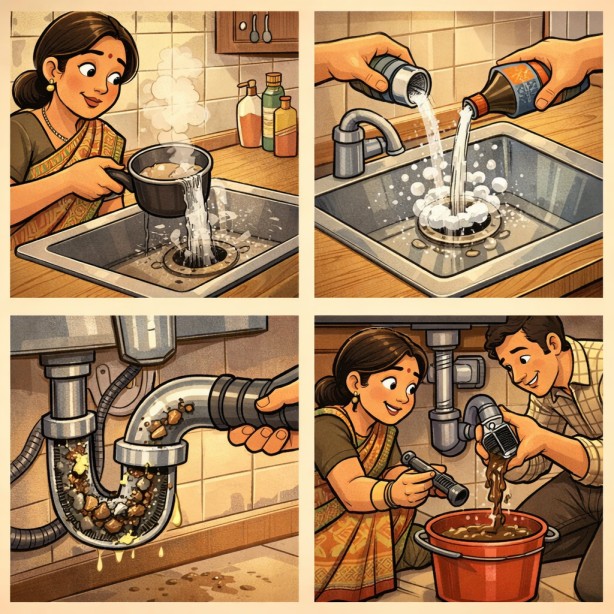
Signs Your Kitchen Drain Pipe Needs Cleaning
Before the drain becomes completely blocked, you may notice a few warning signs.
- Water draining slowly from the sink
- Unpleasant smell coming from the drain
- Gurgling sounds in the pipe
- Water backing up slightly in the sink
- Food particles appearing near the drain opening
Cleaning the pipe early can prevent serious blockages.
Maintaining a clean kitchen sink is also important for hygiene. You may find this guide helpful:
Kitchen Sink Blockage – Simple Home Fixes That Work Naturally
https://caringforyourhome.com/kitchen-sink-blockage-simple-home-fixes-that-work-naturally/
Common Causes of Kitchen Drain Blockage
Understanding what causes the blockage helps prevent the problem in the future.
Typical causes include:
- Cooking oil and grease poured into the sink
- Food scraps entering the drain
- Soap residue buildup
- Coffee grounds or tea leaves
- Rice or flour stuck in pipes
These materials accumulate inside the pipe and reduce water flow.
Quick Method to Clean a Kitchen Drain Pipe
- Pour hot water into the drain.
- Add baking soda.
- Pour vinegar slowly into the pipe.
- Let the mixture sit for 15 minutes.
- Flush with hot water again.
This natural reaction helps loosen grease and food particles.
Simple Ways to Clean Kitchen Drain Pipes
Hot Water and Dish Soap Method
Hot water helps melt grease deposits inside pipes.
Steps
- Boil a kettle of water.
- Add a few drops of dishwashing liquid to the drain.
- Slowly pour the hot water into the sink.
- Allow the water to flush through the pipe.
This method works well for light grease buildup.
Baking Soda and Vinegar Cleaning
This is one of the most effective natural methods.
Steps
- Pour ½ cup baking soda into the drain.
- Add 1 cup vinegar slowly.
- The mixture will fizz and break down grease.
- Leave it for 15–20 minutes.
- Flush the pipe with hot water.
This helps loosen debris inside the pipe.
Salt and Hot Water Method
Salt can help scrub the inside of the pipe.
Steps
- Pour ½ cup salt into the drain.
- Follow with hot water.
- Let the mixture sit for a few minutes.
- Flush again with more hot water.
This method helps remove mild blockages.
Plunger Method
If water is draining very slowly, a plunger can help.
Steps
- Fill the sink with some water.
- Place the plunger over the drain opening.
- Pump up and down several times.
- This creates pressure that loosens the blockage.
After plunging, flush the drain with hot water.
Cleaning the Sink Strainer
Sometimes the blockage occurs at the drain opening itself.
Remove the strainer and clean out trapped food particles.
This simple step often improves drainage immediately.
Maintaining nearby kitchen surfaces also improves hygiene.
How to Remove Grease From Kitchen Cabinets Naturally at Home
https://caringforyourhome.com/how-to-remove-grease-from-kitchen-cabinets-naturally-at-home/
Comparison Table: Drain Cleaning Methods
| Method | Effectiveness | Cost | Best For |
|---|---|---|---|
| Hot water flush | Medium | Free | Light grease buildup |
| Baking soda + vinegar | High | Low | Food and grease blockage |
| Salt and hot water | Medium | Low | Mild clogging |
| Plunger | High | Low | Physical blockages |
Using these methods regularly can prevent major plumbing issues.
Real-Life Example from an Indian Kitchen
Suresh from Hyderabad noticed that water was draining slowly from his kitchen sink. Instead of calling a plumber immediately, he tried pouring baking soda followed by vinegar into the drain.
After waiting for about 15 minutes and flushing with hot water, the drainage improved significantly and the bad smell disappeared.
Personal Experience:
In my own kitchen, the sink once started draining slowly after cooking several oily dishes. Instead of calling a plumber, I used the baking soda and vinegar method followed by hot water. The blockage cleared and the sink started draining normally again.
Common Mistakes to Avoid
Pouring Cooking Oil into the Sink
Oil solidifies inside pipes and causes blockages.
Ignoring Slow Drainage
Small blockages can become major clogs if not treated early.
Using Too Much Chemical Cleaner
Strong chemicals may damage pipes over time.
Throwing Food Waste into the Sink
Food particles often get trapped inside pipes.
Helpful Maintenance Tips
Preventing blockages is easier than fixing them.
- Use a sink strainer to catch food particles
- Avoid pouring oil or grease into the drain
- Flush the pipe with hot water weekly
- Clean the drain opening regularly
Maintaining the rest of the kitchen also improves hygiene.
You may find these guides helpful:
How to Remove Oil Stains From Kitchen Slab Easily
https://caringforyourhome.com/how-to-remove-oil-stains-from-kitchen-slab-easily/
How to Clean Greasy Kitchen Walls Without Paint Damage
https://caringforyourhome.com/how-to-clean-greasy-kitchen-walls-without-paint-damage/
Gas Stove Burner Cleaning at Home – Step-by-Step Natural Guide
https://caringforyourhome.com/gas-stove-burner-cleaning-at-home-step-by-step-natural-guide/
How to Clean Microwave Turntable at Home Easily
https://caringforyourhome.com/how-to-clean-microwave-turntable-at-home-easily/
Simple Refrigerator Cleaning Schedule for Busy Homes
https://caringforyourhome.com/simple-refrigerator-cleaning-schedule-for-busy-homes/
How to Remove Bad Smell From Refrigerator Permanently at Home
https://caringforyourhome.com/how-to-remove-bad-smell-from-refrigerator-permanently-at-home/
Pros and Cons of DIY Drain Cleaning
| Pros | Cons |
|---|---|
| Saves money | Severe clogs may require a plumber |
| Uses simple household items | May require repeated cleaning |
| Environment friendly | Some blockages may be deep in pipes |
| Easy and quick methods | Requires regular maintenance |
Frequently Asked Questions
Why does my kitchen drain pipe smell bad?
Bad smells usually come from food waste and grease buildup inside the pipe.
Can baking soda and vinegar clean drain pipes?
Yes. This combination helps break down grease and food particles.
How often should kitchen drains be cleaned?
Flushing the drain with hot water once a week helps prevent blockages.
Is it safe to use boiling water in kitchen drains?
Yes, but avoid extremely hot water if the pipes are made of plastic.
Can oil cause drain blockage?
Yes. Cooking oil solidifies inside pipes and traps food particles.
When should I call a plumber?
If water stops draining completely or the blockage persists after multiple cleaning attempts.
Conclusion
Kitchen drain pipes often become clogged due to grease, food particles, and soap residue. While the problem may seem serious, many minor blockages can be fixed easily without calling a plumber.
Simple home methods such as hot water flushing, baking soda and vinegar cleaning, and using a plunger can help restore normal drainage. Regular maintenance also plays a key role in preventing future blockages.
By following these practical cleaning tips and avoiding common mistakes like pouring oil into the sink, you can keep your kitchen drain pipe clean and functioning properly.
References
Food Safety and Standards Authority of India (FSSAI)
https://www.fssai.gov.in/
Centers for Disease Control and Prevention (CDC) – Healthy Home Maintenance
https://www.cdc.gov/healthyhomes
United States Environmental Protection Agency (EPA) – Household Wastewater Care
https://www.epa.gov/septic
“From what I’ve observed in many households, including my relatives’ homes, small cleaning habits are often overlooked until the problem becomes noticeable. For example, areas like kitchen corners, drains, or storage spaces are usually ignored during regular cleaning routines.”
“However, I’ve seen that simple and consistent cleaning practices—using basic home methods—can prevent buildup, reduce damage, and keep the space well-maintained. In the long run, these small efforts help avoid bigger issues and unnecessary repair costs.”
Research Sources
World Health Organization (WHO)https://www.who.int/publications/i/item/9789289041683
Centers for Disease Control and Prevention (CDC)
https://www.cdc.gov/healthyhomes
United States Environmental Protection Agency (EPA)
https://www.epa.gov/indoor-air-quality-iaq
