
Soap scum is one of the most common problems in bathrooms. If you look closely at your bathroom tiles, especially near the shower area, you may notice a white or cloudy layer forming over time. This layer is called soap scum.
It forms when soap mixes with minerals present in water. After repeated use of the bathroom, this mixture sticks to tiles and gradually builds up into a dull, sticky film. If it is not cleaned regularly, it can make bathroom tiles look dirty and reduce their shine.
The good news is that you do not need expensive chemical cleaners to remove soap scum. Many simple household ingredients can break down this buildup naturally and safely.
This guide explains how to remove soap scum from bathroom tiles naturally, along with practical cleaning methods and preventive tips suitable for everyday home maintenance.
What Exactly Is Soap Scum?
Soap scum is a residue created when soap reacts with calcium and magnesium minerals in water. These minerals are often present in hard water.
Over time, soap scum can:
- Make tiles appear dull or cloudy
- Trap dirt and bacteria
- Create a slippery surface
- Cause unpleasant bathroom odors
Bathrooms that are used frequently, especially by multiple family members, usually experience faster soap scum buildup.
Keeping bathroom surfaces clean can also prevent other problems. You may find this guide helpful:
Bathroom Cleaning Checklist for Busy People (Daily, Weekly, Monthly Tasks)
https://caringforyourhome.com/bathroom-cleaning-checklist-for-busy-people-easy-daily-weekly-monthly-tasks/
Signs Your Bathroom Tiles Have Soap Scum
Sometimes people confuse soap scum with dirt or mold. These signs can help you identify it.
- White or grey cloudy marks on tiles
- Sticky feeling on tile surfaces
- Water spots that do not disappear easily
- Dull appearance on glossy tiles
If these signs appear, it is time to clean the tiles.
Natural Ways to Remove Soap Scum
Vinegar and Warm Water Spray
One of the simplest natural solutions for soap scum is vinegar.
How to use it
- Mix equal parts of warm water and white vinegar.
- Pour the solution into a spray bottle.
- Spray it on the affected tiles.
- Leave it for about 15 minutes.
- Wipe the tiles with a soft cloth.
Vinegar helps dissolve mineral deposits that cause soap scum.
Baking Soda Cleaning Paste
Baking soda works well when soap scum is slightly thicker.
Steps
- Mix baking soda with a little water to form a paste.
- Apply the paste on the tile surface.
- Leave it for 10–15 minutes.
- Wipe gently using a sponge.
- Rinse with clean water.
This method helps remove stubborn residue.
Lemon Juice Method
Lemon contains natural acids that help break down soap scum.
How to use
- Cut a lemon into halves.
- Rub the lemon directly on the tiles.
- Leave it for a few minutes.
- Wipe the tiles with a damp cloth.
Lemon also leaves a fresh fragrance in the bathroom.
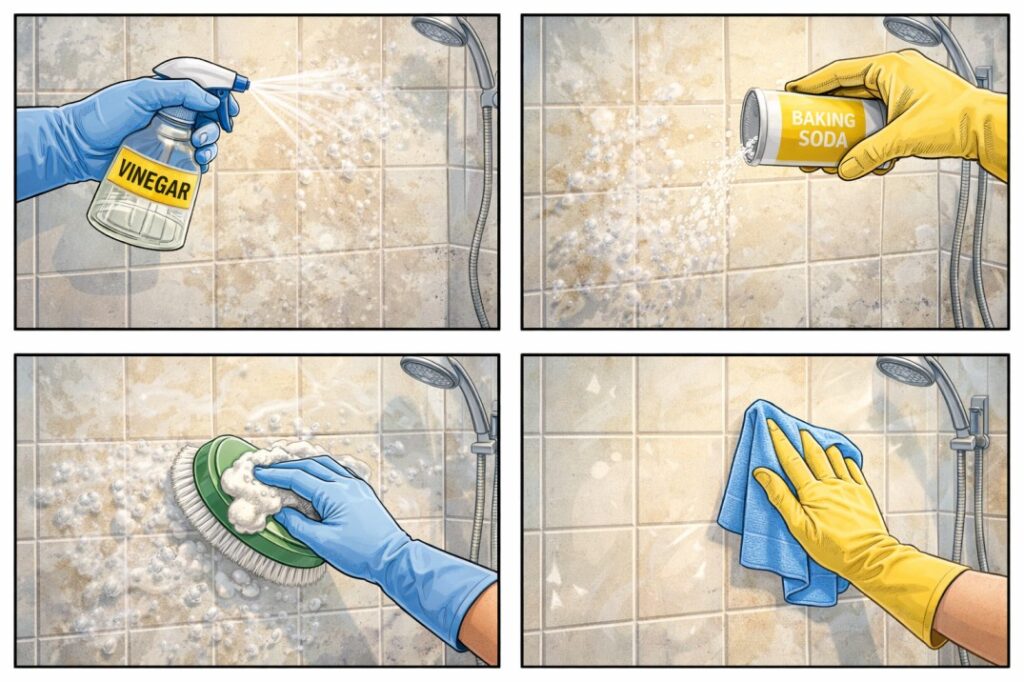
Vinegar and Baking Soda Combination
For areas where soap scum has accumulated for a long time, combining vinegar and baking soda can be effective.
- Spray vinegar solution on the tiles.
- Sprinkle baking soda lightly.
- Allow the mixture to react for a few minutes.
- Wipe the surface clean.
This natural reaction helps loosen buildup.
A Simple Cleaning Routine That Works
Instead of waiting for soap scum to become thick, following a simple routine helps keep tiles clean.
- Wipe tiles with a dry cloth after showering
- Clean bathroom tiles once a week
- Use mild natural cleaners regularly
- Allow proper ventilation in the bathroom
Regular maintenance prevents heavy buildup.
If you notice mineral stains as well, you may find this guide helpful:
How to Remove Hard Water Stains From Bathroom Tiles Naturally
https://caringforyourhome.com/how-to-remove-hard-water-stains-from-bathroom-tiles-naturally/
A Real Situation Many Homes Face
In many apartments, bathroom ventilation may not be very strong. When hot showers create steam, moisture settles on tiles and soap scum forms faster.
One homeowner noticed that the shower tiles looked dull even after cleaning. After switching to a weekly vinegar spray routine, the buildup reduced significantly and the tiles regained their shine.
Personal Experience:
In my own bathroom, soap scum started appearing on the shower tiles after a few months. Instead of using strong cleaners, I tried spraying vinegar and wiping the tiles after every few days. Within a short time, the cloudy layer disappeared and the tiles looked much cleaner.
Common Mistakes People Make
Using too much detergent
Excess soap can actually increase soap scum buildup.
Ignoring ventilation
Poor airflow keeps moisture trapped on tile surfaces.
Waiting too long between cleanings
Soap scum becomes harder to remove when it builds up over months.
Using harsh chemicals
Strong chemicals can damage tile surfaces and grout.
Helpful Maintenance Tips
Small habits can prevent soap scum from returning quickly.
- Use liquid body wash instead of bar soap when possible
- Rinse tiles with water after bathing
- Dry the shower area using a squeegee
- Keep the bathroom well ventilated
Maintaining the rest of the bathroom also improves hygiene.
You may also find these guides useful:
How to Clean Shower Head Blockage Naturally at Home
https://caringforyourhome.com/how-to-clean-shower-head-blockage-naturally-at-home/
Mold Removal From Bathroom Walls – Safe Home Method That Works
https://caringforyourhome.com/mold-removal-from-bathroom-walls-safe-home-method-that-works/
How to Clean Bathroom Exhaust Fan Easily at Home
https://caringforyourhome.com/how-to-clean-bathroom-exhaust-fan-easily-at-home/
How to Clean Bathroom Door Without Damaging Laminate
https://caringforyourhome.com/how-to-clean-bathroom-door-without-damaging-laminate/
Simple Home Remedies to Remove Urine Smell From Toilet
https://caringforyourhome.com/simple-home-remedies-to-remove-urine-smell-from-toilet/
Monsoon Home Care Tips to Prevent Dampness Naturally
https://caringforyourhome.com/monsoon-home-care-tips-to-prevent-dampness-naturally/
Pros and Cons of Natural Cleaning Methods
| Pros | Cons |
|---|---|
| Safe for daily use | May require regular cleaning |
| Uses common household ingredients | Heavy buildup may take time |
| Affordable | Needs consistent maintenance |
| Environment friendly | Some stains may need repeated treatment |
Frequently Asked Questions
Why does soap scum form on bathroom tiles?
Soap scum forms when soap reacts with minerals present in hard water.
Can vinegar remove soap scum?
Yes. Vinegar helps dissolve mineral deposits that create soap scum.
Is baking soda safe for tiles?
Yes. Baking soda is a gentle cleaner and safe for most tile surfaces.
How often should bathroom tiles be cleaned?
Light cleaning once a week usually prevents soap scum buildup.
Does hard water cause more soap scum?
Yes. Hard water contains minerals that increase soap residue.
Can lemon juice remove soap scum?
Yes. Lemon’s natural acidity helps break down soap residue.
Conclusion
Soap scum on bathroom tiles is a common issue caused by soap residue and mineral deposits from water. While it may seem difficult to remove, natural ingredients such as vinegar, baking soda, and lemon can effectively break down this buildup without using harsh chemicals.
Regular cleaning and good ventilation play a major role in preventing soap scum from forming again. With simple weekly maintenance and natural cleaning solutions, you can keep your bathroom tiles looking clean, shiny, and hygienic.
Small habits like wiping tiles after bathing and maintaining proper airflow can make a big difference in keeping your bathroom fresh.
References
World Health Organization (WHO) – Indoor Air Quality Guidelines
https://www.who.int/publications/i/item/9789289041683
United States Environmental Protection Agency (EPA) – Household Cleaning and Indoor Air Quality
https://www.epa.gov/indoor-air-quality-iaq
Centers for Disease Control and Prevention (CDC) – Healthy Home Cleaning Practices
https://www.cdc.gov/healthyhomes/keeping-home-clean.html
“From what I’ve observed in many households, including my relatives’ homes, small cleaning habits are often overlooked until the problem becomes noticeable. For example, areas like kitchen corners, drains, or storage spaces are usually ignored during regular cleaning routines.”
“However, I’ve seen that simple and consistent cleaning practices—using basic home methods—can prevent buildup, reduce damage, and keep the space well-maintained. In the long run, these small efforts help avoid bigger issues and unnecessary repair costs.”
Research Sources
World Health Organization (WHO)https://www.who.int/publications/i/item/9789289041683
Centers for Disease Control and Prevention (CDC)
https://www.cdc.gov/healthyhomes
United States Environmental Protection Agency (EPA)
https://www.epa.gov/indoor-air-quality-iaq