
There’s a very specific kind of irritation that only happens at 7:10 in the morning.
You’ve already overslept slightly. The towel is damp because it never dried properly overnight. Somebody else in the house used the hot water first. The bathroom floor is mysteriously wet even though nobody admits to splashing.
And then you finish your shower, reach for the mirror to shave, do skincare, put on eyeliner, squeeze a pimple you shouldn’t touch —
and the entire mirror looks like a haunted window from a horror movie.
Completely white.
Not a single usable corner.
So you wipe it with your hand, which somehow makes things worse immediately. Now the mirror is foggy and streaked. Tiny water trails everywhere. The lighting catches every smear dramatically like the bathroom itself is criticizing your life choices.
That was my routine for years.
Not a serious problem obviously. Nobody’s life collapses because of mirror fog. But repeated tiny frustrations inside a home have a strange cumulative effect. They slowly turn ordinary mornings into annoying obstacle courses.
Especially in small bathrooms with weak ventilation.
Especially in homes where multiple people are trying to get ready quickly.
Especially during colder months when hot showers feel necessary and every surface inside the bathroom turns damp within minutes.
[IMAGE: flat illustration style]
The worst bathroom I ever dealt with was in an older apartment where the mirror was mounted directly opposite the shower area. No window. Tiny exhaust fan that sounded powerful but achieved almost nothing. After every shower, the mirror fogged so heavily it stayed blurry for nearly twenty minutes.
You could literally write messages on it.
Which sounds fun exactly once.
After that it just feels humid and vaguely depressing.
At first I tried random internet tricks without understanding why mirrors fog in the first place. Which, honestly, is how most home problems become more annoying than they need to be.
People start treating symptoms theatrically instead of fixing conditions practically.
The science itself is simple.
Warm shower steam hits a cooler mirror surface. Moisture condenses into tiny droplets. The droplets scatter light, making the mirror appear cloudy.
That’s it.
The important part is this: fogging is mostly a temperature and moisture problem, not a “dirty mirror” problem.
Though dirty mirrors definitely make it worse.
I learned that accidentally after cleaning mine properly for the first time in months.
Not a quick wipe. Actually cleaning it.
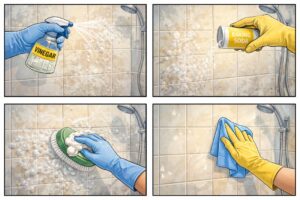
Warm water, vinegar, microfiber cloth.
The difference surprised me immediately. A cleaner mirror fogged slightly less and cleared faster because grime and residue give moisture more surface texture to cling to.
Which was mildly embarrassing because I had been blaming the bathroom design while my mirror itself was coated with toothpaste mist and old soap residue.
Real homes are humbling like that.
Still, cleaning alone didn’t solve the problem completely. The bathroom remained too humid after showers.
The first thing that genuinely worked was changing airflow timing.
Most people turn on the exhaust fan after showering. Too late.
Steam has already filled the room by then.
Now I switch on the exhaust fan a few minutes before starting the shower and leave the bathroom door slightly open afterward whenever possible. Even a small airflow difference matters more than expensive anti-fog products sometimes.
Especially in compact bathrooms where steam gets trapped quickly.
One awkward realization I had during this process: many bathroom exhaust fans barely function properly because nobody cleans them.
I removed the vent cover from mine one afternoon and found a thick gray layer of dust attached to the fan blades. The thing was basically circulating disappointment instead of removing moisture.
After cleaning it properly, airflow improved immediately.
The mirror still fogged a little during very hot showers, but it cleared faster instead of staying cloudy forever.
[IMAGE: flat illustration style]
Another thing that helped unexpectedly was slightly lowering shower temperature.
Not cold showers. Absolutely not.
Just less volcanic.
Very hot water creates dramatically more steam than most people realize. During winter especially, I used to shower in water hot enough to recreate weather systems inside the bathroom.
Naturally the mirror surrendered instantly.
Once I reduced the temperature slightly, steam levels dropped enough to notice a real difference.
This is the annoying truth about household problems:
small adjustments often outperform dramatic hacks.
That said, I did try the famous shaving cream trick.
And strangely… it worked.
At least temporarily.
If you’ve never heard of it, the idea is simple:
- apply a tiny amount of shaving cream to the mirror
- wipe it evenly
- buff it clean with a dry cloth
It leaves behind a thin invisible film that reduces condensation buildup.
I resisted trying this because it sounded like fake internet advice invented by somebody bored in a hotel bathroom.
But after testing it, the mirror genuinely stayed clearer for several days.
Not perfect.
But noticeably better.
The only downside is overapplying it creates streaks that become visible in bright lighting. The first time I tried it, I used far too much and the mirror looked slightly greasy for a week.
Tiny amount works best.
Same with dish soap methods.
A very thin layer buffed properly can reduce fogging because it changes how water droplets form on the glass. Instead of tiny cloudy droplets, moisture spreads more evenly and stays more transparent.
Again though — subtle application matters.
Otherwise your bathroom mirror starts looking like somebody cleaned it with cooking oil.
One thing nobody mentions enough is how much bathroom size affects mirror fogging.
Tiny bathrooms trap steam aggressively.
Especially apartments where:
- there’s no window
- the ceiling is low
- the shower is directly beside the sink
- towels never fully dry
- ventilation is weak
In those bathrooms, preventing all fog becomes unrealistic during long hot showers.
The goal becomes reducing moisture buildup enough that the mirror clears quickly afterward.
That mindset helped me stop chasing perfect solutions.
Because honestly, some home advice online sounds written by people living in giant luxury bathrooms with skylights and industrial ventilation systems.
Real bathrooms are different.
Real bathrooms have damp corners and mysterious smells after rainy weeks and one towel hook holding six things at once.
Another surprisingly effective change was wiping water off shower walls after bathing.
Not obsessively. Just quickly using a small squeegee.
At first I thought this had nothing to do with the mirror. But leftover water continuing to evaporate after showers keeps humidity levels high longer. Removing excess water reduced lingering steam throughout the room.
Same reason wet bath mats make bathrooms feel humid for hours.
Moisture stays trapped inside the room longer than people realize.
And honestly, the emotional side of this problem is bigger than it sounds.
Fogged mirrors create rushed mornings.
You lean too close trying to see properly. Makeup gets uneven. Shaving becomes risky. Hair styling turns into guesswork. People with glasses suffer twice because both the mirror and the glasses fog simultaneously like a coordinated attack.
One winter morning before work I got so irritated trying to clear the mirror that I used a hairdryer on it.
Which worked beautifully for about forty seconds.
Then the steam won again.
[IMAGE: flat illustration style]
Another thing that improved the situation long term was replacing an old fabric shower curtain with a lighter waterproof one.
The old curtain stayed damp constantly and made the entire bathroom smell humid. Heavy wet fabrics quietly increase moisture retention inside small bathrooms.
The difference afterward was subtle but noticeable:
less dampness lingering in the room overall.
And if your mirror fogs excessively no matter what you try, sometimes the issue is broader household humidity.
This became obvious during monsoon season in my apartment. The mirror fogged faster, towels dried slower, and the bathroom smelled slightly damp even without shower use.
At that point, airflow matters more than tricks.
Opening windows elsewhere in the house helped surprisingly much because trapped humid indoor air affects the bathroom too.
One thing I stopped doing completely:
wiping the mirror aggressively with towels after every shower.
It creates streaks, lint buildup, and eventually tiny scratches over time. Plus damp towels often smell faintly musty anyway, which transfers onto the glass subtly.
Better ventilation solved more than frantic wiping ever did.
And honestly, anti-fog bathroom products can work, but many feel unnecessary for normal homes. Some leave residue. Some need constant reapplication. Some smell strangely chemical in enclosed bathrooms.
The simplest solutions were usually enough:
- cleaner mirror surface
- better airflow
- less extreme steam
- reducing lingering moisture
- occasional anti-fog coating tricks
Nothing glamorous.
No dramatic life-changing hack.
Just understanding why the mirror fogged in the first place instead of fighting steam emotionally every morning.
These days my bathroom mirror still fogs slightly during long hot showers in winter.
That’s normal.
But it clears within minutes now instead of becoming an opaque wall of frustration while I’m already late for work.
Which honestly feels like a bigger improvement than it sounds.
Because homes function emotionally as much as physically.
And small repeated annoyances matter.
Especially before coffee.
FAQs
Why does my bathroom mirror fog up after a shower?
Bathroom mirrors fog because warm steam from the shower hits the cooler mirror surface, causing moisture to condense into tiny droplets.
What is the easiest way to stop mirror fogging naturally?
Improving bathroom airflow, cleaning the mirror regularly, reducing excessive steam, and applying a thin layer of shaving cream or dish soap can help reduce fog naturally.
Does shaving cream really stop mirrors from fogging?
Yes, temporarily. A very thin buffed layer of shaving cream can create a surface that reduces condensation buildup on mirrors.
Why does my bathroom stay foggy for so long?
Poor ventilation, high humidity, wet towels, standing water, and weak exhaust fans can trap moisture inside the bathroom for longer periods.
Is it bad to wipe fog off mirrors with a towel?
Frequent wiping with damp towels can leave streaks, lint, and tiny scratches over time. Improving ventilation usually works better than repeatedly wiping the mirror.
“From what I’ve observed in many households, including my relatives’ homes, small cleaning habits are often overlooked until the problem becomes noticeable. For example, areas like kitchen corners, drains, or storage spaces are usually ignored during regular cleaning routines.”
“However, I’ve seen that simple and consistent cleaning practices—using basic home methods—can prevent buildup, reduce damage, and keep the space well-maintained. In the long run, these small efforts help avoid bigger issues and unnecessary repair costs.”
Research Sources
World Health Organization (WHO)https://www.who.int/publications/i/item/9789289041683
Centers for Disease Control and Prevention (CDC)
https://www.cdc.gov/healthyhomes
United States Environmental Protection Agency (EPA)
https://www.epa.gov/indoor-air-quality-iaq