

Introduction
During winter, many homes tend to keep certain rooms closed for long periods. Guest rooms, storage rooms, or rarely used bedrooms may remain shut to keep the house warm or to reduce cleaning work. However, when rooms remain closed for weeks, they often develop problems such as dust buildup, musty smells, moisture patches, and stale air.
Closed rooms do not get enough sunlight or ventilation, which can cause dust, mold, and unpleasant odors to accumulate. When these rooms are opened after several weeks, the air may feel heavy and the furniture may appear dull or dusty.
Fortunately, maintaining closed rooms during winter does not require heavy cleaning. A few simple habits and periodic checks can keep these rooms fresh and hygienic throughout the season.
In this guide, you will learn practical winter cleaning tips for closed rooms, including easy ways to remove dust, prevent moisture buildup, and maintain healthy indoor air.
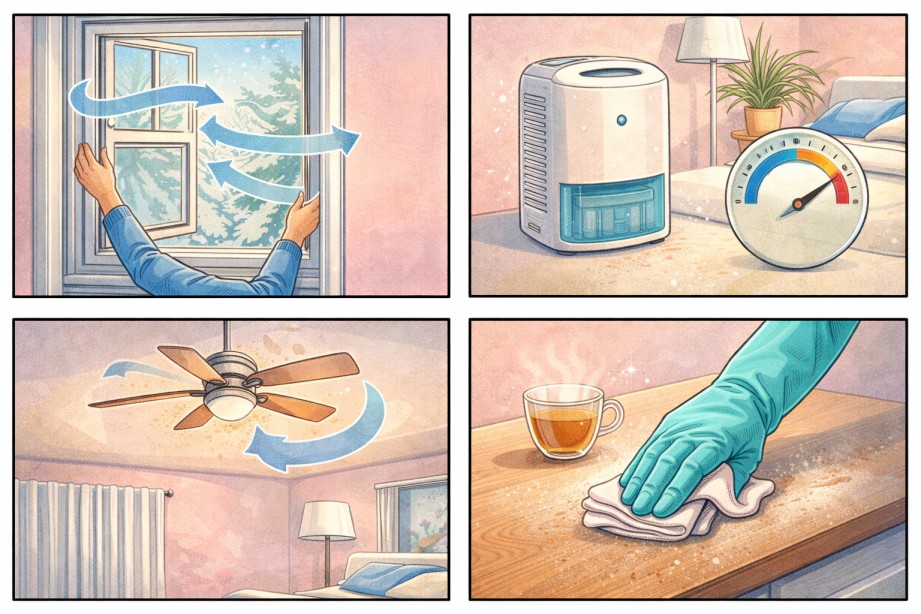
Why Closed Rooms Become Dusty and Smelly in Winter
When rooms remain closed, airflow stops and fresh air cannot circulate. This leads to the accumulation of dust and trapped moisture.
Common problems found in closed rooms include:
- Dust buildup on furniture and floors
- Musty or stale smell in the air
- Moisture accumulation on walls or windows
- Mold growth in corners
- Stuffy indoor air
Rooms that receive little sunlight or are located in humid areas may develop these issues faster.
Maintaining proper home ventilation is important during winter. You may also find this guide helpful:
Winter Home Care Tips to Avoid Moisture Damage and Dampness
https://caringforyourhome.com/winter-home-care-tips-to-avoid-moisture-damage-and-dampness/
Quick Winter Cleaning Routine for Closed Rooms
If you have a room that stays closed most of the time, a simple routine can keep it fresh.
- Open the room at least once a week
- Allow fresh air and sunlight inside
- Dust furniture and surfaces regularly
- Check corners for moisture or mold
- Keep the room dry and ventilated
These small steps prevent long-term cleaning problems.
Simple Cleaning Tips for Closed Rooms
Open Windows for Fresh Air
Fresh air circulation is one of the easiest ways to improve indoor air quality.
Even during winter, opening windows for 10–15 minutes helps remove stale air and reduces indoor moisture.
Sunlight entering the room also helps reduce mold growth.
Dust Furniture and Surfaces
Closed rooms often collect fine dust over time.
Use a soft cloth or microfiber duster to clean:
- Tables and cupboards
- Window sills
- Shelves and decorative items
- Headboards and side tables
Regular dusting keeps the room clean and prevents allergens.
Furniture care is also important for long-term maintenance. You may find this helpful:
Wooden Furniture Care Tips to Prevent Damage and Extend Lifespan
https://caringforyourhome.com/wooden-furniture-care-tips-to-prevent-damage-and-extend-lifespan/
Clean Curtains and Upholstery
Curtains and fabric furniture can trap dust and odors in closed rooms.
Vacuum or gently shake curtains to remove dust.
You may also read:
How to Clean Curtains at Home Without Taking Them Down
https://caringforyourhome.com/how-to-clean-curtains-at-home-without-taking-them-down/
Check for Moisture or Damp Patches
Closed rooms sometimes develop damp spots on walls due to condensation.
Inspect areas such as:
- Corners of walls
- Behind furniture
- Near windows
If moisture is present, allow the room to air out.
For deeper moisture problems, you may find this guide useful:
How to Dry Damp Walls at Home During Rainy Season
https://caringforyourhome.com/how-to-dry-damp-walls-at-home-during-rainy-season/
Use Natural Odor Absorbers
Closed rooms may develop musty smells.
You can place natural odor absorbers such as:
- Baking soda in small bowls
- Charcoal pieces
- Camphor tablets
These help absorb unpleasant odors.
If cupboards develop smell, you may find this helpful:
How to Remove Smell From Cupboard Naturally at Home
https://caringforyourhome.com/how-to-remove-smell-from-cupboard-naturally-at-home/
Vacuum Floors and Carpets
Dust often settles on floors and carpets in unused rooms.
Vacuum cleaning helps remove dust particles and improves air quality.
If the room contains rugs or mattresses, regular cleaning is helpful.
Mattress Stain Removal at Home – Safe and Easy Natural Methods
https://caringforyourhome.com/mattress-stain-removal-at-home-safe-and-easy-natural-methods/
Comparison Table: Cleaning Solutions for Closed Rooms
| Method | Effectiveness | Cost | Best For |
|---|---|---|---|
| Opening windows | High | Free | Fresh air circulation |
| Dusting furniture | High | Very low | Dust removal |
| Natural odor absorbers | Medium | Low | Removing smells |
| Vacuum cleaning | High | Medium | Floor and carpet cleaning |
Using these methods together helps maintain clean and fresh rooms.
A Common Situation in Many Homes
Many families keep a guest room closed during winter because it is rarely used. After several weeks, the room may develop a dusty smell and the air may feel stale.
A homeowner in Pune started opening the guest room window once a week and dusting the furniture regularly. Within a short time, the room remained fresh even though it was not used daily.
Personal Experience:
In my home, one spare bedroom used to stay closed during winter and developed a slightly musty smell. After making it a habit to open the windows every weekend and dust the furniture, the room stayed much fresher.
Common Mistakes to Avoid
Keeping rooms closed for months
Completely sealed rooms trap stale air and moisture.
Ignoring corners and hidden areas
Dust and mold often appear in corners first.
Blocking sunlight
Sunlight helps keep rooms dry and prevents mold growth.
Storing damp items
Wet clothes or bedding should not be stored in closed rooms.
Helpful Maintenance Tips
Simple habits can keep closed rooms clean throughout winter.
- Air out the room weekly
- Keep furniture slightly away from walls
- Avoid storing damp items
- Maintain indoor ventilation
Maintaining overall home cleanliness also helps.
You may also find these guides useful:
Simple Ways to Prevent Fungal Growth in Wardrobes
https://caringforyourhome.com/simple-ways-to-prevent-fungal-growth-in-wardrobes/
Pre-Festival Home Cleaning Checklist – Step-by-Step Guide for a Fresh Home
https://caringforyourhome.com/pre-festival-home-cleaning-checklist-step-by-step-guide-for-a-fresh-home/
How to Remove Water Stains From Wooden Table Naturally at Home
https://caringforyourhome.com/how-to-remove-water-stains-from-wooden-table-naturally-at-home/
How to Clean Fabric Sofa at Home Without Vacuum Cleaner
https://caringforyourhome.com/how-to-clean-fabric-sofa-at-home-without-vacuum-cleaner/
Pros and Cons of Maintaining Closed Rooms
| Pros | Cons |
|---|---|
| Reduces heavy cleaning later | Requires periodic ventilation |
| Improves indoor air quality | Some dust may still accumulate |
| Prevents mold and moisture | Needs regular monitoring |
| Keeps furniture in good condition | Requires occasional effort |
Frequently Asked Questions
Why do closed rooms smell musty?
Closed rooms trap moisture and stale air, which can cause unpleasant odors.
How often should closed rooms be ventilated?
Opening the room once a week for fresh air is usually sufficient.
Can sunlight help remove room odors?
Yes. Sunlight helps reduce moisture and improves air freshness.
Should furniture be moved occasionally?
Yes. Moving furniture slightly helps prevent moisture buildup behind it.
Do closed rooms collect more dust?
Yes. Dust particles settle over time when rooms are not cleaned regularly.
Can natural odor absorbers help?
Yes. Charcoal, baking soda, and camphor can absorb unwanted smells.
Conclusion
Closed rooms during winter can quickly accumulate dust, moisture, and stale air if they are not maintained regularly. Lack of ventilation and sunlight often leads to musty smells and uncomfortable indoor air.
Fortunately, keeping these rooms clean and fresh does not require heavy cleaning. Simple habits such as opening windows, dusting furniture, checking for moisture, and using natural odor absorbers can make a big difference.
By following these practical winter cleaning tips, you can maintain a healthier and more comfortable home environment while preventing long-term cleaning problems.
References
World Health Organization (WHO) – Indoor Air Quality Guidelines
https://www.who.int/publications/i/item/9789289041683
United States Environmental Protection Agency (EPA) – Indoor Air Quality Basics
https://www.epa.gov/indoor-air-quality-iaq
Centers for Disease Control and Prevention (CDC) – Healthy Home Environment
https://www.cdc.gov/healthyhomes
“From what I’ve observed in many households, including my relatives’ homes, small cleaning habits are often overlooked until the problem becomes noticeable. For example, areas like kitchen corners, drains, or storage spaces are usually ignored during regular cleaning routines.”
“However, I’ve seen that simple and consistent cleaning practices—using basic home methods—can prevent buildup, reduce damage, and keep the space well-maintained. In the long run, these small efforts help avoid bigger issues and unnecessary repair costs.”
Research Sources
World Health Organization (WHO)https://www.who.int/publications/i/item/9789289041683
Centers for Disease Control and Prevention (CDC)
https://www.cdc.gov/healthyhomes
United States Environmental Protection Agency (EPA)
https://www.epa.gov/indoor-air-quality-iaq
