
The first rust spot appeared so quietly I almost ignored it.
A tiny orange stain near the base of the tap. Barely noticeable unless the bathroom light hit it directly. It looked harmless. Temporary even. I wiped it once with a tissue and forgot about it immediately.
Two weeks later it had spread into a thin rough line creeping around the metal like the bathroom was aging faster than the rest of the apartment.
That’s the frustrating thing about rust.
It rarely arrives dramatically.
It starts small enough for denial.
Especially in bathrooms, where everything already deals with water constantly, so your brain stops recognizing warning signs properly. A damp corner feels normal. Tiny water droplets feel harmless. Metal fixtures quietly stay wet for hours and nobody really thinks about it until the finish starts changing color.
Then suddenly:
the shower handle looks old,
the towel rod feels rough,
the faucet edges develop strange orange shadows,
and the bathroom somehow starts looking tired even after cleaning.
[IMAGE: flat illustration style]
The worst part is that many bathroom fixtures don’t actually rust because people are “dirty” or neglectful.
Bathrooms are just difficult environments.
Constant humidity.
Steam.
Mineral-heavy water.
Poor ventilation.
Wet towels touching metal surfaces daily.
Even decent fixtures slowly struggle if moisture never properly leaves the room.
I learned this the hard way in a small apartment bathroom with no window and an exhaust fan that sounded powerful but mostly moved air emotionally rather than physically.
After every shower, the mirrors fogged completely and metal surfaces stayed damp for hours. At first I thought that was just normal bathroom behavior.
Apparently the fixtures disagreed.
The towel rack developed tiny rust dots first.
Then the screws near the sink.
Then the metal soap holder started staining the wall beneath it.
And honestly, rust changes how a bathroom feels psychologically.
Even clean bathrooms start feeling neglected once orange stains appear. Metal loses that smooth reflective look and starts feeling rough, tired, slightly abandoned.
Especially around sinks where lighting exposes everything aggressively in the morning.
My first mistake was trying to “clean away” rust repeatedly without fixing the moisture problem causing it.
Classic household mistake.
Treating symptoms emotionally instead of conditions practically.
I’d scrub the stain off, feel productive for ten minutes, then watch it slowly return days later because the fixture itself remained constantly wet afterward.
The real solution started with drying.
Not obsessively.
Just consistently.
One small microfiber cloth hanging near the sink changed more than expensive cleaners ever did. After washing hands or finishing showers, I started wiping obvious water droplets from taps, shower handles, and metal edges quickly.
That tiny habit interrupted moisture sitting on surfaces for hours.
Simple.
Annoyingly effective.
[IMAGE: flat illustration style]
Another thing I underestimated badly:
hard water.
Some bathrooms don’t just deal with water. They deal with mineral-heavy water that leaves deposits behind constantly. Those white chalky spots around taps aren’t just ugly — they trap moisture against metal surfaces longer and slowly damage protective finishes.
I ignored mineral buildup for months because it looked cosmetic.
Then I realized the roughest rust patches always formed exactly where mineral deposits stayed longest.
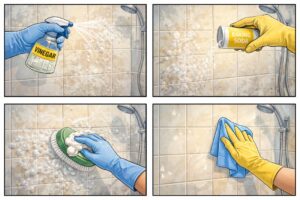
Once I started cleaning those deposits regularly with diluted vinegar, fixtures stayed smoother and dried faster afterward.
Not glamorous advice.
Realistic advice.
One thing nobody mentions enough:
bathroom ventilation affects rust more than cleaning products do.
A badly ventilated bathroom keeps moisture trapped everywhere:
- under taps
- around screws
- beneath soap dishes
- behind toilet pipe fittings
- inside shower corners
If steam stays lingering on mirrors long after showers end, metal fixtures are staying damp too.
I started leaving the bathroom door partially open after showering whenever possible and running the exhaust fan earlier instead of waiting until the room already looked like a sauna.
Moisture removal works better before humidity completely builds up.
Another hidden issue was wet fabrics touching metal constantly.
Wet towels draped over rails for hours.
Bath mats pressed against metal stands.
Damp loofahs hanging from shower hooks.
Water transfers quietly.
One towel hook in my bathroom kept rusting repeatedly until I realized damp towels stayed bunched against it almost continuously.
Once airflow improved around fabrics too, the rust slowed dramatically.
Another surprisingly important thing:
cheap metal fixtures deteriorate faster no matter how carefully you clean.
That realization irritated me because I prefer believing maintenance solves everything. But some low-quality chrome coatings simply fail quickly in humid environments. Once the protective layer gets scratched or weakened, moisture reaches the metal underneath and rust begins easily.
Especially around edges and joints.
One soap dispenser tray started rusting within months despite regular cleaning because the coating itself was thin and damaged underneath.
At some point, replacement becomes more realistic than endless rescue attempts.
[IMAGE: flat illustration style]
Another thing I stopped doing:
leaving cleaning chemicals sitting on metal surfaces too long.
Strong bathroom cleaners can damage protective finishes over time if not rinsed properly. Ironically, aggressive cleaning sometimes accelerates rust because the fixture coating weakens gradually.
I learned that after using a harsh cleaner repeatedly on the shower handle. The metal started looking dull first. Then rough spots appeared. Then tiny rust specks followed weeks later.
Now gentler regular cleaning works better than occasional chemical warfare.
One surprisingly effective natural method for minor rust prevention was applying tiny amounts of petroleum jelly to vulnerable metal areas occasionally.
Not thick greasy layers.
Just a very light protective coating on exposed screws or small fixture joints where moisture collected repeatedly.
It helped repel water slightly and slowed oxidation noticeably in problem spots.
Especially near sink bases.
And honestly, bathrooms reveal how small repeated habits shape homes more than dramatic deep cleaning sessions do.
Rust prevention mostly came down to:
- reducing standing moisture
- improving airflow
- removing mineral buildup
- drying surfaces occasionally
- avoiding trapped dampness
Tiny actions repeated consistently.
Not miracle products.
Another awkward truth:
cluttered bathrooms trap humidity worse.
Too many bottles crowded around fixtures reduce airflow and keep surfaces damp longer. My sink area used to hold:
- skincare bottles
- toothbrush cups
- razors
- soap trays
- random hair ties
- half-empty products I forgot to throw away
Water collected underneath everything.
Once surfaces stayed more open, cleaning and drying became much easier naturally.
One thing people rarely admit:
bathroom maintenance often collapses during stressful life periods first.
You stop wiping surfaces.
Wet towels stay crumpled longer.
Ventilation gets ignored.
Mineral buildup accumulates quietly.
Then suddenly rust appears “out of nowhere.”
My bathroom always looked worst during months when routines became chaotic generally.
Homes reflect mental bandwidth more than people realize.
These days my bathroom fixtures still get water spots sometimes.
Of course they do.
It’s a bathroom, not a hotel advertisement filmed in impossible lighting conditions.
But the metal stays smoother now. Rust spots stopped spreading aggressively. The sink area feels cleaner longer without that tired orange staining creeping around edges constantly.
Mostly because I stopped treating rust like a random cosmetic problem…
and started paying attention to how long moisture was staying trapped there every single day.
FAQs
What causes bathroom fixtures to rust?
Bathroom fixtures rust because constant moisture, humidity, hard water deposits, and poor ventilation gradually damage protective metal coatings.
How can I naturally prevent rust on bathroom fixtures?
Dry metal surfaces regularly, improve bathroom ventilation, remove mineral buildup with vinegar, and avoid leaving moisture trapped around fixtures.
Does hard water make rust worse?
Yes. Hard water leaves mineral deposits that trap moisture against metal surfaces and slowly weaken protective finishes.
Why do bathroom fixtures rust even after cleaning?
Cleaning alone doesn’t solve trapped moisture or poor airflow. If fixtures stay wet regularly, rust often returns.
Can vinegar remove rust from bathroom fixtures?
Diluted vinegar can help remove mineral buildup and light rust spots gently, but harsh scrubbing or strong chemicals may damage delicate finishes over time.
“From what I’ve observed in many households, including my relatives’ homes, small cleaning habits are often overlooked until the problem becomes noticeable. For example, areas like kitchen corners, drains, or storage spaces are usually ignored during regular cleaning routines.”
“However, I’ve seen that simple and consistent cleaning practices—using basic home methods—can prevent buildup, reduce damage, and keep the space well-maintained. In the long run, these small efforts help avoid bigger issues and unnecessary repair costs.”
Research Sources
World Health Organization (WHO)https://www.who.int/publications/i/item/9789289041683
Centers for Disease Control and Prevention (CDC)
https://www.cdc.gov/healthyhomes
United States Environmental Protection Agency (EPA)
https://www.epa.gov/indoor-air-quality-iaq