
Introduction
Microwave ovens are widely used in modern kitchens for reheating food, cooking quick meals, and preparing snacks. Because of frequent use, food spills, grease splashes, and sauce stains often collect inside the microwave, especially on the turntable plate.
The microwave turntable is the rotating glass plate that helps heat food evenly. Over time, it can accumulate oil stains, dried food particles, and unpleasant odors. If it is not cleaned regularly, these stains may become difficult to remove and may also affect hygiene in the kitchen.
Fortunately, cleaning a microwave turntable is simple and does not require strong chemical cleaners. With a few common household ingredients such as dish soap, vinegar, or lemon, you can remove stains and keep the turntable clean.
In this guide, you will learn how to clean a microwave turntable at home easily, along with practical cleaning methods, maintenance tips, and common mistakes to avoid.
Why the Microwave Turntable Gets Dirty
Microwave turntables get dirty mainly because food splashes during heating. When food is heated without a lid or cover, small droplets of oil, curry, or sauce may land on the glass plate.
Over time, the following can accumulate on the turntable:
- Food splashes and sauce stains
- Oil and grease residue
- Burnt food particles
- Water spots from steam
- Unpleasant food odors
Regular cleaning helps prevent stains from becoming permanent.
Keeping kitchen appliances clean is important for overall hygiene. You may also find this guide helpful:
How to Clean Induction Cooktop Without Scratches at Home
https://caringforyourhome.com/how-to-clean-induction-cooktop-without-scratches-at-home/
Signs Your Microwave Turntable Needs Cleaning
You may notice a few signs when the turntable needs cleaning.
- Sticky surface on the glass plate
- Visible food stains or grease spots
- Unpleasant smell inside the microwave
- Burn marks from dried food spills
Cleaning the plate early prevents stubborn stains.
Quick Method to Clean Microwave Turntable
- Remove the glass turntable from the microwave.
- Wash it with warm water and mild dish soap.
- Use a soft sponge to remove stains.
- Rinse thoroughly with clean water.
- Dry the plate before placing it back.
This simple method removes most food residue.
Easy Ways to Clean Microwave Turntable
Washing With Dish Soap
The easiest way to clean the turntable is using warm water and dish soap.
Steps
- Carefully remove the glass turntable.
- Place it in the sink.
- Apply a few drops of dishwashing liquid.
- Clean using a soft sponge.
- Rinse and dry before placing it back.
Dish soap helps remove oil and grease stains easily.
Vinegar Cleaning Method
Vinegar helps dissolve stubborn food residue and removes odors.
Steps
- Mix equal parts of vinegar and warm water.
- Dip a cloth in the solution.
- Wipe the turntable surface gently.
- Rinse with water and dry.
This method also helps remove cloudy marks on glass.
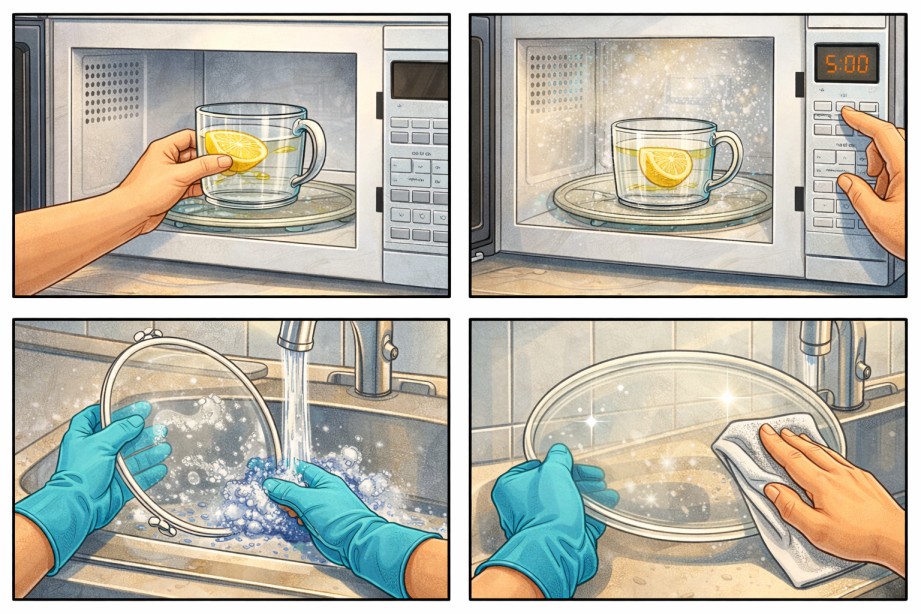
Lemon Steam Cleaning Method
Lemon works well for removing odors and softening dried food stains.
Steps
- Fill a microwave-safe bowl with water.
- Add slices of lemon.
- Heat the bowl in the microwave for about 3 minutes.
- The steam will loosen stains inside the microwave.
- Remove the turntable and wipe it clean.
This method also freshens the microwave interior.
Baking Soda Method for Tough Stains
If the turntable has dried stains, baking soda can help.
Steps
- Mix baking soda with a small amount of water to form a paste.
- Apply the paste on stained areas.
- Leave it for 10 minutes.
- Clean gently with a sponge.
- Rinse thoroughly.
Baking soda works as a mild natural scrub.
Comparison Table: Microwave Cleaning Methods
| Method | Effectiveness | Cost | Best For |
|---|---|---|---|
| Dish soap washing | High | Very low | Regular cleaning |
| Vinegar cleaning | High | Low | Removing odors |
| Lemon steam method | Medium | Low | Loosening stains |
| Baking soda paste | High | Very low | Tough stains |
Using these methods alternately helps keep the microwave clean.
Real-Life Example from an Indian Kitchen
Ravi from Bengaluru noticed that curry splashes had left stains on his microwave turntable. Because he reheated food frequently without a lid, small droplets had accumulated on the glass plate.
Instead of using strong cleaners, he washed the turntable with warm water and dish soap once a week. Within a few weeks, the microwave stayed much cleaner and stains did not build up again.
Personal Experience:
In my own kitchen, the microwave turntable once developed sticky oil stains after reheating food several times. After soaking the plate in warm soapy water for a few minutes, the stains became much easier to remove and the glass looked clear again.
Common Mistakes to Avoid
Using Metal Scrubbers
Metal scrubbers can scratch the glass turntable.
Placing Hot Glass in Cold Water
Sudden temperature changes may crack the glass plate.
Ignoring Food Spills
Dried spills become harder to clean later.
Using Harsh Chemical Cleaners
Strong cleaners can leave residue on surfaces that come into contact with food.
Simple Maintenance Tips
A few simple habits can keep your microwave cleaner for longer.
Cover food while heating
Use a microwave-safe lid to prevent splashes.
Clean spills immediately
Wipe small spills before they dry.
Clean the turntable weekly
Regular cleaning prevents stubborn stains.
Maintain other kitchen appliances
You may also find these guides useful:
Gas Stove Burner Cleaning at Home – Step-by-Step Natural Guide
https://caringforyourhome.com/gas-stove-burner-cleaning-at-home-step-by-step-natural-guide/
How to Remove Grease From Kitchen Cabinets Naturally at Home
https://caringforyourhome.com/how-to-remove-grease-from-kitchen-cabinets-naturally-at-home/
How to Remove Oil Stains From Kitchen Slab Easily
https://caringforyourhome.com/how-to-remove-oil-stains-from-kitchen-slab-easily/
Kitchen Sink Blockage – Simple Home Fixes That Work Naturally
https://caringforyourhome.com/kitchen-sink-blockage-simple-home-fixes-that-work-naturally/
Simple Refrigerator Cleaning Schedule for Busy Homes
https://caringforyourhome.com/simple-refrigerator-cleaning-schedule-for-busy-homes/
How to Remove Bad Smell From Refrigerator Permanently at Home
https://caringforyourhome.com/how-to-remove-bad-smell-from-refrigerator-permanently-at-home/
Pros and Cons of Natural Cleaning Methods
| Pros | Cons |
|---|---|
| Safe for kitchen appliances | Requires regular cleaning |
| Uses common household ingredients | Tough stains may need repeated cleaning |
| Affordable | Needs time for soaking |
| Environment friendly | Not suitable for cracked plates |
Frequently Asked Questions
Can microwave turntables be washed with soap?
Yes. Warm water and mild dish soap are safe for cleaning the glass turntable.
How often should the turntable be cleaned?
Cleaning once a week helps prevent grease and food buildup.
Can vinegar remove microwave odors?
Yes. Vinegar helps neutralize unpleasant smells.
Is baking soda safe for glass turntables?
Yes. Baking soda is gentle and safe for removing stains.
Why does the microwave smell after heating food?
Food splashes and residue inside the microwave can create unpleasant odors.
Can the turntable be cleaned in a dishwasher?
Most microwave glass plates are dishwasher safe, but check the manufacturer’s instructions.
Conclusion
The microwave turntable plays an important role in evenly heating food, but it can easily accumulate food spills, grease, and stains with regular use. If not cleaned frequently, these stains may cause unpleasant smells and affect kitchen hygiene.
Fortunately, cleaning the turntable is simple and requires only basic household ingredients like dish soap, vinegar, lemon, or baking soda. Regular cleaning helps maintain the appearance of the glass plate and keeps your microwave hygienic.
By adopting small habits such as covering food while heating and wiping spills quickly, you can keep your microwave clean and functioning efficiently.
References
Food Safety and Standards Authority of India (FSSAI)
https://www.fssai.gov.in/
Centers for Disease Control and Prevention (CDC) – Kitchen Hygiene Practices
https://www.cdc.gov/healthyhomes
United States Environmental Protection Agency (EPA) – Indoor Cleaning and Hygiene
https://www.epa.gov/indoor-air-quality-iaq
“From what I’ve observed in many households, including my relatives’ homes, small cleaning habits are often overlooked until the problem becomes noticeable. For example, areas like kitchen corners, drains, or storage spaces are usually ignored during regular cleaning routines.”
“However, I’ve seen that simple and consistent cleaning practices—using basic home methods—can prevent buildup, reduce damage, and keep the space well-maintained. In the long run, these small efforts help avoid bigger issues and unnecessary repair costs.”
Research Sources
World Health Organization (WHO)https://www.who.int/publications/i/item/9789289041683
Centers for Disease Control and Prevention (CDC)
https://www.cdc.gov/healthyhomes
United States Environmental Protection Agency (EPA)
https://www.epa.gov/indoor-air-quality-iaq