
Learn how to protect your home from mold during the rainy season using simple, natural methods. Practical tips, real-life home stories, and prevention strategies.
Introduction
The rainy season brings much-needed relief from heat, but it also creates the perfect environment for mold growth inside homes. Damp walls, musty smells, black patches on ceilings, and fungal growth inside cupboards are common complaints during prolonged rainfall. Many homeowners notice these problems only after mold becomes visible, by which time it may already have spread.
Mold is not just an aesthetic issue. It thrives in moisture-rich environments and can damage walls, furniture, fabrics, and even indoor air quality. Using chemical sprays may remove visible mold temporarily, but unless moisture is controlled, it often returns.
The good news is that mold prevention does not require expensive products or harsh chemicals. With timely action, ventilation, and simple habits, you can protect your home from mold during the rainy season. This guide explains why mold forms, which areas are most vulnerable, and how to prevent it naturally, based on real home conditions.
Why Mold Develops During the Rainy Season
Mold grows when moisture, warmth, and poor airflow come together. During monsoon, these conditions are common.
- High humidity slows down drying
- Continuous rain increases wall and floor moisture
- Closed windows reduce ventilation
- Damp clothes and furniture raise indoor moisture
- Seepage from roofs or walls adds hidden dampness
Once mold spores find a moist surface, they spread quickly if not addressed early.
Areas Most Prone to Mold Growth
Certain parts of the home are more vulnerable during the rainy season:
- Bathroom walls and ceilings
- Kitchen corners and under-sink cabinets
- Wardrobes and closed cupboards
- Behind furniture placed near walls
- Washing machine and laundry areas
Regular monitoring of these areas helps catch mold early.
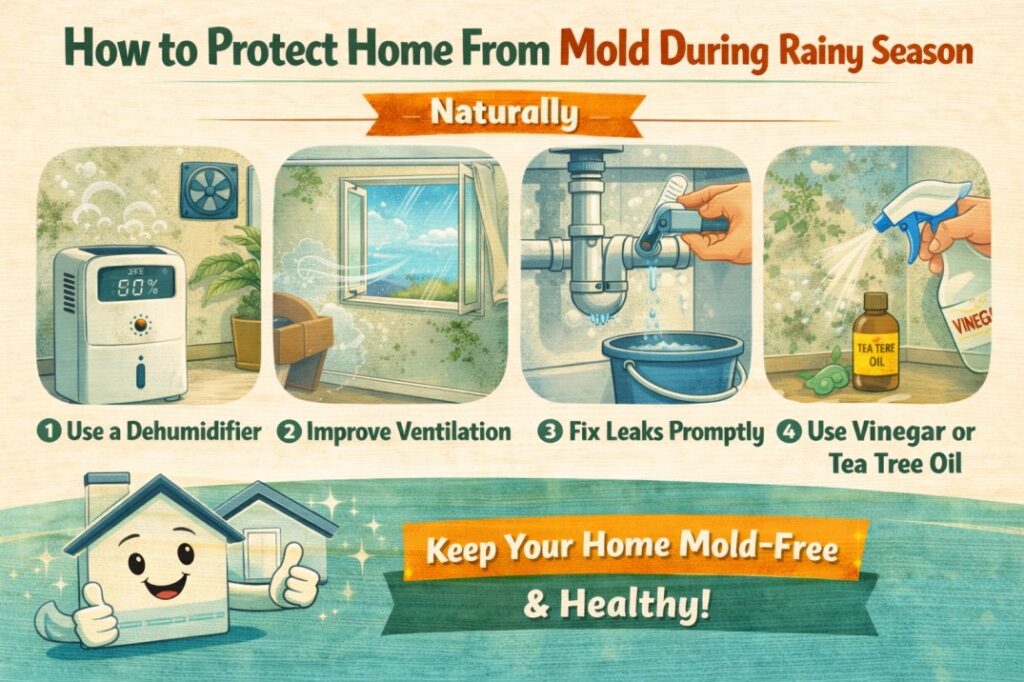
How to Protect Home From Mold During Rainy Season
1. Control Indoor Moisture Daily
Moisture control is the most important step in mold prevention.
- Wipe wet floors and surfaces regularly
- Do not leave water standing overnight
- Dry bathrooms after use
Controlling dampness early aligns with broader
monsoon home care tips to prevent dampness naturally
2. Improve Ventilation Whenever Possible
Even short periods of ventilation help reduce humidity.
- Open windows when rain pauses
- Use exhaust fans in kitchens and bathrooms
- Allow cross-ventilation whenever possible
Airflow prevents moisture from settling on surfaces.
3. Keep Furniture Away From Damp Walls
Furniture placed tightly against walls blocks airflow and traps moisture.
- Maintain a small gap between furniture and walls
- Check behind wardrobes and beds weekly
This practice also helps protect wooden surfaces, as explained in
wooden furniture care tips to prevent damage and extend lifespan
4. Use Natural Moisture Absorbers
Simple household items can absorb excess moisture:
- Rock salt in bowls for cupboards
- Baking soda for closed shelves
- Activated charcoal behind furniture
Replace these every 10–15 days during heavy rain.
5. Manage Laundry and Appliances Carefully
Wet clothes and appliances add to indoor humidity.
- Avoid drying clothes indoors for long periods
- Leave washing machine doors open after use
Regular appliance maintenance reduces moisture buildup, as shown in
how to clean washing machine drum at home naturally
6. Clean Early Signs of Mold Naturally
If you notice small mold spots:
- Wipe with vinegar or baking soda solution
- Dry the area thoroughly afterward
- Improve airflow in that area
Early cleaning prevents spread.
Real-Life Home Stories: Preventing Mold During Rainy Season
Story 1: Alok Mishra – Gomti Nagar, Lucknow, Uttar Pradesh
Alok Mishra noticed black mold patches forming behind his sofa every monsoon. The wall remained damp due to continuous rain and poor airflow. Instead of repainting, he moved the furniture away from the wall, cleaned the area with a mild vinegar solution, and placed bowls of rock salt nearby. He also opened windows whenever rainfall paused. Within weeks, the mold stopped spreading, and no new patches appeared the following season.
Story 2: Sneha Kulkarni – Karve Nagar, Pune, Maharashtra
Sneha Kulkarni experienced mold growth inside her kitchen cabinets during the rainy season. Moisture from cooking and closed windows worsened the problem. She started wiping cabinets dry daily, using baking soda in small containers inside cupboards, and running the exhaust fan longer after cooking. Over time, the musty smell disappeared, and mold did not return. Her experience showed that small daily habits make a big difference.
Story 3: Joseph Mathew – Kottayam, Kerala
Living in a high-rainfall area, Joseph Mathew dealt with mold on bedroom walls every year. He focused on moisture control instead of chemicals. He ensured cross-ventilation, dried walls with fans after heavy rain, and avoided pushing furniture against walls. These steps reduced mold significantly, and wall repainting was no longer needed annually.
Common Mistakes That Encourage Mold
- Keeping windows closed all day
- Ignoring small damp patches
- Drying clothes indoors without ventilation
- Relying only on chemical sprays
Do vs Avoid: Mold Prevention Habits
| Do | Avoid |
|---|---|
| Ventilate rooms daily | Sealing rooms completely |
| Dry surfaces regularly | Leaving damp areas |
| Use natural absorbers | Ignoring humidity |
| Act early on mold spots | Waiting for spread |
Mold Prevention and Overall Home Hygiene
Mold growth is often linked to overall home maintenance. Grease, moisture, and poor airflow in kitchens and bathrooms contribute to fungal growth. Maintaining clean appliances like chimneys helps reduce indoor humidity and airborne particles, as explained in
how to clean chimney filter at home without chemicals step by step
FAQs
1. Is mold dangerous for health?
Long-term exposure may cause allergies or respiratory discomfort.
2. Can mold grow even if walls look dry?
Yes, hidden moisture inside walls can still support mold growth.
3. How often should I check for mold during monsoon?
Weekly inspection is ideal, especially in corners and behind furniture.
4. Do air fresheners stop mold smell?
They mask odor but do not remove mold or moisture.
5. Can mold come back after cleaning?
Yes, if moisture is not controlled, mold can return.
Simple Summary
Mold during the rainy season is a common but preventable problem. By controlling moisture, improving ventilation, adjusting furniture placement, and acting early, you can protect your home naturally. Real-life home experiences show that consistency matters more than chemicals.
With simple habits and timely care, you can keep your home healthier, cleaner, and mold-free throughout the rainy season.
Safety note: If you’re unsure or uncomfortable performing any home maintenance task mentioned in this article, it’s safer to consult a qualified professional.