

Learn practical wooden furniture care tips to prevent damage from moisture, heat, scratches, and pests. Simple, natural methods for long-lasting furniture protection.
Introduction
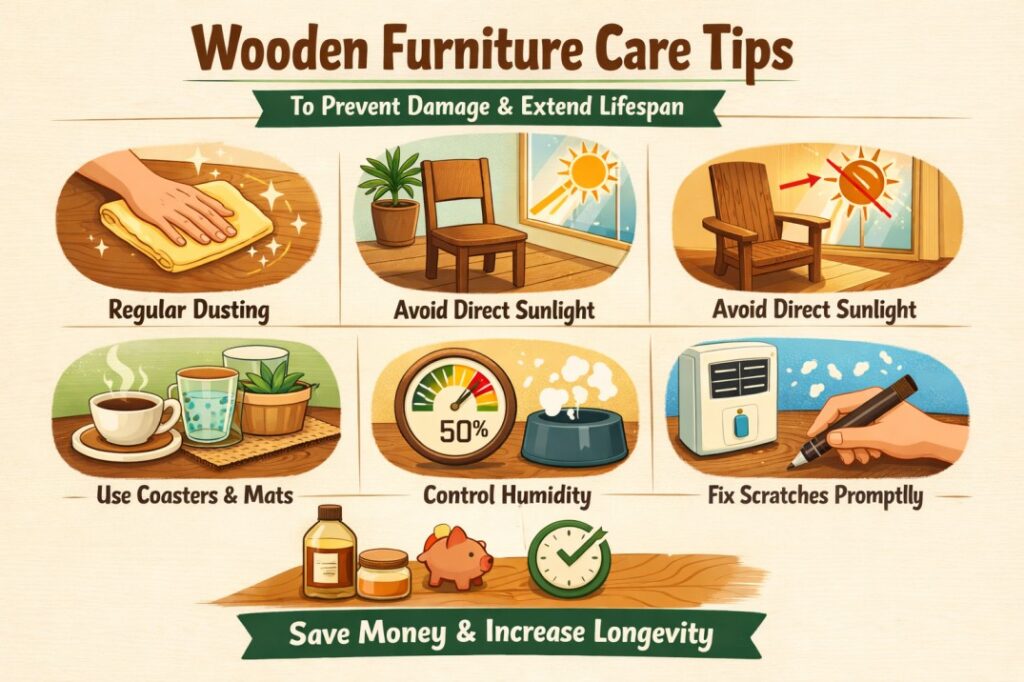
Wooden furniture adds warmth, durability, and timeless appeal to a home. From beds and dining tables to wardrobes and cabinets, wood is often one of the most valuable household investments. Yet, despite its strength, wood is highly sensitive to environmental changes, daily use, and improper maintenance.
Many homeowners notice issues like fading polish, surface cracks, termite damage, or warping only after the damage becomes visible. By then, repairs can be costly and sometimes irreversible. The truth is that most wooden furniture damage happens gradually due to moisture, heat, dust, and neglect rather than sudden accidents.
The good news is that with simple habits and regular care, you can significantly reduce wear and tear. These wooden furniture care tips to prevent damage focus on everyday actions, natural maintenance methods, and seasonal precautions suitable for real homes—not showrooms.
This guide explains why wooden furniture gets damaged, what to watch out for, and how to protect it effectively without complicated treatments or harsh chemicals.
Why Wooden Furniture Gets Damaged Over Time
Wood is a natural material that reacts to its surroundings. Common causes of damage include:
- Moisture and humidity, leading to swelling or mold
- Excessive dryness, causing cracks and shrinkage
- Direct sunlight, which fades color and weakens polish
- Heat exposure, resulting in surface damage
- Dust and grime, creating micro-scratches
- Pests like termites, especially in humid climates
Understanding these factors helps you prevent damage instead of fixing it later.
Daily Wooden Furniture Care Habits
Dust Regularly but Gently
Dust may seem harmless, but it contains tiny particles that scratch wooden surfaces over time. Use a soft, dry microfiber cloth to dust furniture at least twice a week.
Avoid:
- Rough cloths
- Dry wiping when dust buildup is heavy
For stubborn dust, lightly dampen the cloth and wipe dry immediately.
Clean Spills Immediately
Liquids can seep into wood quickly, leaving stains or causing swelling. Whether it’s water, tea, or oil, wipe spills as soon as they occur.
Never allow wet items like glasses or flower vases to sit directly on wooden surfaces without coasters.
Weekly and Monthly Care Practices
Use Natural Wood-Friendly Cleaners
Instead of chemical sprays, use simple natural solutions:
- Mild soap mixed with water (used sparingly)
- A damp cloth followed by thorough drying
Avoid over-wetting surfaces. Excess moisture is one of the biggest threats to wooden furniture.
Polish Occasionally, Not Frequently
Over-polishing can attract dust and dull the finish. Polishing once every 2–3 months is usually sufficient.
Choose products suitable for your furniture’s finish and avoid silicone-heavy polishes.
Seasonal Wooden Furniture Care Tips
Monsoon Care: Prevent Moisture Damage
High humidity can cause wood to swell, smell musty, or develop fungus.
Tips:
- Keep furniture slightly away from walls
- Use natural moisture absorbers like silica gel or charcoal nearby
- Ensure good ventilation
Managing dampness during rainy seasons protects not only furniture but also indoor hygiene. These precautions align well with general monsoon home care tips to prevent dampness, where controlling moisture plays a key role.
Summer Care: Protect from Heat and Sunlight
Prolonged exposure to heat and sunlight fades polish and dries out wood.
- Use curtains or blinds to block direct sunlight
- Avoid placing furniture near windows or heat sources
- Rotate furniture placement occasionally
Winter Care: Prevent Cracks
Dry air in winter can cause wood to lose moisture.
- Maintain moderate indoor humidity
- Avoid placing furniture near heaters
Furniture Placement Matters
Maintain Proper Spacing
Wooden furniture should not be pushed tightly against walls, especially external ones. This allows air circulation and prevents moisture trapping.
This principle also applies to appliances and storage units. For example, keeping space around appliances helps reduce moisture buildup, as explained in
how to clean washing machine drum at home naturally
Use Protective Accessories
- Coasters under cups and bottles
- Table mats under hot dishes
- Felt pads under furniture legs
These small additions prevent scratches, heat marks, and surface wear.
Pest Prevention for Wooden Furniture
Watch for Early Signs
Termite damage often starts internally and becomes visible later.
Warning signs include:
- Powdery residue near furniture
- Hollow sounds when tapped
- Small holes on wooden surfaces
Keep furniture dry and clean, as moisture attracts pests.
Regular Inspection
Inspect furniture legs, undersides, and hidden corners every few months. Early detection makes treatment easier and less damaging.
Real-Life Home Stories: Wooden Furniture Care
Story 1: Rajesh Mehta – Borivali West, Mumbai, Maharashtra
Rajesh Mehta owns a teakwood dining table that began developing a musty smell during monsoon. Although the surface looked fine, moisture from the wall behind it caused hidden dampness. He moved the table slightly away from the wall and started using natural moisture absorbers nearby. He also wiped the table weekly with a dry cloth instead of wet cleaning. Within a month, the smell disappeared, and the wood retained its finish. This experience showed that placement and moisture control matter more than frequent polishing.
Story 2: Kavya Nair – Kakkanad, Kochi, Kerala
Living in a humid coastal climate, Kavya noticed fungal spots forming on her wooden wardrobe. Instead of using chemical sprays, she focused on ventilation by opening wardrobe doors weekly and keeping the room airy. She also reduced dampness in the room using simple methods similar to those shared in
how to clean washing machine drum at home naturally
After consistent care, the fungus stopped spreading, and no further damage occurred.
Story 3: Anil Saxena – Indirapuram, Ghaziabad, Uttar Pradesh
Anil Saxena observed fading polish and surface cracks on his sofa set placed near a large window. Direct sunlight throughout the afternoon was the main cause. He rearranged the furniture, added light curtains, and reduced polishing frequency. Over time, further fading stopped. His experience highlighted how sunlight exposure can shorten furniture lifespan if not managed properly.
Do vs Avoid: Wooden Furniture Care
| Do | Avoid |
|---|---|
| Dust with soft cloth | Using abrasive cleaners |
| Keep furniture dry | Allowing moisture buildup |
| Use mats and coasters | Placing hot items directly |
| Ensure ventilation | Blocking airflow completely |
Myths vs Reality
Myth: Wooden furniture is low maintenance
Reality: Regular care is essential for longevity
Myth: More polish means better protection
Reality: Over-polishing attracts dust
Myth: Damage is unavoidable with age
Reality: Proper care slows aging significantly
Kitchen and Living Area Furniture Care
Furniture in kitchens and living rooms faces higher exposure to heat, grease, and spills.
- Wipe kitchen cabinets regularly
- Avoid grease buildup near wooden surfaces
Grease from cooking can spread beyond appliances. Maintaining kitchen cleanliness—such as regularly cleaning gas stoves and chimneys—helps protect nearby furniture. You may find this guide useful:
how to clean chimney filter at home without chemicals step by step
FAQs
1. How often should wooden furniture be cleaned?
Light dusting twice a week and deeper cleaning once a month is ideal.
2. Is water bad for wooden furniture?
Excess water can damage wood, but a lightly damp cloth used carefully is safe.
3. Can sunlight permanently damage wooden furniture?
Yes, prolonged direct sunlight can fade polish and weaken wood fibers.
4. How can I protect furniture during monsoon?
Ensure ventilation, control indoor humidity, and keep furniture away from damp walls.
5. Do natural oils help in furniture care?
Occasional use of suitable wood oils can help, but excessive application should be avoided.
Related Natural Home Care Guides
If you prefer simple and chemical-free home maintenance, these guides may also help:
- Bathroom surface maintenance in
how to remove hard water stains from bathroom tiles naturally - Upholstery care explained in
how to clean fabric sofa at home without vacuum cleaner
Simple Summary
Wooden furniture lasts for years when cared for properly. By controlling moisture, avoiding heat exposure, cleaning gently, and inspecting regularly, you can prevent most common types of damage. These wooden furniture care tips focus on consistency rather than effort.
With mindful daily habits and seasonal precautions, your furniture can retain its strength, appearance, and comfort for a long time, making it a reliable part of your home rather than a recurring repair concern.
“From what I’ve observed in many households, including my relatives’ homes, small cleaning habits are often overlooked until the problem becomes noticeable. For example, areas like kitchen corners, drains, or storage spaces are usually ignored during regular cleaning routines.”
“However, I’ve seen that simple and consistent cleaning practices—using basic home methods—can prevent buildup, reduce damage, and keep the space well-maintained. In the long run, these small efforts help avoid bigger issues and unnecessary repair costs.”
Research Sources
World Health Organization (WHO)https://www.who.int/publications/i/item/9789289041683
Centers for Disease Control and Prevention (CDC)
https://www.cdc.gov/healthyhomes
United States Environmental Protection Agency (EPA)
https://www.epa.gov/indoor-air-quality-iaq
