
Persistent toilet bad smell can be fixed naturally. Learn proven home remedies, real household experiences, and prevention tips to remove toilet odor safely and effectively.
Introduction
A bad smell coming from the toilet is one of the most common yet uncomfortable household problems. What makes it frustrating is that the bathroom may appear clean, freshly scrubbed, and even sprayed with air freshener—yet the odor keeps returning. This often leaves homeowners confused and embarrassed, especially when guests are around.
In most cases, toilet odor is not caused by dirt alone. Hidden moisture, bacterial buildup under the rim, dry floor traps, or poor ventilation are usually responsible. Many people try strong chemical cleaners to fix the issue, but these often provide only temporary relief while introducing harsh fumes into the home.
The better solution is to understand the cause and address it naturally. These toilet bad smell home remedies focus on eliminating odor at its source using simple household ingredients and practical habits. They are safe, affordable, and suitable for long-term use, making them ideal for everyday homes.
Why Toilet Bad Smell Happens
Toilet odor can come from several hidden areas, not just the bowl itself.
- Bacteria buildup under the toilet rim
- Dry or clogged floor drains releasing sewer gases
- Moisture and dampness encouraging mold growth
- Slow drainage or residue in pipes
- Poor airflow and ventilation
Unless these root causes are treated, the smell is likely to return.
Simple Home Remedies for Toilet Bad Smell
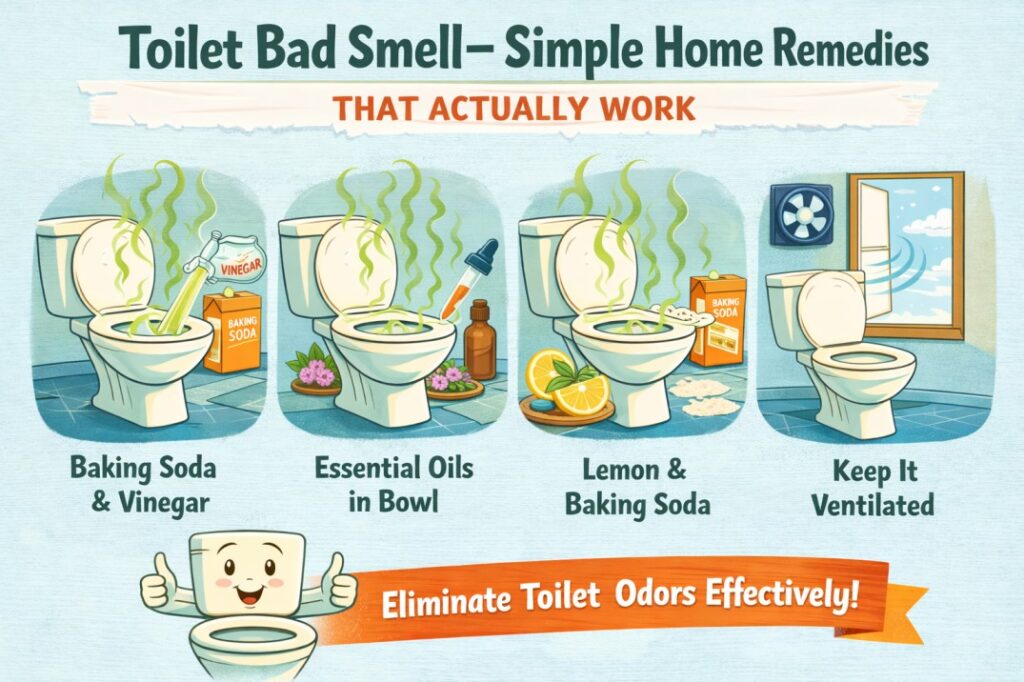
1. Baking Soda and Vinegar for Toilet Bowl Odor
This method helps neutralize odor-causing bacteria.
How to use:
- Sprinkle 1 cup of baking soda into the toilet bowl
- Add 1–2 cups of white vinegar
- Let it sit for 20–30 minutes
- Scrub gently and flush
Use this once a week for regular odor control.
2. Clean Under the Toilet Rim Thoroughly
The underside of the rim is a common hiding spot for bacteria.
- Use a toothbrush or small scrub brush
- Apply baking soda paste or diluted vinegar
- Scrub under the rim carefully
This simple step is often overlooked but highly effective.
3. Treat Floor Drain Smell Naturally
If the smell persists after cleaning the bowl, the floor trap may be dry.
Steps:
- Pour warm (not boiling) water into the drain
- Add ½ cup baking soda
- Follow with 1 cup vinegar
- Rinse after 15 minutes
This restores the water seal and blocks sewer gases.
4. Control Moisture and Dampness
Damp bathrooms trap odors and promote bacterial growth.
- Wipe floors after use
- Keep windows or exhaust fans on
- Avoid leaving stagnant water overnight
Moisture control is especially important during rainy seasons. These habits align with broader
monsoon home care tips to prevent dampness
5. Lemon and Salt for Mild Odor Issues
For routine freshness:
- Sprinkle salt in the bowl
- Scrub with half a lemon
- Rinse after 10 minutes
This works well for light odor maintenance.
Real Home Stories: What Actually Worked
Story 1: Rakesh Sharma – Andheri East, Mumbai, Maharashtra
Rakesh Sharma, a marketing professional living in a 2BHK apartment in Andheri East, noticed a strong toilet smell in his guest bathroom that worsened in the evenings. Despite regular cleaning, the odor persisted. After some inspection, he realized the guest toilet was rarely used, causing the floor trap to dry out.
He began pouring warm water followed by baking soda into the drain once a week and flushed the toilet daily. Within a few days, the smell stopped returning. Improving ventilation by opening the window during dry hours helped maintain freshness long-term. The issue was not poor hygiene but trapped sewer gas.
Story 2: Ananya Rao – Indiranagar, Bengaluru, Karnataka
Ananya Rao lives with her family in a rented apartment in Indiranagar. During monsoon, her bathroom developed a musty toilet smell every morning. The toilet was clean, but damp floors and closed windows were common due to frequent rain.
She started wiping the bathroom dry after every use and kept the exhaust fan running for 15 minutes post-shower. She also cleaned mineral deposits from tiles using natural methods similar to
how to remove hard water stains from bathroom tiles naturally
Within two weeks, the odor reduced significantly and did not return.
Story 3: Suman Chatterjee – Salt Lake, Kolkata, West Bengal
Suman Chatterjee, a retired school teacher in Salt Lake, faced recurring toilet odor every few weeks. Deep cleaning helped temporarily, but the smell kept coming back. On closer inspection, he found residue buildup under the toilet rim and behind the toilet base—areas usually skipped during routine cleaning.
By scrubbing these hidden spots weekly with baking soda paste and improving airflow by keeping the bathroom door open during the day, the issue was resolved permanently. Consistency proved more effective than strong cleaning products.
Common Mistakes to Avoid
- Using air fresheners instead of cleaning the source
- Ignoring floor drains and hidden corners
- Mixing chemical cleaners with natural remedies
- Allowing moisture to remain overnight
Do vs Avoid: Toilet Odor Control
| Do | Avoid |
|---|---|
| Clean bowl and rim weekly | Masking smell with sprays |
| Keep drains clean and wet | Ignoring floor traps |
| Ventilate daily | Keeping bathrooms closed |
| Use natural cleaners | Mixing harsh chemicals |
Toilet Odor and Overall Home Hygiene
Bathroom odor is often linked to overall home maintenance. Moisture buildup in appliances and nearby areas can also contribute to lingering smells. Regular upkeep such as
how to clean washing machine drum at home naturally
helps control moisture and odor spread.
Kitchen hygiene also matters, as grease and fumes travel indoors. Maintaining appliances like chimneys, explained in
how to clean chimney filter at home without chemicals step by step
supports overall freshness in the home.
FAQs
1. Why does my toilet smell even after cleaning?
The odor usually comes from drains, moisture, or bacteria under the rim rather than visible dirt.
2. How often should I clean my toilet to prevent bad smell?
Weekly cleaning with monthly deep cleaning works well for most homes.
3. Is baking soda safe for toilets?
Yes, it is non-abrasive and safe for ceramic surfaces.
4. Can ventilation really reduce toilet odor?
Yes, proper airflow prevents odor buildup and bacterial growth.
5. Does dampness increase toilet smell?
Yes, moisture encourages bacteria and mold that cause odor.
Simple Summary
Toilet bad smell is a common household issue, but it doesn’t require harsh chemicals to fix. By identifying hidden causes like dry drains, moisture, and bacterial buildup, you can eliminate odors naturally and prevent them from returning. Baking soda, vinegar, proper ventilation, and consistent habits make a lasting difference.
With these simple home remedies and real-world practices, your bathroom can stay fresh, hygienic, and comfortable—naturally and safely.
From what I have observed in many homes, including relatives’ houses, small cleaning habits are often ignored until problems become noticeable. Regular maintenance using simple home methods makes a big difference in keeping things clean, preventing damage, and avoiding costly repairs later.
References
World Health Organization (WHO)https://www.who.int/publications/i/item/9789289041683
Centers for Disease Control and Prevention (CDC)
https://www.cdc.gov/healthyhomes
United States Environmental Protection Agency (EPA)
https://www.epa.gov/indoor-air-quality-iaq