

Learn practical summer kitchen care tips to avoid food spoilage. Simple storage, cleaning, and hygiene methods to keep food fresh during hot Indian summers.
Introduction
Summer in India brings high temperatures, humidity, and longer daylight hours. While the season is perfect for enjoying fresh fruits like mangoes and watermelons, it also increases the chances of food spoilage in the kitchen. Heat and moisture create ideal conditions for bacteria to grow quickly, causing food to spoil faster than usual.
Many households notice that cooked food turns sour quickly, vegetables wilt faster, and stored grains sometimes attract insects during summer. Without proper kitchen care and storage habits, food waste can increase significantly.
Fortunately, a few simple habits can help prevent this problem. By maintaining proper hygiene, storing food correctly, and keeping kitchen appliances clean, you can extend the freshness of ingredients and reduce food waste.
In this guide, we will explore summer kitchen care tips to avoid food spoilage, with practical advice suitable for Indian homes. These tips will help you maintain a hygienic kitchen and keep your food fresh even during the hottest months.
Understanding Why Food Spoils Faster in Summer
Food spoilage happens when bacteria, yeast, or mould grow on food items. Warm temperatures accelerate this process because microorganisms multiply faster in heat.
Common reasons for food spoilage during summer include:
- High kitchen temperature
- Improper food storage
- Moisture buildup in containers
- Poor refrigerator hygiene
- Leaving cooked food outside for too long
Certain foods such as milk, cooked rice, curry, and cut fruits spoil especially fast during summer.
Maintaining a clean refrigerator also plays an important role in preserving food freshness. You can read our guide on
Simple Refrigerator Cleaning Schedule for Busy Homes
https://caringforyourhome.com/simple-refrigerator-cleaning-schedule-for-busy-homes/
Key Benefits of Proper Summer Kitchen Care
Following good kitchen maintenance habits during summer provides several benefits.
- Reduces food waste
- Keeps food safe for consumption
- Prevents bad smells in the kitchen
- Avoids insect infestation
- Improves overall kitchen hygiene
- Helps save money by reducing spoiled groceries
A well-maintained kitchen also makes cooking more pleasant during hot weather.
Featured Snippet: Quick Tips to Prevent Food Spoilage in Summer
- Store cooked food in the refrigerator within two hours.
- Keep kitchen surfaces clean and dry.
- Use airtight containers for storing grains and spices.
- Avoid leaving cut fruits outside for long periods.
- Maintain proper refrigerator temperature.
- Wash vegetables and dry them before storing.
These simple habits can significantly reduce food spoilage during summer.
Practical Summer Kitchen Care Tips
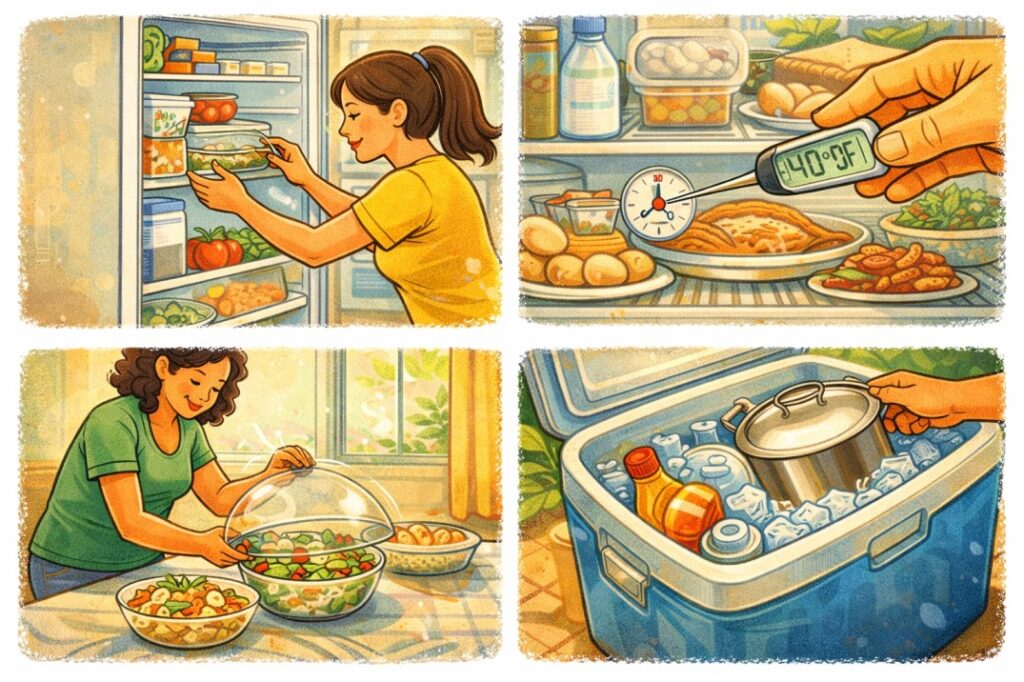
1. Store Cooked Food Quickly
Cooked food should never remain at room temperature for long periods during summer.
After cooking:
- Allow the food to cool slightly
- Store it in clean airtight containers
- Place it in the refrigerator within two hours
This prevents bacteria from multiplying rapidly.
Proper refrigerator maintenance also helps preserve food freshness. You may find this guide helpful:
Refrigerator Maintenance Tips to Increase Life and Improve Performance
https://caringforyourhome.com/refrigerator-maintenance-tips-to-increase-life-and-improve-performance/
2. Maintain Refrigerator Temperature
The refrigerator should ideally be set between 1°C and 4°C to prevent bacterial growth.
Avoid overloading the fridge because it restricts air circulation.
Regular cleaning helps remove spills and bacteria that can contaminate food.
If your refrigerator develops unpleasant smells, you can read:
How to Remove Bad Smell From Refrigerator Permanently at Home
https://caringforyourhome.com/how-to-remove-bad-smell-from-refrigerator-permanently-at-home/
3. Store Grains and Pulses Properly
Grains and pulses can attract insects during hot weather.
To protect them:
- Store them in airtight containers
- Keep containers in a cool and dry place
- Add a few dried neem leaves or bay leaves to prevent insects
These natural methods help protect stored food.
4. Wash and Dry Vegetables Before Storing
Many people store vegetables directly after buying them. However, excess moisture can cause vegetables to rot faster.
Best practice:
- Wash vegetables thoroughly
- Dry them completely with a cloth
- Store them in refrigerator vegetable trays
Proper storage helps extend freshness.
5. Keep Kitchen Surfaces Clean
Food particles left on kitchen counters can attract insects and bacteria.
Clean kitchen surfaces daily using mild cleaning solutions.
Oil stains and grease also attract dirt. If needed, you can learn effective cleaning methods here:
How to Remove Oil Stains From Kitchen Slab Easily
https://caringforyourhome.com/how-to-remove-oil-stains-from-kitchen-slab-easily/
6. Avoid Leaving Cut Fruits Outside
Cut fruits spoil very quickly in summer.
After cutting fruits:
- Store them in sealed containers
- Refrigerate immediately
- Consume within a few hours
This prevents bacterial contamination.
7. Maintain Good Kitchen Ventilation
A hot and humid kitchen encourages bacterial growth.
Improve ventilation by:
- Using exhaust fans
- Opening kitchen windows
- Running the chimney while cooking
If your exhaust system becomes greasy, airflow may reduce. Learn how to clean it here:
How to Remove Grease From Kitchen Exhaust Fan
https://caringforyourhome.com/how-to-remove-grease-from-kitchen-exhaust-fan/
Comparison Table: Common Food Storage Methods
| Storage Method | Effectiveness | Best For | Cost |
|---|---|---|---|
| Airtight containers | High | Grains and pulses | Low |
| Refrigeration | Very high | Cooked food | Medium |
| Natural insect repellents | Medium | Dry food storage | Very low |
| Proper ventilation | Medium | Kitchen hygiene | Low |
Combining these methods gives the best results.
Real-Life Example from an Indian Home
Suman from Delhi noticed that cooked dal and vegetables started spoiling quickly during summer afternoons. Sometimes the food developed a sour smell within a few hours.
She started refrigerating cooked food immediately after cooling and cleaned her refrigerator shelves regularly.
Within a few weeks, she noticed that food remained fresh much longer and kitchen odours reduced significantly.
Personal Experience:
During peak summer in my home, I once noticed that leftover rice started spoiling within a few hours when left on the kitchen counter. After making it a habit to store cooked food in airtight containers and refrigerate it quickly, the problem almost disappeared and food stayed fresh much longer.
Common Mistakes to Avoid
Leaving Cooked Food Outside
Cooked food left at room temperature can spoil quickly in summer.
Overloading the Refrigerator
Overcrowding blocks airflow and reduces cooling efficiency.
Storing Wet Vegetables
Moisture causes vegetables to rot faster.
Ignoring Refrigerator Cleaning
Spilled food and bacteria can contaminate stored items.
Expert Tips for Preventing Food Spoilage
Experts recommend a few simple practices.
Use smaller containers
Divide large portions of food into smaller containers for quicker cooling.
Label stored food
Write the storage date to track freshness.
Use fresh ingredients
Avoid storing vegetables or fruits that are already slightly spoiled.
Check refrigerator seals
Loose door seals reduce cooling efficiency.
Pros and Cons of Common Summer Food Storage Practices
| Pros | Cons |
|---|---|
| Reduces food waste | Requires regular maintenance |
| Keeps food safe | Needs proper refrigerator space |
| Improves kitchen hygiene | Some foods must be consumed quickly |
| Saves money | Requires daily attention |
Frequently Asked Questions
1. Why does food spoil faster in summer?
High temperatures encourage bacteria and microorganisms to multiply rapidly.
2. How long can cooked food stay outside in summer?
Cooked food should not stay at room temperature for more than two hours.
3. What temperature should a refrigerator maintain?
The ideal temperature range is 1°C to 4°C.
4. How can I prevent insects in stored grains?
Use airtight containers and add natural repellents like bay leaves or neem leaves.
5. Should fruits be stored in the refrigerator during summer?
Most cut fruits should be refrigerated to prevent spoilage.
6. How often should refrigerators be cleaned?
It is recommended to clean the refrigerator once every two weeks.
Conclusion
Summer temperatures can create ideal conditions for food spoilage, especially in kitchens where cooking happens frequently. Heat, humidity, and improper storage habits can cause food to spoil quickly, leading to waste and hygiene concerns.
Fortunately, a few simple kitchen care practices can make a big difference. Storing cooked food promptly, maintaining proper refrigerator temperature, keeping surfaces clean, and ensuring good ventilation all help preserve food freshness.
By following these practical tips, you can keep your kitchen hygienic and ensure that food remains safe and fresh even during the hottest months of the year.
References
Food Safety and Inspection Service (USDA)
https://www.fsis.usda.gov/food-safety
World Health Organization – Food Safety Guidelines
https://www.who.int/news-room/fact-sheets/detail/food-safety
The Spruce – Food Storage Tips
https://www.thespruce.com/food-storage-guidelines-1907774
Good Housekeeping – Kitchen Food Safety Tips
https://www.goodhousekeeping.com/food-recipes/cooking/a32024644/food-safety-tips/
From what I have observed in many homes, including relatives’ houses, small cleaning habits are often ignored until problems become noticeable. Regular maintenance using simple home methods makes a big difference in keeping things clean, preventing damage, and avoiding costly repairs later.
References
World Health Organization (WHO)https://www.who.int/publications/i/item/9789289041683
Centers for Disease Control and Prevention (CDC)
https://www.cdc.gov/healthyhomes
United States Environmental Protection Agency (EPA)
https://www.epa.gov/indoor-air-quality-iaq