
Introduction
Ants are one of the most common pests found in kitchens. In many Indian homes, they appear suddenly on kitchen counters, inside cupboards, or near food storage areas. Even small food crumbs or sweet spills can attract ants quickly.
The problem becomes more noticeable during warm and humid seasons, when ants actively search for food and water. Once they find a food source, they leave scent trails that guide other ants to the same location. As a result, a small ant problem can quickly become a larger infestation.
Using chemical pesticides inside the kitchen is not always safe, especially around food preparation areas. Fortunately, there are several natural and safe ways to keep ants away without using harsh chemicals.
In this guide, you will learn simple tricks to keep ants away from the kitchen naturally, along with practical cleaning habits, easy home remedies, and preventive measures suitable for Indian households.
Understanding Why Ants Enter the Kitchen
Ants usually enter kitchens in search of food, water, and shelter. Even tiny food particles can attract them.
Some common reasons ants appear in kitchens include:
- Food crumbs left on kitchen counters
- Open containers of sugar or sweets
- Water spills near sinks
- Dirty dishes left overnight
- Cracks or gaps in walls and floors
Once ants discover food, they create a trail using pheromones so that other ants can follow the same path.
Maintaining a clean kitchen is one of the most effective ways to prevent ants. You may find this guide helpful:
How to Remove Oil Stains From Kitchen Slab Easily
https://caringforyourhome.com/how-to-remove-oil-stains-from-kitchen-slab-easily/
Key Benefits of Using Natural Ant Control Methods
Natural remedies offer several advantages for kitchen pest control.
- Safe for food preparation areas
- No harmful chemical residue
- Affordable and easy to use
- Environment friendly
- Suitable for homes with children or pets
These methods also help maintain better kitchen hygiene.
Featured Snippet: Quick Natural Ways to Keep Ants Away
- Clean food spills immediately.
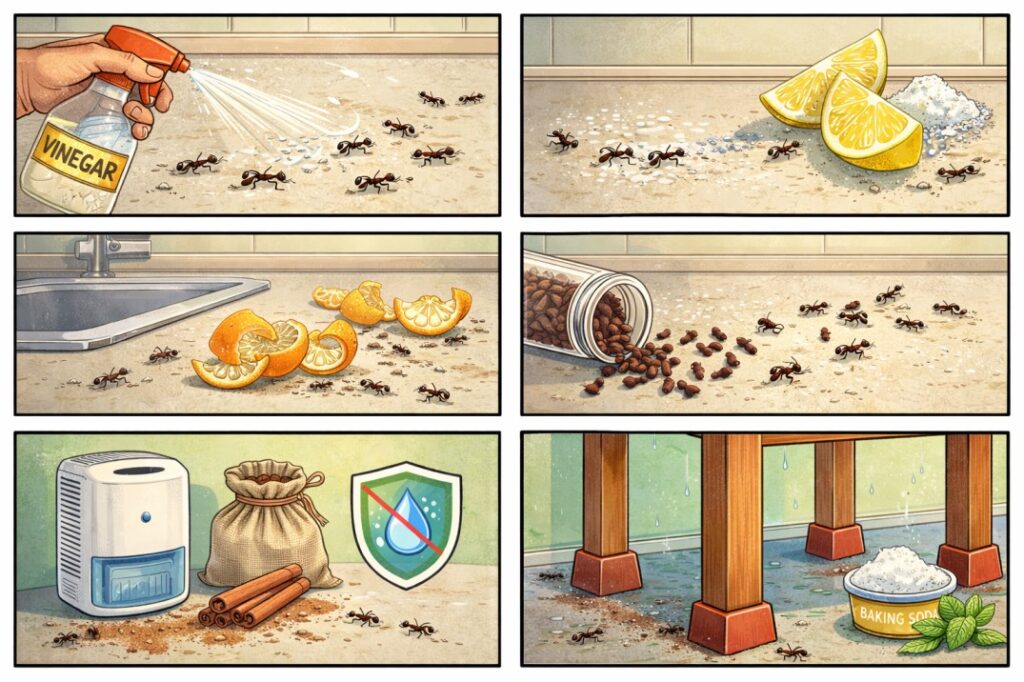
- Use lemon or vinegar spray near ant trails.
- Store sugar and sweets in airtight containers.
- Seal cracks in walls or cupboards.
- Sprinkle spices like turmeric or cinnamon near entry points.
- Keep kitchen surfaces dry and clean.
These simple habits help prevent ants from entering the kitchen.
Effective Natural Tricks to Keep Ants Away
1. Use Lemon Juice Near Ant Entry Points
Lemon juice is a natural ant repellent because its strong smell disrupts ant scent trails.
How to use
- Squeeze fresh lemon juice into a small bowl.
- Dip a cloth in the juice.
- Wipe kitchen counters, shelves, and areas where ants appear.
The acidic smell helps prevent ants from returning.
2. Spray Vinegar Solution
Vinegar is another effective natural ant deterrent.
Steps
- Mix equal parts white vinegar and water.
- Pour the mixture into a spray bottle.
- Spray the solution along ant trails, windows, and kitchen corners.
Vinegar removes scent trails that ants use for navigation.
3. Use Turmeric Powder
Turmeric is widely used in Indian kitchens and can also help repel ants.
How to use
- Sprinkle turmeric powder near entry points such as door gaps or cracks.
- Ants avoid crossing areas with strong spices.
4. Cinnamon Powder Barrier
Cinnamon has a strong smell that ants dislike.
Sprinkle cinnamon powder along:
- Kitchen window edges
- Door corners
- Under sinks
This creates a natural barrier that discourages ants.
5. Keep Food Stored in Airtight Containers
Open food containers attract ants quickly.
Store items like:
- Sugar
- Jaggery
- Biscuits
- Sweets
- Dry fruits
in airtight containers to prevent ants from reaching them.
You may also find these tips helpful:
Kitchen Sink Blockage – Simple Home Fixes That Work Naturally
https://caringforyourhome.com/kitchen-sink-blockage-simple-home-fixes-that-work-naturally/
6. Clean Kitchen Surfaces Regularly
Food particles on counters or floors can attract ants.
Clean kitchen surfaces daily using mild cleaning solutions.
Grease and food spills can attract pests as well. You may read:
How to Remove Grease From Kitchen Cabinets Naturally at Home
https://caringforyourhome.com/how-to-remove-grease-from-kitchen-cabinets-naturally-at-home/
7. Keep the Kitchen Sink Dry
Ants also search for water sources.
Avoid leaving water spills near the sink or countertops.
Regular sink cleaning also helps maintain hygiene. You may find this guide useful:
Kitchen Sink Blockage – Simple Home Fixes That Work Naturally
https://caringforyourhome.com/kitchen-sink-blockage-simple-home-fixes-that-work-naturally/
8. Seal Cracks and Entry Points
Small gaps in walls, windows, or cupboards allow ants to enter easily.
Seal these openings using:
- Silicone sealant
- Wall filler
- Tape (temporary solution)
Blocking entry points helps prevent future infestations.
Comparison Table: Natural Ant Repellent Methods
| Method | Effectiveness | Cost | Best For |
|---|---|---|---|
| Lemon juice | Medium | Low | Removing ant trails |
| Vinegar spray | High | Low | Repelling ants |
| Turmeric powder | Medium | Very low | Entry points |
| Cinnamon powder | Medium | Low | Preventive barrier |
| Airtight containers | High | Medium | Food protection |
Combining these methods usually gives the best results.
Real-Life Example from an Indian Home
Ramesh from Hyderabad noticed ants frequently gathering around the kitchen counter where sugar was stored. Even after cleaning the area, ants kept returning.
He began storing sugar in airtight containers and sprayed vinegar solution along the kitchen corners.
Within a few days, the number of ants reduced significantly and the problem was mostly resolved.
Personal Experience:
In my own kitchen, ants once started appearing near the sugar container during summer. After wiping the counter with lemon juice and storing sugar in airtight jars, the ants gradually stopped coming back.
Common Mistakes to Avoid
Leaving Food Crumbs on Counters
Even small crumbs can attract ants quickly.
Keeping Food Containers Open
Open food containers make it easier for ants to access food.
Ignoring Small Ant Trails
Ant trails should be cleaned immediately to prevent larger infestations.
Leaving Dirty Dishes Overnight
Food residue on dishes can attract ants during the night.
Expert Tips for Long-Term Ant Prevention
Experts recommend a few simple habits.
Maintain daily kitchen cleaning
Regular cleaning prevents food buildup.
Keep dry foods sealed
Proper storage prevents pest attraction.
Improve kitchen hygiene
Clean counters, floors, and cupboards frequently.
Check kitchen corners
Inspect areas behind appliances where crumbs may accumulate.
You may also find these guides helpful:
How to Clean Greasy Kitchen Walls Without Paint Damage
https://caringforyourhome.com/how-to-clean-greasy-kitchen-walls-without-paint-damage/
Gas Stove Burner Cleaning at Home – Step-by-Step Natural Guide
https://caringforyourhome.com/gas-stove-burner-cleaning-at-home-step-by-step-natural-guide/
Pest Control Tips for Home Without Chemicals – Safe Natural Solutions
https://caringforyourhome.com/pest-control-tips-for-home-without-chemicals-safe-natural-solutions/
Simple Refrigerator Cleaning Schedule for Busy Homes
https://caringforyourhome.com/simple-refrigerator-cleaning-schedule-for-busy-homes/
How to Remove Bad Smell From Refrigerator Permanently at Home
https://caringforyourhome.com/how-to-remove-bad-smell-from-refrigerator-permanently-at-home/
Pros and Cons of Natural Ant Control Methods
| Pros | Cons |
|---|---|
| Safe for kitchens | May require repeated use |
| Low cost | Strong infestations may need stronger methods |
| Environment friendly | Natural smells may fade quickly |
| Easy DIY solutions | Needs regular cleaning |
Frequently Asked Questions
1. Why do ants come into the kitchen?
Ants usually enter kitchens searching for food, water, or sugar-based items.
2. Does vinegar repel ants?
Yes. Vinegar disrupts ant scent trails and helps repel them.
3. Is lemon effective against ants?
Yes. The acidic smell of lemon discourages ants from following trails.
4. Can turmeric keep ants away?
Turmeric acts as a natural repellent because ants dislike strong spices.
5. How can I prevent ants from returning?
Maintain kitchen cleanliness, store food in airtight containers, and seal entry points.
6. Are natural remedies safe for kitchens?
Yes. Natural remedies are generally safe and avoid harmful chemical residues.
Conclusion
Ants in the kitchen are a common household problem, but they can be managed effectively using simple natural solutions. Since ants are attracted to food crumbs, sugar, and moisture, maintaining a clean kitchen environment is the first step in preventing infestations.
Natural ingredients such as lemon, vinegar, turmeric, and cinnamon can help disrupt ant trails and discourage them from entering your kitchen. Combined with proper food storage and regular cleaning, these methods can significantly reduce the chances of ants returning.
By following these easy tricks and maintaining good kitchen hygiene, you can keep your kitchen clean, safe, and free from ants without relying on harsh chemical pesticides.
References
Food Safety and Standards Authority of India (FSSAI)
https://www.fssai.gov.in/
Centers for Disease Control and Prevention (CDC) – Pest Prevention Guidelines
https://www.cdc.gov/healthyhomes/pests/index.html
United States Environmental Protection Agency (EPA) – Pest Control and Prevention
https://www.epa.gov/safepestcontrol
“From what I’ve observed in many households, including my relatives’ homes, small cleaning habits are often overlooked until the problem becomes noticeable. For example, areas like kitchen corners, drains, or storage spaces are usually ignored during regular cleaning routines.”
“However, I’ve seen that simple and consistent cleaning practices—using basic home methods—can prevent buildup, reduce damage, and keep the space well-maintained. In the long run, these small efforts help avoid bigger issues and unnecessary repair costs.”
Research Sources
World Health Organization (WHO)https://www.who.int/publications/i/item/9789289041683
Centers for Disease Control and Prevention (CDC)
https://www.cdc.gov/healthyhomes
United States Environmental Protection Agency (EPA)
https://www.epa.gov/indoor-air-quality-iaq