
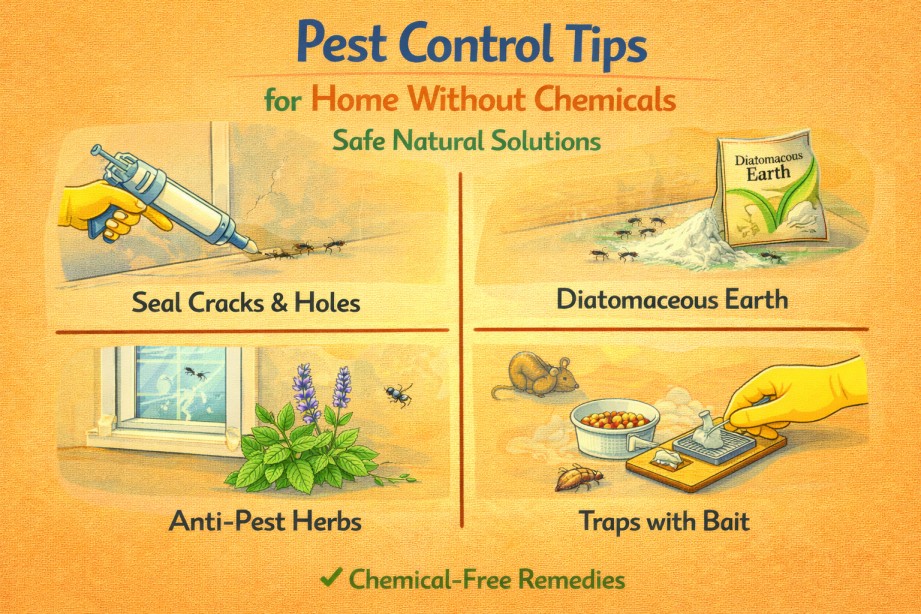
Discover effective pest control tips for home without chemicals. Learn natural methods, prevention habits, real-life home stories, and safe long-term solutions.
Introduction
Pests inside the home are not just an inconvenience—they affect hygiene, comfort, and peace of mind. Ants in the kitchen, cockroaches in cupboards, mosquitoes at night, or silverfish in damp corners are common problems across many households. While chemical sprays promise quick results, they often come with strong fumes, health concerns, and only short-term relief.
Many families avoid chemical pest control due to children, elderly members, pets, or respiratory sensitivities. Others notice that pests return after a few weeks, even after repeated chemical use. This happens because chemicals often kill visible pests but don’t address the conditions that attract them.
The good news is that pest control for home without chemicals is possible and effective. With natural repellents, cleanliness, moisture control, and simple preventive habits, you can reduce pests safely and sustainably. This guide explains why pests enter homes, how to control them naturally, and how real households solved pest issues without chemical sprays.
Why Pests Enter Homes
Pests are usually attracted by basic survival needs:
- Food crumbs and spills
- Moisture and damp areas
- Warm, dark hiding spots
- Open drains or cracks
- Poor ventilation
Unless these factors are addressed, pests are likely to return regardless of treatment.
Common Household Pests and Their Triggers
Ants
Attracted to sugar, food crumbs, and spills.
Cockroaches
Thrive in warm, moist areas like kitchens and bathrooms.
Mosquitoes
Breed in stagnant water and damp surroundings.
Silverfish
Prefer dark, humid places such as cupboards and bathrooms.
Flies
Drawn to uncovered food and garbage.
Understanding what attracts each pest helps in targeted control.
Pest Control Tips for Home Without Chemicals
1. Maintain Strict Cleanliness
Cleanliness is the foundation of natural pest control.
- Wipe kitchen counters daily
- Clean food spills immediately
- Wash dishes before bedtime
- Dispose of garbage daily
Kitchen hygiene also reduces grease buildup, which attracts pests, as discussed in
how to remove grease from kitchen cabinets naturally at home
2. Control Moisture and Dampness
Moisture attracts many pests.
- Fix leaking taps and pipes
- Dry bathroom floors after use
- Improve ventilation
Moisture control is especially important during rainy seasons, similar to practices shared in
how to protect home from mold during rainy season naturally
3. Use Natural Repellents
Some natural ingredients repel pests effectively.
- Ants: Vinegar-water spray on entry points
- Cockroaches: Bay leaves in cupboards
- Mosquitoes: Neem leaves or essential oil diffusers
- Flies: Lemon with cloves
These repel pests without killing beneficial insects.
4. Seal Entry Points
Pests often enter through tiny gaps.
- Seal cracks near doors and windows
- Fix loose tiles or wall gaps
- Use mesh on windows and drains
This prevents pests from entering in the first place.
5. Improve Airflow and Ventilation
Stagnant air and humidity create pest-friendly environments.
- Use exhaust fans in kitchens and bathrooms
- Open windows daily when possible
- Clean exhaust fans regularly
You may follow steps from
how to clean bathroom exhaust fan easily at home
to maintain proper airflow.
6. Store Food Properly
Improper storage invites pests.
- Use airtight containers
- Avoid leaving fruits uncovered
- Clean storage shelves monthly
This is especially important for preventing ants and cockroaches.
Natural Pest Control for Specific Areas
Kitchen
- Clean stove burners regularly to avoid food residue
- Keep sink drains clear
- Avoid overnight leftovers
Maintaining appliances like stoves helps reduce pest attraction, as explained in
gas stove burner cleaning at home – step-by-step natural guide
Bathroom
- Keep floors and walls dry
- Use exhaust fans after bathing
- Clean drains regularly
Bathrooms with moisture issues often attract pests and mold together.
Bedrooms and Cupboards
- Air cupboards weekly
- Avoid storing damp clothes
- Use natural absorbers like neem or charcoal
Real-Life Home Stories: Chemical-Free Pest Control
Story 1: Aarti Joshi – Viman Nagar, Pune, Maharashtra
Aarti Joshi noticed frequent ant trails in her kitchen, especially near the sugar container. Instead of using sprays, she focused on wiping counters every night and storing food in airtight containers. She also sprayed vinegar and water near entry points. Within a week, the ants disappeared and did not return. Aarti now follows a nightly cleaning routine, which has kept her kitchen pest-free naturally.
Story 2: Imran Khan – Jogeshwari East, Mumbai, Maharashtra
Imran Khan faced recurring cockroach issues in his bathroom and kitchen during monsoon. He avoided chemicals due to asthma concerns. He focused on drying floors, fixing leaks, and placing bay leaves inside cabinets. He also improved ventilation and cleaned drains regularly. Over time, cockroach sightings reduced significantly. His experience showed that moisture control is more effective than sprays.
Story 3: Sunitha Reddy – Miyapur, Hyderabad, Telangana
Sunitha Reddy struggled with mosquitoes entering her home every evening. Instead of coils or sprays, she removed stagnant water from balconies and bathrooms, used window mesh, and placed neem leaves near windows. She also used natural repellents at night. Within days, mosquito presence reduced, and her family slept more comfortably without chemical exposure.
Common Mistakes to Avoid
- Using chemicals as the first solution
- Ignoring moisture and leaks
- Leaving food uncovered
- Sealing pests inside without removing attractants
Do vs Avoid: Natural Pest Control
| Do | Avoid |
|---|---|
| Keep home dry and clean | Using chemical sprays |
| Use natural repellents | Masking problems temporarily |
| Seal entry points | Leaving cracks open |
| Store food properly | Leaving leftovers exposed |
Pest Control and Overall Home Care
Pest issues often reflect overall home maintenance. Dampness, grease, and poor ventilation affect multiple problems—from pests to odors and mold. Following seasonal routines like the
summer home maintenance checklist to keep your home cool and damage-free
helps prevent pest-friendly conditions year-round.
FAQs
1. Is chemical-free pest control effective?
Yes, when combined with cleanliness and moisture control, it provides long-term results.
2. How long do natural methods take to work?
Most show results within a few days to a couple of weeks.
3. Are natural repellents safe for children and pets?
Yes, when used responsibly and not ingested.
4. Why do pests return after cleaning?
Because moisture or food sources were not fully eliminated.
5. When should professional help be considered?
If infestation is severe or structural damage is suspected.
Simple Summary
Pest control without chemicals focuses on prevention rather than quick fixes. By controlling food sources, moisture, and entry points—and using natural repellents—you can keep pests away safely. Real-life home experiences show that consistent habits work better than harsh sprays.
With these natural pest control tips, your home can remain cleaner, healthier, and safer for everyone—without relying on chemicals or harmful fumes.
From what I have observed in many homes, including relatives’ houses, small cleaning habits are often ignored until problems become noticeable. Regular maintenance using simple home methods makes a big difference in keeping things clean, preventing damage, and avoiding costly repairs later.
References
World Health Organization (WHO)https://www.who.int/publications/i/item/9789289041683
Centers for Disease Control and Prevention (CDC)
https://www.cdc.gov/healthyhomes
United States Environmental Protection Agency (EPA)
https://www.epa.gov/indoor-air-quality-iaq