

Introduction
In Indian kitchens, cooking usually involves frying, tempering spices, and preparing rich gravies. All these cooking styles release oil vapour, smoke, and tiny grease particles that slowly accumulate inside the kitchen chimney. Over time, this buildup can reduce the suction power of the chimney and make your kitchen feel smoky or sticky.
Many people think chimney deep cleaning is complicated and requires removing the entire appliance from the wall. Because of this misconception, cleaning often gets delayed until the grease becomes very thick. In reality, you can clean your kitchen chimney effectively without removing it, using simple household ingredients and safe cleaning techniques.
Regular cleaning keeps your chimney efficient, reduces bad smells, and prevents oil from dripping onto your stove or food. It also improves hygiene and extends the life of the appliance.
In this detailed guide, you will learn practical kitchen chimney deep cleaning tips without removing it, especially useful for Indian households. We will cover easy cleaning methods, common mistakes to avoid, expert tips, and simple maintenance habits that can keep your chimney working smoothly.
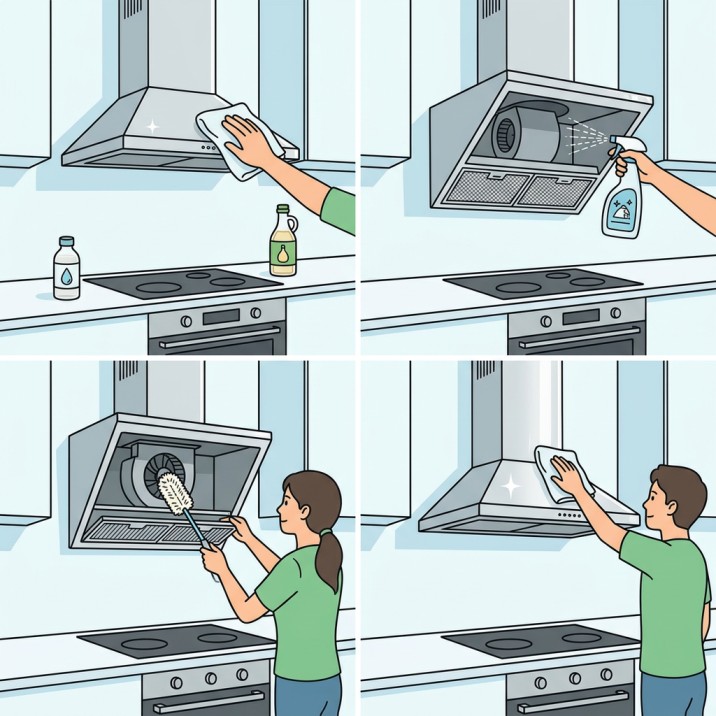
Understanding Kitchen Chimney Deep Cleaning
A kitchen chimney is designed to remove smoke, grease particles, and cooking fumes from the kitchen. Inside the chimney, there are important components such as filters, fan blades, and an oil collector tray.
During cooking, oil vapour rises and sticks to these parts. Over weeks and months, this forms a thick greasy layer that affects airflow and suction.
When grease builds up, you may notice:
- Reduced suction power
- Loud noise while the chimney runs
- Oil dripping from the filters
- Strong cooking smell staying in the kitchen
- Sticky surfaces around the chimney
Deep cleaning means removing this grease from filters, inner surfaces, and the oil collector while the chimney is still mounted on the wall.
In many Indian homes where cooking happens 2–3 times daily, it is recommended to clean the chimney every 4–6 weeks.
Grease buildup often spreads to nearby areas as well. If that happens, you can also read our guide on how to remove grease from kitchen cabinets naturally at
https://caringforyourhome.com/how-to-remove-grease-from-kitchen-cabinets-naturally-at-home/ caringforyourhome-sitemap march…
Key Benefits of Cleaning Chimney Without Removing It
Cleaning the chimney while it remains installed offers several advantages for busy households.
Saves Money
Professional chimney cleaning services in India can cost between ₹600 and ₹1500 per visit. Cleaning it yourself reduces maintenance costs.
Saves Time
Removing the chimney requires tools and technical effort. Cleaning it in place is much quicker.
Improves Suction Power
Removing grease from filters allows air to flow freely again.
Removes Kitchen Odour
Old grease traps cooking smells. Cleaning helps eliminate these odours.
Keeps Kitchen Hygienic
Grease buildup attracts dust, insects, and bacteria.
Extends Appliance Life
Regular maintenance reduces strain on the motor and improves durability.
Step-by-Step Guide to Deep Clean Chimney Without Removing It
You can clean your chimney using simple ingredients available in most Indian kitchens.
Step 1: Turn Off the Power
Safety should always come first.
- Switch off the chimney power supply
- Unplug the socket if possible
- Allow the chimney to cool completely
Never clean a chimney while it is running.
Step 2: Remove and Clean the Oil Collector
Most modern chimneys have an oil collector tray that stores grease.
- Carefully slide out the tray.
- Dispose of the collected oil.
- Soak the tray in hot water with dishwashing liquid for 20 minutes.
- Scrub gently using a sponge.
- Wash and dry before placing it back.
This tray usually contains the maximum grease.
Step 3: Clean the Chimney Filters
Filters trap most of the oil particles.
If they are removable:
- Take them out carefully.
- Soak them in hot water mixed with:
- Dishwashing liquid
- Baking soda
- A small amount of vinegar
- Leave for 30 minutes.
- Scrub gently using a soft brush.
If the filters cannot be removed easily, spray them with a solution of hot water + vinegar + dish soap and wipe carefully.
For a detailed method, you can read how to clean chimney filter at home without chemicals step-by-step guide at
https://caringforyourhome.com/how-to-clean-chimney-filter-at-home-without-chemicals-step-by-step/ caringforyourhome-sitemap march…
Step 4: Clean the Inner Surface
Grease also sticks to the inner body of the chimney.
Prepare a natural degreaser.
Mix:
- 1 cup hot water
- 2 tablespoons vinegar
- 1 teaspoon baking soda
- Few drops dishwashing liquid
Dip a cloth in the solution and wipe the interior carefully.
Use an old toothbrush to clean corners where grease collects.
Avoid spraying liquid directly into the motor.
Step 5: Clean the Chimney Fan Blades
Fan blades often collect hidden grease.
Use a cloth dipped in warm soap water and wipe the visible blades gently.
Do not pour water inside the chimney motor housing.
Step 6: Clean the Chimney Exterior
The outer surface also becomes sticky due to cooking oil vapour.
Use a microfiber cloth with mild dish soap.
For glass chimneys, vinegar solution works well to remove oil marks.
If oil stains have spread to the kitchen slab, you may find our guide helpful: how to remove oil stains from kitchen slab easily at
https://caringforyourhome.com/how-to-remove-oil-stains-from-kitchen-slab-easily/ caringforyourhome-sitemap march…
Step 7: Final Dry Wipe
After cleaning:
- Wipe all surfaces with a dry cloth
- Ensure no moisture remains
- Reinstall filters and oil collector
Switch on the chimney and check the airflow.
Comparison Table: Chimney Cleaning Methods
| Feature | Home Cleaning | Professional Service | Chemical Cleaners |
|---|---|---|---|
| Cost | Very low | Medium to high | Medium |
| Convenience | Easy at home | Requires booking | Store bought |
| Safety | Safe natural ingredients | Safe with trained technicians | May contain harsh chemicals |
| Cleaning depth | Good for regular maintenance | Deep cleaning | Depends on product |
| Eco-friendly | Yes | Neutral | Sometimes harmful |
For most households, monthly home cleaning combined with occasional professional service works best.
Real-Life Example from an Indian Home
Priya from Bengaluru noticed that her chimney started making more noise and the suction reduced after several months of regular cooking.
Instead of immediately calling a service technician, she tried cleaning it at home using hot water, baking soda, and dish soap.
After cleaning the filters and oil tray properly, she noticed a significant improvement in suction and the kitchen smell reduced.
⭐ Personal Experience
In my own kitchen, I once ignored chimney cleaning for almost three months during a busy period. The suction dropped and oil stains started appearing near the stove. After doing a simple deep clean with hot water and baking soda, the difference was immediate — the chimney became quieter and the airflow improved noticeably.
Common Mistakes to Avoid
Many people unknowingly damage their chimney during cleaning.
Using Too Much Water
Water entering the motor can damage the appliance.
Using Harsh Chemical Cleaners
Strong chemicals can damage the stainless steel or glass surface.
Scrubbing with Metal Brushes
This can scratch the filters.
Ignoring the Oil Collector
This tray holds a lot of grease and should be cleaned regularly.
Cleaning While Power Is On
Always switch off the power before cleaning.
Expert Tips for Better Chimney Maintenance
Experts recommend following these simple habits.
Run the chimney before cooking
Switch it on 5 minutes before cooking to improve airflow.
Keep it running after cooking
Let it run for 5–10 minutes to remove remaining smoke.
Clean filters regularly
Monthly cleaning prevents heavy grease buildup.
Use proper suction level
Always increase chimney speed while frying or deep cooking.
Grease can also spread to nearby kitchen walls. If that happens, read how to clean greasy kitchen walls without paint damage at
https://caringforyourhome.com/how-to-clean-greasy-kitchen-walls-without-paint-damage/ caringforyourhome-sitemap march…
Pros and Cons of Cleaning Chimney Without Removing It
| Pros | Cons |
|---|---|
| Saves money | Cannot reach deep motor parts |
| Easy to perform | Very thick grease may need professional cleaning |
| No tools required | Some chimney designs are harder to access |
| Quick cleaning process | Needs regular maintenance |
| Eco-friendly cleaning methods | Professional servicing still needed occasionally |
Frequently Asked Questions
1. How often should I clean my kitchen chimney?
In Indian kitchens, filters should ideally be cleaned once every month, while deeper cleaning can be done every 2–3 months.
2. Can baking soda remove chimney grease?
Yes. Baking soda helps break down grease and is commonly used for natural cleaning.
3. Is vinegar safe for chimney cleaning?
Yes. Vinegar is a natural degreaser and helps remove oil residue effectively.
4. Do auto-clean chimneys require manual cleaning?
Yes. Auto-clean models reduce grease buildup but still need filter cleaning.
5. What causes bad smell from chimney?
Accumulated grease and oil residue often cause unpleasant smell.
6. Can I clean the chimney motor myself?
It is better to avoid cleaning the motor area unless you have technical knowledge.
7. When should I call a professional service?
If the suction remains weak even after cleaning or grease buildup is very thick, professional service is recommended.
Conclusion
A clean kitchen chimney is essential for maintaining a smoke-free and hygienic kitchen environment, especially in Indian homes where cooking involves oil, spices, and frequent frying.
The good news is that you do not always need to remove the chimney or spend money on frequent professional services. With simple ingredients like baking soda, vinegar, and dishwashing liquid, you can perform effective deep cleaning at home.
Regular cleaning improves suction power, reduces cooking odours, and prevents grease buildup. It also protects the appliance and extends its lifespan.
By following the simple methods explained in this guide and maintaining a regular cleaning routine, you can keep your kitchen chimney working efficiently for many years.
References
- https://www.consumerreports.org/appliances/range-hoods/how-to-clean-a-range-hood/
- https://www.thespruce.com/how-to-clean-range-hood-filters-5072316
- https://www.goodhousekeeping.com/home/cleaning/a34905420/how-to-clean-range-hood-filter/
- https://energyeducation.ca/encyclopedia/Range_hood
Safety note: If you’re unsure or uncomfortable performing any home maintenance task mentioned in this article, it’s safer to consult a qualified professional.