
Learn how to remove water stains from a wooden table using safe, natural home remedies. Step-by-step methods, real-life stories, and prevention tips included.
Introduction
Water stains on a wooden table are one of the most common and frustrating furniture problems. A hot cup placed without a coaster, a water bottle left overnight, or moisture during the rainy season can leave behind white rings or dull patches that spoil the table’s appearance. These marks often appear suddenly, even on well-maintained furniture.
Many people assume water stains mean permanent damage or rushed polishing. In reality, most water stains affect only the surface finish, not the wood itself. Using harsh chemicals or aggressive sanding often causes more harm than good, especially on polished or coated tables.
The good news is that you can remove water stains from a wooden table naturally using simple household methods. This guide explains why water stains form, how to remove them step by step, and how real homes have handled the problem safely—without damaging the wood.
Why Water Stains Appear on Wooden Tables
Water stains usually form when moisture gets trapped in the finish layer of the wood.
Common causes include:
- Wet glasses or bottles without coasters
- Hot cups creating condensation
- High humidity during monsoon
- Delayed wiping of spills
- Damp cleaning cloths
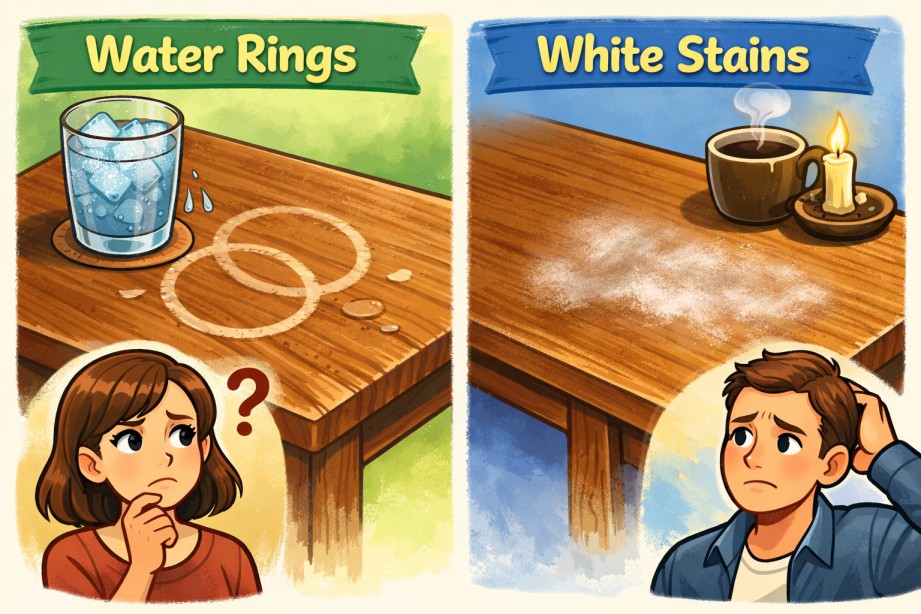
White stains usually indicate surface moisture, while darker marks may suggest deeper penetration that needs gentler care.
Types of Water Stains on Wooden Tables
White or Cloudy Rings
These are surface-level stains caused by trapped moisture in the polish or finish.
Dark Water Marks
These indicate moisture reaching the wood fibers and need extra care and patience.
Natural Ingredients You’ll Need
Most methods use items already at home:
- Soft cotton or microfiber cloth
- Toothpaste (plain white, non-gel)
- Baking soda
- Olive oil or coconut oil
- Hair dryer (optional)
- Mild soap and water
Always test on a hidden area first.
Step-by-Step: How to Remove Water Stains From Wooden Table Naturally
Step 1: Start With Gentle Heat (For White Stains)
- Set a hair dryer to low heat
- Hold it 6–8 inches away from the stain
- Move continuously for 30–60 seconds
This helps evaporate trapped moisture from the finish.
Step 2: Use Toothpaste for Light Stains
- Apply a small amount of white toothpaste to a cloth
- Rub gently along the grain of the wood
- Wipe clean with a dry cloth
This works well for recent white rings.
Step 3: Baking Soda Paste for Stubborn Marks
- Mix baking soda with a few drops of water
- Apply lightly on the stain
- Rub gently using a soft cloth
- Wipe dry immediately
Avoid scrubbing aggressively.
Step 4: Restore Shine With Natural Oil
After stain removal:
- Apply a few drops of olive or coconut oil
- Rub gently to restore the finish
- Buff with a clean cloth
This helps even out dull spots.
Safety Tips While Treating Wooden Tables
- Avoid soaking the surface
- Never use bleach or ammonia
- Don’t use gel toothpaste
- Always rub along the wood grain
- Dry the surface completely after cleaning
Common Mistakes to Avoid
- Scrubbing hard with rough cloths
- Using excess water
- Polishing before removing moisture
- Ignoring early stains until they darken
Real-Life Home Stories: Water Stain Removal
Story 1: Neeraj Khanna – Pitampura, Delhi
Neeraj Khanna noticed white rings on his wooden dining table after guests visited. The stains were from cold water bottles placed without coasters. Instead of refinishing the table, he used a hair dryer followed by gentle toothpaste rubbing. The marks faded significantly within minutes. He now uses coasters regularly and wipes the table dry after meals. His experience showed that early action prevents permanent damage.
Story 2: Sharmila Das – Ballygunge, Kolkata, West Bengal
During monsoon, Sharmila Das found cloudy patches forming on her center table due to high humidity. She focused on moisture control by improving ventilation and wiping the table daily. She also followed practices similar to
monsoon home care tips to prevent dampness naturally
Over time, the stains stopped forming, and existing marks lightened naturally.
Story 3: Vinayak Patil – Kolhapur, Maharashtra
Vinayak Patil faced repeated water stains on his wooden table placed near the kitchen. Steam and moisture from cooking were the main cause. Along with gentle stain removal, he improved kitchen hygiene and ventilation, keeping grease and moisture under control—similar to methods explained in
how to clean chimney filter at home without chemicals step by step
This reduced both stains and surface dullness.
Do vs Avoid: Wooden Table Care
| Do | Avoid |
|---|---|
| Use coasters and mats | Placing wet items directly |
| Wipe spills immediately | Letting moisture sit |
| Use gentle natural methods | Scrubbing aggressively |
| Maintain ventilation | Ignoring humidity |
Preventing Water Stains in the Future
- Always use coasters and placemats
- Wipe tables daily during humid weather
- Avoid damp cloth cleaning
- Keep tables away from kitchens and bathrooms
Protecting furniture also goes hand-in-hand with overall home care, as seen in
how to clean washing machine drum at home naturally
where moisture management plays a key role.
Grease and residue in kitchens can also affect nearby wooden surfaces, making regular maintenance such as
gas stove burner cleaning at home – step-by-step natural guide
useful beyond just appliances.
Related Natural Cleaning Guides
You may also find these helpful:
- Bathroom moisture control in
how to remove hard water stains from bathroom tiles naturally - Upholstery care in
how to clean fabric sofa at home without vacuum cleaner
FAQs
1. Are water stains permanent on wooden tables?
Most white stains are temporary and can be removed naturally if treated early.
2. Can oil alone remove water stains?
Oil helps restore shine but should be used after removing trapped moisture.
3. Is heat safe for wooden tables?
Low, controlled heat is safe when used carefully and briefly.
4. Why do stains come back during monsoon?
High humidity reintroduces moisture into the finish.
5. Should I polish after removing stains?
Only after the surface is fully dry and stain-free.
Simple Summary
Water stains on wooden tables are common but often reversible. With gentle heat, mild natural cleaners, and consistent moisture control, you can remove stains safely without damaging the finish. Real-life experiences show that early action and simple habits are more effective than harsh treatments.
By combining stain removal with preventive care, your wooden table can stay clean, polished, and long-lasting—even during humid or rainy seasons.
From what I have observed in many homes, including relatives’ houses, small cleaning habits are often ignored until problems become noticeable. Regular maintenance using simple home methods makes a big difference in keeping things clean, preventing damage, and avoiding costly repairs later.
References
World Health Organization (WHO)https://www.who.int/publications/i/item/9789289041683
Centers for Disease Control and Prevention (CDC)
https://www.cdc.gov/healthyhomes
United States Environmental Protection Agency (EPA)
https://www.epa.gov/indoor-air-quality-iaq