
Learn how to remove oil stains from kitchen slab easily using simple home remedies. Step-by-step methods, common mistakes, FAQs, and real-life Indian household experiences.

Introduction
The kitchen slab is one surface that never really gets a break. From morning tea preparation to late-night cooking, it handles oil splashes, spice spills, and water drops throughout the day. Over time, even with regular wiping, faint oil marks slowly turn into stubborn stains—especially around the stove area.
For many households, these stains become visible only during deep cleaning or festival preparation. By then, simple wiping no longer works. The slab starts looking dull, patchy, and unhygienic, even though it is cleaned daily.
Rohit Mehra from Faridabad, Haryana, realised this when sunlight hit his black granite slab at an angle, revealing greasy patches he had never noticed before. “The slab looked clean, but the stains were clearly there,” he said. Like many homeowners, he wanted an easy solution that would not damage the slab surface.
The good news is that oil stains can be removed safely. Learning how to remove oil stains from kitchen slab easily helps maintain cleanliness, improves appearance, and prevents long-term surface damage—without harsh chemicals or professional help.
Why Oil Stains Form on Kitchen Slabs
Kitchen slabs are constantly exposed to oil, moisture, and heat. Common reasons oil stains develop include:
- Regular frying and tadka cooking
- Oil splashes near gas stove
- Porous slab materials absorbing oil
- Infrequent deep cleaning
- Using oily cloths for wiping
Granite, marble, and composite slabs may look smooth, but many have microscopic pores that absorb oil over time. If stains are not treated early, they become darker and harder to remove.
Grease buildup often spreads to nearby cabinets as well. This guide on removing grease from kitchen cabinets naturally at home explains how similar stains form on surrounding surfaces.
Things to Check Before Cleaning the Slab
Before applying any remedy, check:
- Slab material (granite, marble, quartz)
- Age of the stain (fresh or old)
- Any cracks or chipped areas
- Whether sealant is present
Always test cleaning solutions on a small hidden area first.
How to Remove Oil Stains From Kitchen Slab Easily
1. Baking Soda Paste Method
This is one of the safest and most effective home remedies.
How to use:
- Mix baking soda with a little water to form a thick paste
- Apply directly on the oil stain
- Leave for 20–30 minutes
- Wipe gently with a damp cloth
Baking soda absorbs oil without scratching the surface.
2. Dish Soap and Warm Water Cleaning
For fresh oil stains:
- Mix warm water with a few drops of mild dish soap
- Dip a soft cloth or sponge
- Wipe the slab gently
- Rinse with clean water and dry
This method works well when stains are treated early.
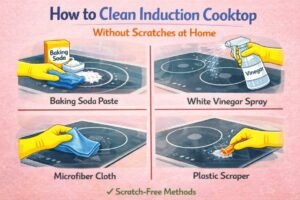
If your induction cooktop is installed on the slab, this induction cooktop cleaning guide without scratches complements slab cleaning safely.
3. Vinegar and Baking Soda Combination
For slightly older stains:
- Sprinkle baking soda on the stain
- Spray diluted vinegar (1:1 with water)
- Let it fizz for 10–15 minutes
- Wipe and rinse thoroughly
Do not leave vinegar for too long, especially on marble slabs.
4. Cornflour or Talcum Powder for Oil Absorption
For stubborn, dry oil stains:
- Sprinkle cornflour or talcum powder
- Leave overnight
- Wipe off in the morning
- Clean with mild soap solution
This method draws oil out of porous surfaces.
5. Lemon Juice and Baking Soda (Occasional Use)
For light stains and freshness:
- Mix lemon juice with baking soda
- Apply briefly
- Clean gently and rinse
Avoid frequent use on marble slabs.
Step-by-Step Deep Cleaning Routine
- Remove loose crumbs and dust
- Apply chosen cleaning method
- Let solution sit briefly
- Wipe gently with soft cloth
- Rinse and dry completely
Drying is important, as moisture can trap grease again. If slab smell persists, this bad smell removal from refrigerator guide explains how odours often spread in kitchens.
Safety Tips While Cleaning Kitchen Slabs
- Avoid steel scrubbers
- Do not use acid cleaners daily
- Rinse after every cleaning
- Dry slab after washing
- Wear gloves if skin is sensitive
Strong cleaners may damage slab finish and sealant.
Common Mistakes to Avoid
- Scrubbing aggressively
- Using toilet or floor cleaners
- Ignoring stains for weeks
- Leaving vinegar overnight
- Cleaning with dirty cloths
These mistakes often cause dullness and surface damage.
Do vs Avoid Table
| Do | Avoid |
|---|---|
| Use mild cleaners | Use harsh chemicals |
| Clean stains early | Let oil soak |
| Dry slab after cleaning | Leave surface wet |
| Test first | Assume all slabs react same |
Real-Life Indian Household Experiences
Neelam Gupta – Jaipur, Rajasthan
Neelam noticed oil stains forming near her stove area after years of cooking. Despite daily wiping, the slab looked patchy. After using baking soda paste once a week and wiping spills immediately, the stains reduced significantly. “The slab looks brighter now,” she said.
Arvind Rao – Visakhapatnam, Andhra Pradesh
Arvind’s granite slab had dark oil marks near the gas burner. He initially tried strong cleaners, which dulled the surface. Switching to cornflour absorption and mild soap helped remove stains safely. “Gentle cleaning worked better than force,” he realised.
How to Prevent Oil Stains on Kitchen Slabs
- Wipe spills immediately
- Use backsplash near stove
- Clean slab lightly every day
- Use chimney or exhaust fan
- Deep clean weekly
If grease buildup is common in your kitchen, this chimney filter cleaning guide without chemicals can help reduce oil settling on slabs.
FAQs
1. Can oil stains be removed completely?
Most stains can be reduced significantly if treated early.
2. Is baking soda safe for granite?
Yes, when used gently and rinsed properly.
3. Can vinegar damage kitchen slabs?
Overuse may harm marble and sealants.
4. How often should slabs be deep cleaned?
Once a week is usually sufficient.
5. Do oil stains return after cleaning?
They can if spills are not wiped regularly.
Simple Checklist
- ✔ Identify slab type
- ✔ Use mild cleaner
- ✔ Absorb oil first
- ✔ Rinse and dry
- ✔ Clean regularly
Summary
Oil stains on kitchen slabs are common in Indian homes, but they do not require harsh chemicals or expensive treatments. With simple home remedies and timely cleaning, it is possible to remove oil stains from kitchen slab easily and safely.
Regular maintenance, gentle cleaning methods, and early attention to spills help keep kitchen slabs clean, hygienic, and visually appealing for everyday use.
Safety note: If you’re unsure or uncomfortable performing any home maintenance task mentioned in this article, it’s safer to consult a qualified professional.