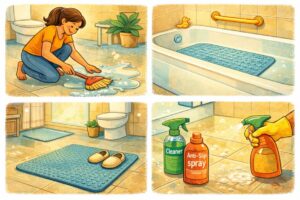

Learn how to remove hard water stains from bathroom tiles using safe, effective home methods. Includes step-by-step cleaning, prevention tips, mistakes to avoid, FAQs, and practical examples.
Introduction: Why Hard Water Stains Are So Difficult to Remove
Bathroom tiles are exposed to water every single day—during showers, handwashing, floor cleaning, and even condensation from humidity. Over time, many homeowners notice white, chalky marks on tiles, cloudy patches on walls, and stubborn rings near taps or shower areas. These marks don’t disappear with normal wiping and often return quickly after cleaning.
These are hard water stains, and they are especially common in areas where groundwater contains high mineral content. Cities across India such as Delhi, Jaipur, Pune, Hyderabad, and Bengaluru experience hard water issues, making bathroom maintenance a regular challenge.
The problem becomes frustrating because:
- Tiles look permanently dirty even after cleaning
- Grout lines darken and harden
- Bathrooms start feeling unhygienic despite daily maintenance
The good news is that you can remove hard water stains from bathroom tiles without relying on harsh chemicals or expensive cleaners. With the right techniques, common household ingredients, and regular care, tiles can be restored and kept clean for the long term.
This article explains why hard water stains form, what tools you need, detailed step-by-step cleaning methods, prevention strategies, real-life experiences, and common mistakes to avoid.
What Causes Hard Water Stains on Bathroom Tiles?
Hard water contains dissolved minerals—mainly calcium and magnesium. When water comes into contact with tile surfaces and then evaporates, these minerals are left behind as residue. Over time, this residue builds up and hardens.
Hard water stains commonly appear:
- Around taps and showerheads
- On wall tiles near the shower
- Along floor edges and corners
- Inside grout lines
Factors that worsen the problem include:
- Poor ventilation
- Allowing water to air-dry naturally
- Infrequent deep cleaning
- Continuous use of hot water (which leaves minerals faster)
Understanding the cause helps you remove stains more effectively and prevent them from coming back.
Tools and Materials You’ll Need (Simple & Accessible)
You don’t need industrial cleaners. Most items are already in your home:
- White vinegar
- Baking soda
- Lemon juice (optional)
- Warm water
- Spray bottle
- Microfiber cloth or sponge
- Old toothbrush (for grout)
- Rubber gloves
- Dry towel or squeegee
These items work together to dissolve mineral deposits and lift stains gently.
Step-by-Step: How to Remove Hard Water Stains From Bathroom Tiles
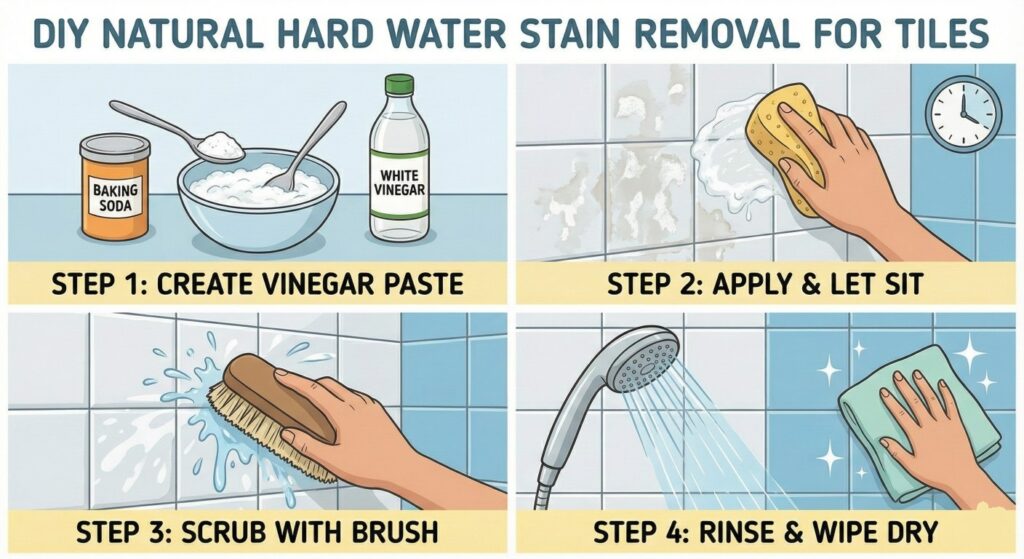
Step 1: Basic Vinegar Spray Treatment
Mix equal parts white vinegar and warm water in a spray bottle.
- Spray generously on stained tile surfaces
- Let it sit for 10–15 minutes
Vinegar’s mild acidity reacts with calcium deposits, softening them for removal.
Important: If your bathroom tiles are natural stone (marble, granite), do a patch test first. Acidic solutions may damage stone.
Step 2: Gentle Scrubbing
Using a microfiber cloth or sponge:
- Scrub the tiles in circular motions
- Focus on cloudy areas and edges
For grout lines, use an old toothbrush to reach deep crevices.
Step 3: Baking Soda for Stubborn Stains
If stains remain:
- Sprinkle baking soda over the damp tile
- Scrub gently
Baking soda acts as a mild abrasive without scratching tiles.
Step 4: Rinse and Dry Completely
Rinse tiles with clean water.
Immediately wipe dry using a towel or squeegee.
Drying is critical—allowing water to sit encourages new mineral deposits.
Deep Cleaning Heavily Stained Areas
For old or thick buildup:
- Make a paste using baking soda + lemon juice
- Apply directly to stains and grout
- Leave for 15–20 minutes
- Scrub with a toothbrush
- Rinse and dry thoroughly
This method works well around taps and shower corners.
Real-Life Experiences: How Homeowners Removed Hard Water Stains
1. Kavita Malhotra – Gurugram, Haryana
Kavita lives in a high-rise apartment with extremely hard water. Despite daily cleaning, white stains kept returning. She began a weekly vinegar spray routine followed by drying tiles with a towel after every shower. Within two months, visible stains reduced significantly, and grout lines lightened.
2. Suresh Naik – Belagavi, Karnataka
Suresh struggled with dull bathroom tiles that looked permanently dirty. After learning about baking soda and lemon paste, he used it on grout lines every three weeks. According to his family, the tiles now stay brighter for longer, even during monsoon season.
3. Aditi and Rohan Jain – Bhopal, Madhya Pradesh
This couple noticed hard water rings near faucets and floor corners. They adopted a simple rule—never let tiles air-dry. After every shower, they wiped walls using a squeegee. Combined with monthly vinegar cleaning, staining reduced drastically within weeks.
These real situations show that consistency matters more than strength of cleaner.
Common Mistakes to Avoid
- Letting water dry naturally on tiles
- Using metal scrubbers, which scratch surfaces
- Applying bleach repeatedly, which doesn’t remove minerals
- Ignoring grout lines, where buildup starts first
- Cleaning only when stains are visible
Do vs Avoid Table
| Do | Avoid |
|---|---|
| Wipe tiles dry daily | Letting water evaporate |
| Use vinegar or lemon | Using harsh acids blindly |
| Clean grout regularly | Ignoring grout buildup |
| Test solutions first | Applying on all tiles without testing |
How Tile Maintenance Fits Into Overall Home Cleaning
Bathroom tile care works best when combined with regular household maintenance. Just as you might follow a routine for how to clean fabric sofa at home without vacuum cleaner (https://caringforyourhome.com/how-to-clean-fabric-sofa-at-home-without-vacuum-cleaner/) to prevent dust buildup, bathroom tiles benefit from small, frequent efforts rather than occasional deep cleaning.
Similarly, grease and mineral buildup behave alike. Learning how to clean chimney filter at home without chemicals step-by-step (https://caringforyourhome.com/how-to-clean-chimney-filter-at-home-without-chemicals-step-by-step/) shows that natural methods, used consistently, often outperform harsh cleaners in the long run.
Preventing Hard Water Stains Long-Term
Prevention saves time and effort. Follow these habits:
- Use a squeegee after showers
- Keep bathroom well-ventilated
- Wipe taps and tiles dry daily
- Deep-clean tiles every 2–4 weeks
- Address stains early before they harden
If possible, installing a water softener can also reduce future buildup, though it’s not mandatory for effective cleaning.
Myths vs Reality
Myth: Bleach removes hard water stains
Reality: Bleach disinfects but doesn’t dissolve minerals
Myth: Hard water stains are permanent
Reality: They can be removed with correct methods
Myth: Strong acids clean faster
Reality: Gentle, repeated cleaning is safer and effective
Frequently Asked Questions
1. Can vinegar damage bathroom tiles?
Vinegar is safe for ceramic and porcelain tiles but should be avoided on marble or natural stone.
2. How often should I clean tiles to prevent stains?
Light wiping daily and deep cleaning once every 2–4 weeks is ideal.
3. Is lemon juice better than vinegar?
Both work well. Lemon juice is slightly milder and leaves a fresh scent.
4. Why do stains keep coming back?
Because minerals remain in water. Drying tiles after use is key to prevention.
5. Can I use baking soda daily?
Occasional use is fine, but daily scrubbing isn’t necessary and may dull tiles over time.
Summary
Hard water stains on bathroom tiles are common, but they are not permanent. With natural ingredients like vinegar, baking soda, and lemon juice—and the habit of drying tiles after use—you can remove stains effectively and prevent them from returning.
Consistent, gentle cleaning protects tile surfaces, improves bathroom appearance, and reduces long-term maintenance effort. When combined with regular care routines used for other areas of the home, tile cleaning becomes manageable rather than overwhelming.
With patience and the right approach, your bathroom tiles can stay clean, bright, and welcoming—even in hard water conditions.
From what I have observed in many homes, including relatives’ houses, small cleaning habits are often ignored until problems become noticeable. Regular maintenance using simple home methods makes a big difference in keeping things clean, preventing damage, and avoiding costly repairs later.
References
World Health Organization (WHO)https://www.who.int/publications/i/item/9789289041683
Centers for Disease Control and Prevention (CDC)
https://www.cdc.gov/healthyhomes
United States Environmental Protection Agency (EPA)
https://www.epa.gov/indoor-air-quality-iaq