
Learn how to clean shower head blockage naturally using safe home methods. Step-by-step solutions, real-life stories, and prevention tips for better water flow.
Introduction
A blocked shower head is a common bathroom problem that many homeowners ignore until water pressure becomes noticeably weak. Instead of a steady spray, water starts flowing unevenly or sideways, making showers uncomfortable and time-consuming. In most cases, this issue develops gradually, which is why it often goes unnoticed at first.
Shower head blockages are usually caused by mineral deposits, soap residue, and impurities in water. In areas with hard water, this problem becomes more frequent. Many people replace shower heads unnecessarily or use harsh chemical cleaners that may damage the finish and leave residues.
The good news is that you can clean shower head blockage naturally at home using simple, safe methods. This guide explains why shower heads get blocked, how to clean them step by step, and how real households restored proper water flow without chemicals or replacements.
Why Shower Head Blockage Happens
Shower head nozzles are small, making them prone to buildup over time.
Common causes include:
- Hard water mineral deposits (calcium and lime)
- Soap and shampoo residue
- Sediment from water supply
- Moisture left standing after use
Over time, these deposits narrow or block the spray holes, reducing water pressure.
Signs Your Shower Head Needs Cleaning
- Uneven or sideways water spray
- Reduced water pressure
- White or chalky deposits on nozzles
- Water dripping instead of spraying
If you notice these signs, cleaning the shower head will help immediately.
Natural Ingredients You’ll Need
Most homes already have what’s required:
- White vinegar
- Baking soda
- Warm water
- Small bowl or bucket
- Old toothbrush
- Soft cloth
- Rubber band or string
Avoid strong chemical descalers.
Step-by-Step: How to Clean Shower Head Blockage Naturally
Step 1: Try External Cleaning First
- Wipe the shower head surface with a damp cloth
- Use a toothbrush to gently scrub visible deposits
Sometimes, surface cleaning alone improves spray.
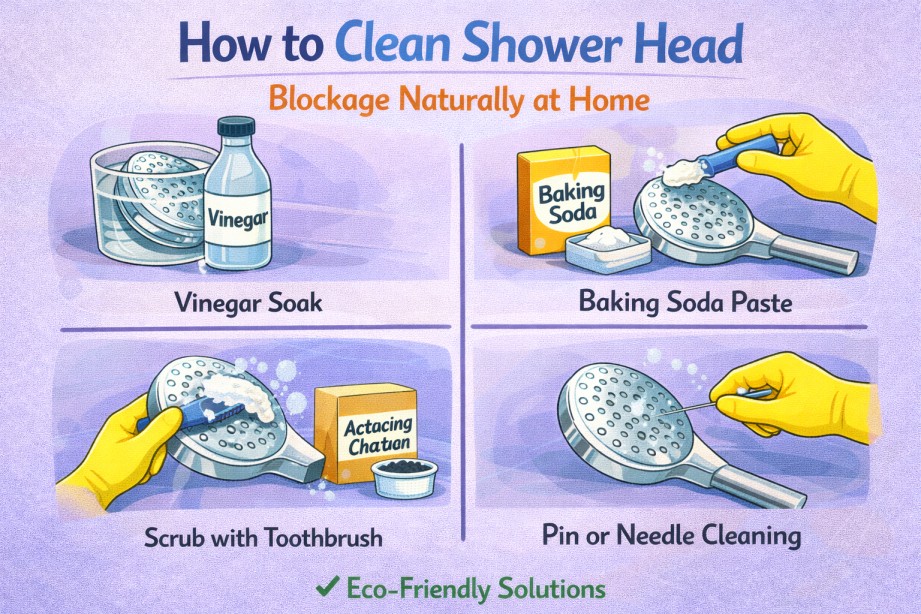
Step 2: Vinegar Soak Method (Most Effective)
For fixed shower heads:
- Fill a plastic bag with white vinegar
- Tie it around the shower head using a rubber band
- Ensure nozzles are fully submerged
- Leave it for 1–2 hours
For removable shower heads:
- Detach and soak in a bowl of vinegar
Vinegar dissolves mineral buildup naturally.
Step 3: Scrub the Nozzles Gently
After soaking:
- Remove the bag or bowl
- Use a toothbrush to scrub nozzle holes
- Clear loosened deposits
Avoid metal pins that may damage nozzles.
Step 4: Flush With Warm Water
- Turn on the shower
- Let warm water run for 2–3 minutes
This flushes out remaining debris from inside the shower head.
Step 5: Baking Soda for Stubborn Blockage (Optional)
If deposits remain:
- Make a paste using baking soda and water
- Apply gently on affected areas
- Scrub lightly and rinse
Safety Tips While Cleaning Shower Heads
- Do not mix vinegar with chemical cleaners
- Avoid abrasive scrubbers
- Rinse thoroughly before use
- Ensure the shower head is securely fixed after cleaning
Natural methods are safe but still require care.
Common Mistakes to Avoid
- Using harsh descaling chemicals frequently
- Ignoring early blockage signs
- Scraping nozzles with sharp objects
- Replacing the shower head unnecessarily
Real-Life Home Stories: Shower Head Blockage Removal
Story 1: Nilesh Patil – Dombivli East, Maharashtra
Nilesh Patil noticed that his morning showers were taking longer due to weak water flow. He initially suspected a plumbing issue. On closer inspection, he found white mineral deposits clogging the shower head holes. He soaked the shower head in vinegar for two hours and scrubbed it gently. Water pressure improved immediately. Nilesh now cleans the shower head once every two months, especially because his area has hard water.
Story 2: Farzana Begum – Tolichowki, Hyderabad, Telangana
Farzana Begum experienced uneven water spray from her overhead shower, with water shooting sideways. She used a vinegar soak method without removing the shower head. After cleaning and flushing, the spray returned to normal. She also began wiping the shower head dry after use to reduce mineral buildup. This simple habit prevented repeated blockages.
Story 3: Anoop Menon – Aluva, Kerala
Living in a humid region, Anoop Menon noticed soap residue and mineral buildup on his shower head more frequently during monsoon. He combined vinegar cleaning with better bathroom ventilation and regular exhaust fan use. Following moisture-control practices similar to
how to clean bathroom exhaust fan easily at home
helped reduce buildup. The shower head stayed clean for longer periods.
Do vs Avoid: Shower Head Care
| Do | Avoid |
|---|---|
| Clean with vinegar regularly | Using harsh chemicals |
| Wipe shower head after use | Letting water sit |
| Scrub gently | Scraping with sharp tools |
| Flush after soaking | Skipping final rinse |
Preventing Shower Head Blockage Long-Term
- Clean shower head every 1–2 months
- Wipe nozzles dry after showers
- Improve bathroom ventilation
- Address hard water issues early
Mineral buildup problems are common across bathrooms, similar to those discussed in
how to remove hard water stains from bathroom tiles naturally
Controlling moisture also helps prevent related issues like mold and odor, as explained in
how to protect home from mold during rainy season naturally
FAQs
1. How often should I clean my shower head?
Once every 1–2 months, more often in hard-water areas.
2. Is vinegar safe for all shower heads?
Yes, for most metal and plastic shower heads when used occasionally.
3. Can baking soda replace vinegar?
Baking soda helps with surface residue, but vinegar is better for mineral deposits.
4. Why does blockage return quickly?
Hard water and moisture left standing accelerate buildup.
5. Should I replace a blocked shower head?
Replacement is rarely needed if regular natural cleaning is done.
Simple Summary
Shower head blockages are usually caused by mineral deposits and soap residue—not plumbing failure. With natural methods like vinegar soaking, gentle scrubbing, and regular drying, you can restore water flow safely at home. Real-life experiences show that consistent cleaning prevents repeated blockage.
By following these simple, natural steps, your shower head can stay clean, efficient, and long-lasting—ensuring comfortable showers every day without chemicals or unnecessary replacements.
From what I have observed in many homes, including relatives’ houses, small cleaning habits are often ignored until problems become noticeable. Regular maintenance using simple home methods makes a big difference in keeping things clean, preventing damage, and avoiding costly repairs later.
References
World Health Organization (WHO)https://www.who.int/publications/i/item/9789289041683
Centers for Disease Control and Prevention (CDC)
https://www.cdc.gov/healthyhomes
United States Environmental Protection Agency (EPA)
https://www.epa.gov/indoor-air-quality-iaq