
Learn how to clean an electric kettle from inside naturally using vinegar, lemon, and baking soda. Simple safe methods to remove limescale and keep your kettle hygienic.
Introduction
Electric kettles have become a common appliance in many Indian homes. They are widely used for boiling water, making tea or coffee, preparing instant noodles, and even cooking small meals in hostels or offices. Because they are used frequently, many people forget that electric kettles also require regular cleaning.
Over time, mineral deposits from water start forming inside the kettle. This white or grey layer is called limescale, and it builds up especially in areas where the water contains more minerals (hard water). Limescale not only affects the taste of boiled water but can also reduce the heating efficiency of the kettle.
Fortunately, cleaning an electric kettle does not require harsh chemical cleaners. In fact, natural ingredients such as vinegar, lemon, and baking soda can remove mineral deposits effectively and safely.
In this guide, you will learn how to clean electric kettle from inside naturally, along with easy step-by-step methods, expert tips, and common mistakes to avoid.
Understanding Why Electric Kettles Get Dirty
Even when you use clean drinking water, kettles slowly develop deposits inside.
This happens because water contains minerals such as calcium and magnesium. When water is heated repeatedly, these minerals settle on the heating element and kettle walls.
Common signs your kettle needs cleaning include:
- White chalky deposits inside the kettle
- Water taking longer to boil
- Strange taste in tea or coffee
- Floating particles in boiled water
If not cleaned regularly, these mineral layers can affect kettle performance and reduce its lifespan.
Regular kitchen appliance maintenance also helps keep your home hygienic. You may also find this guide helpful:
Refrigerator Maintenance Tips to Increase Life and Improve Performance
https://caringforyourhome.com/refrigerator-maintenance-tips-to-increase-life-and-improve-performance/
Key Benefits of Cleaning Electric Kettle Naturally
Cleaning your kettle regularly offers several advantages.
- Improves taste of boiled water
- Removes limescale buildup
- Increases heating efficiency
- Extends kettle lifespan
- Prevents mineral flakes in drinks
- Maintains kitchen hygiene
Natural cleaning methods are also safer because they avoid harsh chemical residue.
Featured Snippet: Quick Way to Clean Electric Kettle Naturally
- Fill the kettle halfway with water.
- Add equal amount of white vinegar.
- Boil the mixture and let it sit for 20 minutes.
- Discard the liquid and rinse thoroughly.
- Boil plain water once before using again.
This simple method helps remove limescale from electric kettles.
Step-by-Step Natural Methods to Clean Electric Kettle
1. Vinegar Cleaning Method
Vinegar is one of the most effective natural descalers.
Steps
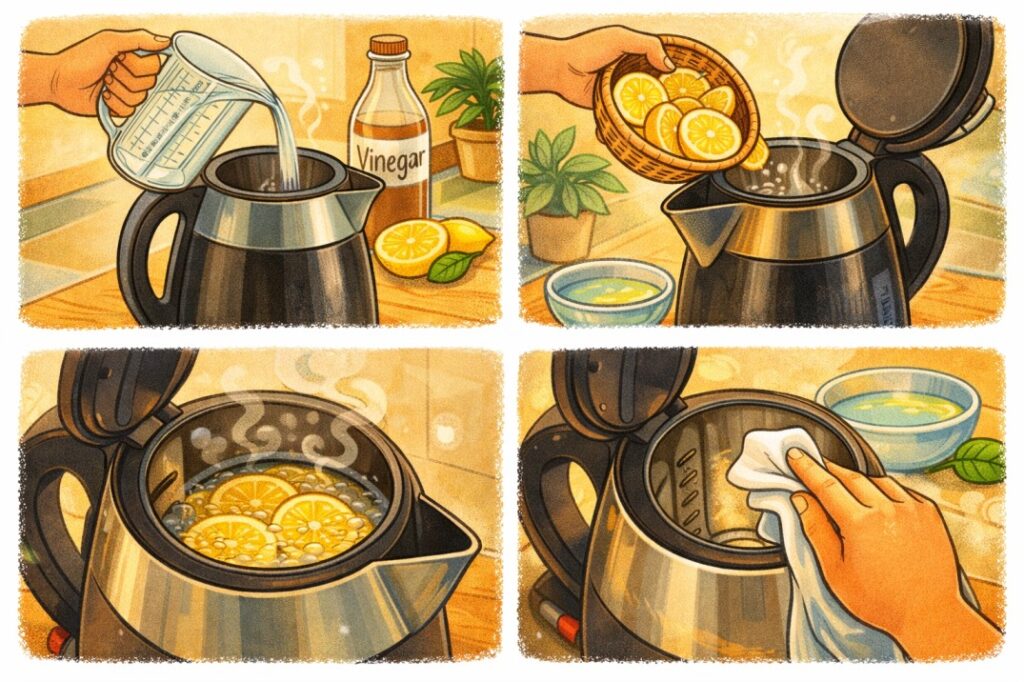
- Fill the kettle with equal parts water and white vinegar.
- Turn on the kettle and bring the solution to a boil.
- Switch it off and allow the mixture to sit for 20–30 minutes.
- Pour out the liquid.
- Rinse the kettle thoroughly with clean water.
Boil fresh water once before using the kettle again.
2. Lemon Cleaning Method
Lemon contains natural acids that dissolve mineral deposits.
Steps
- Fill the kettle with water.
- Add juice of one lemon or a few lemon slices.
- Boil the mixture.
- Let it sit for about 15 minutes.
- Discard the water and rinse well.
This method also helps remove unpleasant odours from the kettle.
3. Baking Soda Method
Baking soda works well for light mineral deposits.
Steps
- Add 1 teaspoon baking soda to the kettle.
- Fill with water.
- Boil the solution.
- Leave for 15 minutes.
- Rinse thoroughly.
This method is gentle and safe for regular cleaning.
4. Vinegar and Baking Soda Deep Cleaning
For kettles with heavy limescale buildup, combining both ingredients works effectively.
Steps
- Add vinegar and water to the kettle.
- Boil and let it sit for 20 minutes.
- Add a small amount of baking soda.
- Gently scrub the inside using a soft brush.
- Rinse thoroughly.
Comparison Table: Natural Kettle Cleaning Methods
| Method | Effectiveness | Cost | Best For |
|---|---|---|---|
| Vinegar cleaning | High | Very low | Heavy limescale |
| Lemon method | Medium | Low | Light deposits |
| Baking soda | Medium | Very low | Regular cleaning |
| Vinegar + baking soda | Very high | Low | Deep cleaning |
Using vinegar once a month is usually enough for most households.
Real-Life Example from an Indian Home
Ankit from Pune noticed white flakes appearing in the water from his electric kettle. Initially, he thought the kettle was damaged.
After checking inside, he realized the heating plate had a thick layer of limescale.
He tried boiling water with vinegar inside the kettle and left it for 30 minutes. After rinsing, the deposits disappeared and the kettle started heating water faster again.
Personal Experience:
In my own kitchen, I once noticed a chalky white layer forming inside the electric kettle after several weeks of use. Instead of using chemical cleaners, I boiled water with lemon slices and left it for about 20 minutes. After rinsing the kettle, the mineral deposits were almost completely gone and the kettle looked much cleaner.
Common Mistakes to Avoid
Using Metal Scrubbers
Metal scrubbers can scratch the kettle interior and damage the heating plate.
Ignoring Limescale Buildup
If limescale is ignored for long periods, it becomes harder to remove.
Overfilling the Kettle
Always follow the recommended water level when cleaning.
Using Strong Chemicals
Harsh cleaning chemicals may leave harmful residue inside the kettle.
Expert Tips for Electric Kettle Maintenance
Experts recommend these simple habits.
Use filtered water
Filtered water reduces mineral buildup.
Empty kettle after use
Avoid leaving water inside for long periods.
Clean monthly
Regular descaling prevents heavy deposits.
Dry kettle interior
Leaving the lid open helps moisture evaporate.
Proper appliance maintenance is important for overall kitchen hygiene.
You may also find these helpful:
How to Clean Induction Cooktop Without Scratches at Home
https://caringforyourhome.com/how-to-clean-induction-cooktop-without-scratches-at-home/
Gas Stove Burner Cleaning at Home – Step-by-Step Natural Guide
https://caringforyourhome.com/gas-stove-burner-cleaning-at-home-step-by-step-natural-guide/
How to Remove Bad Smell From Refrigerator Permanently at Home
https://caringforyourhome.com/how-to-remove-bad-smell-from-refrigerator-permanently-at-home/
Simple Refrigerator Cleaning Schedule for Busy Homes
https://caringforyourhome.com/simple-refrigerator-cleaning-schedule-for-busy-homes/
How to Clean Washing Machine Drum at Home Naturally
https://caringforyourhome.com/how-to-clean-washing-machine-drum-at-home-naturally/
Pros and Cons of Natural Kettle Cleaning
| Pros | Cons |
|---|---|
| Uses safe household ingredients | May need repeated cleaning |
| Low cost | Strong limescale may take time |
| Environment friendly | Requires regular maintenance |
| Easy to perform | Vinegar smell may remain briefly |
Frequently Asked Questions
1. How often should I clean my electric kettle?
Cleaning once every 3–4 weeks is usually enough to prevent mineral buildup.
2. Is vinegar safe for electric kettles?
Yes. Vinegar is commonly used to remove limescale and is safe when rinsed properly.
3. Can lemon remove kettle limescale?
Yes. Lemon contains citric acid which helps dissolve mineral deposits.
4. Why does my kettle have white deposits inside?
These are mineral deposits from hard water.
5. Can baking soda damage the kettle?
No. Baking soda is gentle and safe for most kettles.
6. How do I remove vinegar smell after cleaning?
Boil plain water once or twice and discard it.
Conclusion
Electric kettles are convenient kitchen appliances, but they require regular cleaning to maintain performance and hygiene. Mineral deposits from hard water can slowly build up inside the kettle, affecting both efficiency and taste.
Fortunately, removing these deposits is simple with natural household ingredients such as vinegar, lemon, and baking soda. These methods are affordable, safe, and highly effective for everyday maintenance.
By cleaning your electric kettle regularly and following simple maintenance habits, you can ensure it continues working efficiently while providing clean, fresh-tasting boiled water for your daily beverages.
References
Healthline
https://www.healthline.com/health/how-to-clean-electric-kettle
The Spruce
https://www.thespruce.com/how-to-clean-an-electric-kettle-5094734
Good Housekeeping
https://www.goodhousekeeping.com/home/cleaning/a35472991/how-to-clean-a-kettle/
Consumer Reports
https://www.consumerreports.org/appliances/how-to-clean-an-electric-kettle/
From what I have observed in many homes, including relatives’ houses, small cleaning habits are often ignored until problems become noticeable. Regular maintenance using simple home methods makes a big difference in keeping things clean, preventing damage, and avoiding costly repairs later.
References
World Health Organization (WHO)https://www.who.int/publications/i/item/9789289041683
Centers for Disease Control and Prevention (CDC)
https://www.cdc.gov/healthyhomes
United States Environmental Protection Agency (EPA)
https://www.epa.gov/indoor-air-quality-iaq