
Learn how to clean a bathroom exhaust fan easily at home using safe, natural methods. Step-by-step instructions, real-life stories, and maintenance tips included.
Introduction
Bathroom exhaust fans play a quiet but important role in keeping bathrooms fresh and dry. They remove moisture, odors, and steam after showers, helping prevent dampness, mold, and lingering smells. Because they’re mounted high and out of sight, exhaust fans are often forgotten during regular cleaning.
Over time, dust, lint, and moisture settle on the fan blades and cover. This buildup reduces airflow, makes the fan noisy, and limits its ability to remove humidity. In some homes, a dirty exhaust fan actually contributes to dampness instead of preventing it.
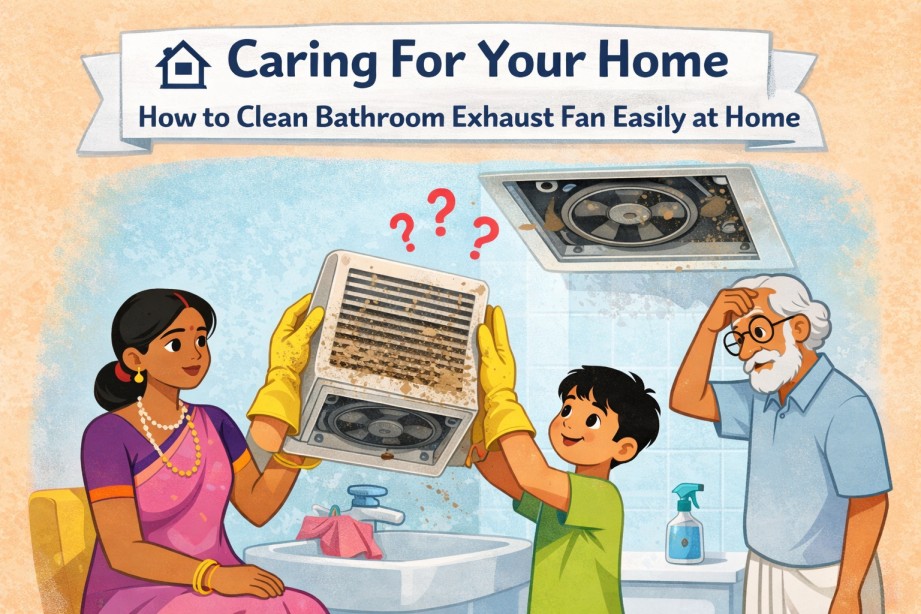
Many people assume cleaning an exhaust fan is complicated or unsafe. In reality, with basic precautions and simple tools, you can clean a bathroom exhaust fan easily at home. This guide explains why exhaust fans get dirty, how to clean them step by step, and how real households have handled the task safely.
Why Bathroom Exhaust Fans Get Dirty
Bathroom exhaust fans deal with a mix of dust and moisture, which makes dirt stick easily.
Common reasons for buildup include:
- Steam from hot showers
- Dust and lint from the air
- Infrequent cleaning
- Continuous fan usage during monsoon
- Poor ventilation
When dust mixes with moisture, it forms a sticky layer that blocks airflow and attracts more dirt.
Signs Your Bathroom Exhaust Fan Needs Cleaning
- Reduced airflow or steam lingering longer
- Unusual noise while running
- Visible dust on the fan cover
- Musty smell despite using the fan
If you notice these signs, cleaning is overdue.
Tools and Materials Needed
You don’t need special equipment. Basic household items work well:
- Screwdriver (if cover is fixed)
- Soft brush or old toothbrush
- Microfiber cloth
- Mild dish soap
- Warm water
- Vacuum cleaner with brush attachment (optional)
- Step stool
Avoid harsh chemical sprays.
Step-by-Step: How to Clean Bathroom Exhaust Fan Easily at Home
Step 1: Switch Off Power Completely
Turn off the exhaust fan switch and, if possible, the main power supply. Safety should always come first.
Step 2: Remove the Fan Cover
Most exhaust fan covers either snap off or are held with screws. Remove it gently and place it on a flat surface.
Step 3: Clean the Fan Cover
- Soak the cover in warm water with mild soap
- Use a soft brush to remove dust and grime
- Rinse and dry completely
This step alone improves airflow noticeably.
Step 4: Clean Fan Blades and Motor Area (Surface Only)
- Use a dry brush or vacuum to remove loose dust
- Wipe blades gently with a damp cloth
- Avoid touching wiring or spraying water inside
Do not dismantle internal electrical components.
Step 5: Wipe the Surrounding Area
Dust often collects around the fan opening.
- Wipe the ceiling area around the fan
- Remove cobwebs and dust
This prevents dirt from falling back onto the fan.
Step 6: Reassemble After Drying
Once everything is dry, reinstall the cover and restore power. Run the fan for a minute to ensure smooth operation.
Safety Tips While Cleaning Exhaust Fan
- Never clean with power on
- Avoid water near electrical wiring
- Use a stable stool or ladder
- Do not use pressure sprays
- Stop if you notice loose wiring
If the fan is very old or damaged, professional inspection is safer.
Common Mistakes to Avoid
- Ignoring exhaust fan cleaning for years
- Spraying water directly into the motor
- Using chemical degreasers
- Reinstalling damp covers
Real-Life Home Stories: Bathroom Exhaust Fan Cleaning
Story 1: Manish Arora – Janakpuri, New Delhi
Manish Arora noticed that steam lingered in his bathroom long after showers, even though the exhaust fan was running. On inspection, he found the fan cover clogged with thick dust. After switching off power, he cleaned the cover and wiped the blades gently. The difference was immediate—the fan became quieter and removed steam faster. Manish now cleans the exhaust fan every three months, which has helped reduce dampness and bathroom odor.
Story 2: Ritu Kulkarni – Aundh, Pune, Maharashtra
Ritu Kulkarni experienced mold spots forming near her bathroom ceiling during monsoon. Although she cleaned tiles regularly, the exhaust fan was heavily clogged. She cleaned the fan using warm soapy water for the cover and dry brushing for the blades. She also improved ventilation habits, similar to practices shared in
monsoon home care tips to prevent dampness naturally
After regular maintenance, mold growth reduced significantly.
Story 3: Praveen Nair – Aluva, Kerala
Living in a humid region, Praveen Nair relied heavily on his bathroom exhaust fan. Over time, the fan became noisy and less effective. He cleaned it carefully and began wiping moisture from bathroom surfaces after use. Combined with other moisture-control habits, the exhaust fan worked more efficiently, and bathroom odors reduced. His experience showed how exhaust fan care supports overall bathroom hygiene.
Do vs Avoid: Exhaust Fan Care
| Do | Avoid |
|---|---|
| Clean fan every 2–3 months | Waiting until airflow drops |
| Switch off power before cleaning | Cleaning with power on |
| Use soft brushes and cloths | Using water sprays |
| Dry parts fully | Reinstalling wet covers |
Exhaust Fan Cleaning and Overall Bathroom Hygiene
A clean exhaust fan supports better bathroom hygiene by reducing moisture. Damp bathrooms often develop mineral stains and odors if ventilation is poor. You may find these related guides helpful:
- Tile maintenance in
how to remove hard water stains from bathroom tiles naturally - Odor control in
toilet bad smell: simple home remedies that actually work
Appliance moisture management also matters in other parts of the home, as explained in
how to clean washing machine drum at home naturally
FAQs
1. How often should I clean my bathroom exhaust fan?
Every 2–3 months, or more often during monsoon.
2. Can a dirty exhaust fan cause dampness?
Yes, reduced airflow allows moisture to remain trapped.
3. Is it safe to clean the fan myself?
Yes, for surface cleaning, as long as power is switched off.
4. Why is my exhaust fan noisy?
Dust buildup on blades often causes imbalance and noise.
5. Should I oil the exhaust fan motor?
Only if recommended by the manufacturer.
Simple Summary
Cleaning a bathroom exhaust fan is a simple but often overlooked task. With basic tools, proper safety steps, and regular maintenance, you can restore airflow, reduce dampness, and improve bathroom hygiene. Real-life home experiences show that timely cleaning prevents mold and odor issues.
By adding exhaust fan cleaning to your regular home care routine, you can keep your bathroom fresher, drier, and more comfortable throughout the year.
From what I have observed in many homes, including relatives’ houses, small cleaning habits are often ignored until problems become noticeable. Regular maintenance using simple home methods makes a big difference in keeping things clean, preventing damage, and avoiding costly repairs later.
References
World Health Organization (WHO)https://www.who.int/publications/i/item/9789289041683
Centers for Disease Control and Prevention (CDC)
https://www.cdc.gov/healthyhomes
United States Environmental Protection Agency (EPA)
https://www.epa.gov/indoor-air-quality-iaq