

Learn how to clean bathroom door without damaging laminate using simple, safe home methods. Step-by-step guide, mistakes to avoid, FAQs, and real-life Indian experiences.
Introduction
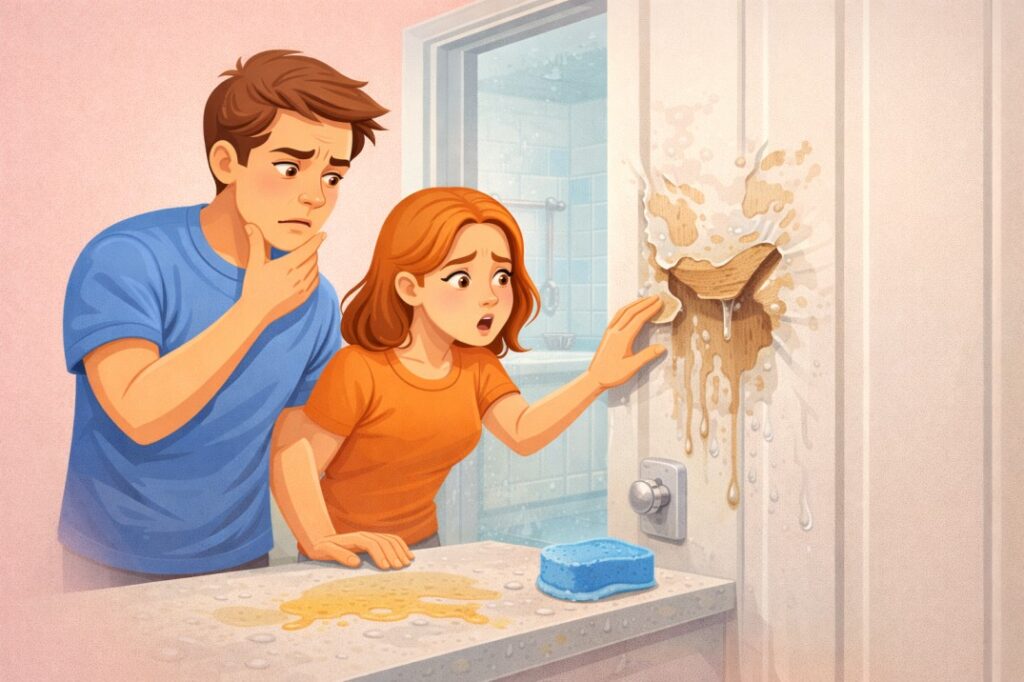
Bathroom doors often face the toughest conditions in any home. Daily exposure to moisture, steam, soap residue, and frequent handling causes them to lose shine quickly. In homes where laminate doors are used for bathrooms, the challenge becomes even bigger—cleaning too lightly leaves stains behind, while cleaning too harshly risks peeling or swelling.
Many people notice the problem during regular cleaning days or before guests arrive. The door may look dull, patchy, or stained near the handle and lower edges, even though it was cleaned recently. Laminate surfaces need a different approach compared to wooden or painted doors.
Learning how to clean bathroom door without damaging laminate helps maintain appearance, prevents moisture damage, and extends the door’s life. This article explains why laminate doors get dirty, safe cleaning methods, common mistakes, and simple habits that keep bathroom doors looking clean without causing damage.
Why Bathroom Laminate Doors Get Dirty Easily
Bathroom laminate doors are exposed to a mix of moisture and daily use. Common reasons they lose finish include:
- Steam from hot showers
- Water splashes near door edges
- Soap and shampoo residue
- Frequent hand contact near handles
- Poor bathroom ventilation
Unlike solid wood, laminate has a thin protective layer. Excess water or harsh cleaners can weaken this layer, leading to swelling, bubbling, or peeling—especially near edges.
If moisture is a recurring issue in your bathroom, these winter home care tips to avoid moisture damage and dampness explain how humidity affects surfaces throughout the home.
Things to Check Before Cleaning a Laminate Door
Before starting, check:
- Whether laminate edges are already loose
- Areas with visible swelling
- Type of stains (water marks, soap stains, dirt)
- Condition near hinges and handle
Always avoid soaking laminate surfaces, even if stains look stubborn.
How to Clean Bathroom Door Without Damaging Laminate
1. Dry Dusting First
Start with a dry microfiber cloth.
- Remove surface dust and hair
- Clean corners and edges gently
- This prevents dirt from spreading during wet cleaning
Dry dusting is especially important if the bathroom stays humid.
2. Mild Soap and Warm Water Cleaning
This is the safest method for regular cleaning.
Steps:
- Mix warm water with a few drops of mild dish soap
- Dip a soft cloth and wring it thoroughly
- Wipe the door gently in straight strokes
- Clean one section at a time
Never allow water to drip down the door.
3. Vinegar Solution for Soap Marks (Occasional Use)
For visible soap or water stains:
- Mix 1 cup water with 1 tablespoon white vinegar
- Lightly dampen a cloth
- Wipe stained areas gently
- Immediately wipe dry
Do not use vinegar frequently, as repeated use may dull laminate shine.
If your bathroom walls also show moisture marks, this mold removal from bathroom walls guide explains how dampness spreads in enclosed spaces.
4. Baking Soda Paste for Handle Area
The area around the door handle often has fingerprints and grime.
- Mix a small amount of baking soda with water
- Apply gently using a soft cloth
- Rub lightly and wipe clean
- Dry immediately
Avoid using baking soda on glossy laminate surfaces too often.
5. Drying Is Mandatory
After every cleaning step:
- Wipe the door completely dry
- Pay attention to edges and corners
- Leave the bathroom door open for airflow
Drying prevents moisture from entering laminate layers.
Step-by-Step Weekly Cleaning Routine
- Dry wipe entire door
- Clean with mild soap solution
- Spot-clean stains if needed
- Wipe handle area
- Dry thoroughly
This routine takes less than 10 minutes and prevents long-term damage.
Safety Tips While Cleaning Laminate Doors
- Never use steel scrubbers
- Avoid bleach and acid cleaners
- Do not spray water directly
- Use soft cloths only
- Ensure good ventilation
Using harsh bathroom cleaners meant for tiles can permanently damage laminate.
If strong smells linger in the bathroom, this toilet bad smell removal guide explains how odour often relates to moisture and residue.
Common Mistakes to Avoid
- Scrubbing hard to remove stains
- Using excess water
- Ignoring swollen edges
- Cleaning only once in a while
- Letting soap residue dry on surface
These mistakes reduce laminate lifespan significantly.
Do vs Avoid Table
| Do | Avoid |
|---|---|
| Use mild soap | Use harsh cleaners |
| Wipe gently | Scrub aggressively |
| Dry after cleaning | Leave surface wet |
| Clean regularly | Delay cleaning |
Real-Life Indian Household Experiences
Sneha Kulkarni – Nashik, Maharashtra
Sneha noticed her bathroom laminate door starting to swell near the bottom edge during monsoon. She realised frequent mopping splashed water onto the door. By switching to gentle cleaning and drying the door after every wash, further damage stopped. “Drying made the biggest difference,” she shared.
Mohammed Irfan – Kozhikode, Kerala
Irfan’s bathroom door developed dull patches due to daily use of strong bathroom cleaner. After learning safer cleaning methods, he restored the door’s appearance and avoided further peeling. “The laminate looks better with simple cleaning,” he said.
How to Prevent Laminate Door Damage Long-Term
- Use exhaust fan during showers
- Keep bathroom well-ventilated
- Wipe door dry after mopping
- Avoid hanging wet towels on door
- Clean lightly every week
If moisture affects other furniture nearby, these wooden furniture care tips explain how humidity impacts surfaces beyond the bathroom.
FAQs
1. Can laminate bathroom doors be washed with water?
Only lightly damp cleaning is safe. Avoid soaking.
2. Is vinegar safe for laminate doors?
Yes, when diluted and used occasionally.
3. How often should laminate doors be cleaned?
Light cleaning once a week is sufficient.
4. Can laminate peeling be reversed?
No, but proper care can prevent further damage.
5. Are commercial bathroom cleaners safe?
Most are too harsh for laminate surfaces.
Simple Checklist
- ✔ Dry dust first
- ✔ Use mild soap
- ✔ Clean stains gently
- ✔ Dry immediately
- ✔ Ventilate bathroom
Summary
Laminate bathroom doors require careful cleaning to maintain their appearance and durability. Using gentle methods, minimal water, and regular drying makes it possible to clean bathroom door without damaging laminate surfaces.
Consistent care, attention to moisture, and avoiding harsh products help extend the life of laminate doors—keeping bathrooms looking clean and well-maintained for everyday use.
Safety note: If you’re unsure or uncomfortable performing any home maintenance task mentioned in this article, it’s safer to consult a qualified professional.