
Learn how to clean bathroom ceiling mold without scrubbing using simple home methods. Easy and safe tips to remove mold and prevent it from returning.
How to Clean Bathroom Ceiling Mold Without Scrubbing
Introduction
Bathroom ceiling mold is a common problem in many homes, especially in areas with high humidity. Bathrooms are exposed to steam from hot showers, poor ventilation, and constant moisture. Over time, these conditions create the perfect environment for mold to grow on ceilings and corners.
Mold usually appears as black, green, or dark grey spots on bathroom ceilings. Apart from making the bathroom look dirty, mold can also cause unpleasant smells and may trigger allergies for some people. Many people try to remove it by scrubbing the ceiling, but this can be difficult, messy, and sometimes ineffective.
Fortunately, there are easier ways to deal with this problem. Using natural cleaning solutions and proper techniques, you can remove mold without heavy scrubbing. These methods help loosen mold stains and kill the spores so they do not return quickly.
In this guide, you will learn how to clean bathroom ceiling mold without scrubbing, using safe household ingredients and simple techniques suitable for Indian homes.
Understanding Why Mold Forms on Bathroom Ceilings
Mold develops when moisture stays on surfaces for long periods. Bathrooms are particularly vulnerable because steam rises during bathing and condenses on the ceiling.
Several factors contribute to ceiling mold growth:
- Poor bathroom ventilation
- Constant humidity from showers
- Water condensation on ceiling surfaces
- Lack of regular cleaning
- Poor sunlight exposure
When moisture stays trapped on the ceiling, mold spores begin to grow and spread.
Improving bathroom ventilation can reduce mold growth. You may find this guide useful:
How to Clean Bathroom Exhaust Fan Easily at Home
https://caringforyourhome.com/how-to-clean-bathroom-exhaust-fan-easily-at-home/
Key Benefits of Removing Ceiling Mold
Removing mold early helps maintain a healthier and cleaner bathroom environment.
- Improves bathroom hygiene
- Removes unpleasant musty smell
- Prevents mold from spreading to walls
- Reduces allergy risks
- Improves the appearance of the bathroom
Regular maintenance can prevent mold from returning frequently.
Featured Snippet: Quick Method to Remove Bathroom Ceiling Mold Without Scrubbing
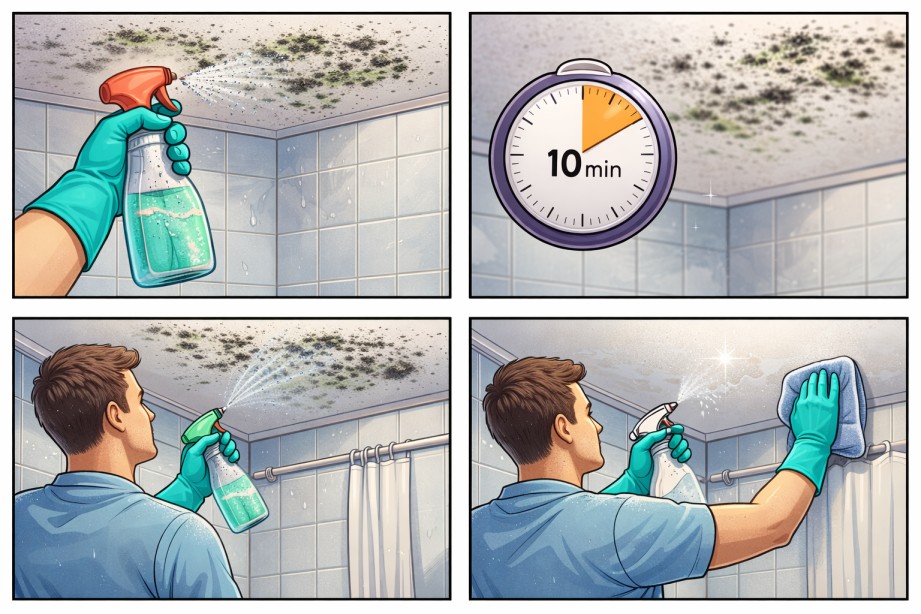
- Mix vinegar and water in a spray bottle.
- Spray the solution on mold spots.
- Leave it for 20–30 minutes.
- Wipe gently with a cloth or sponge.
- Allow the ceiling to dry completely.
This method helps loosen mold and kill spores without scrubbing.
Step-by-Step Methods to Clean Bathroom Ceiling Mold
1. Vinegar Spray Method
White vinegar is one of the most effective natural solutions for removing mold.
Steps
- Fill a spray bottle with equal parts vinegar and water.
- Spray the solution directly on the mold spots.
- Let it sit for about 30 minutes.
- Use a soft cloth or sponge to wipe the area.
- Allow the ceiling to air dry.
Vinegar helps kill mold spores and remove stains naturally.
2. Baking Soda Spray Method
Baking soda helps neutralize mold and remove unpleasant odours.
Steps
- Mix 1 teaspoon baking soda with 1 cup water.
- Pour the mixture into a spray bottle.
- Spray it on the mold area.
- Leave for 20 minutes.
- Wipe gently with a cloth.
This method works well for mild mold growth.
3. Hydrogen Peroxide Method
Hydrogen peroxide is another effective mold remover that works without scrubbing.
Steps
- Fill a spray bottle with 3% hydrogen peroxide solution.
- Spray the moldy areas on the ceiling.
- Leave it for 15 minutes.
- Wipe with a cloth.
Hydrogen peroxide helps break down mold stains and disinfect surfaces.
4. Vinegar and Baking Soda Combination
For stubborn mold patches, combining both ingredients can improve results.
Steps
- Spray vinegar solution on the mold.
- Wait for 20 minutes.
- Sprinkle a little baking soda.
- Spray water lightly and wipe the area.
This method helps loosen tougher mold stains.
Comparison Table: Mold Cleaning Methods
| Method | Effectiveness | Cost | Best For |
|---|---|---|---|
| Vinegar spray | High | Low | Moderate mold |
| Baking soda solution | Medium | Very low | Mild mold |
| Hydrogen peroxide | High | Medium | Mold stains |
| Vinegar + baking soda | Very high | Low | Stubborn mold |
Using vinegar regularly can prevent mold from returning.
Real-Life Example from an Indian Home
Priya from Chennai noticed black mold spots forming on the ceiling of her bathroom during the monsoon season. Because the bathroom had poor ventilation, moisture accumulated quickly.
Instead of scrubbing the ceiling, she sprayed vinegar solution and left it for half an hour before wiping it with a cloth.
Within a few days, most of the mold stains disappeared and the bathroom looked much cleaner.
Personal Experience:
In my own bathroom, I once noticed small mold spots appearing on the ceiling corners during the rainy season. Instead of scrubbing the ceiling, I sprayed a vinegar solution and left it for some time. After wiping gently with a cloth, the mold reduced significantly and the bathroom smelled fresher.
Common Mistakes to Avoid
Ignoring Small Mold Spots
Small patches can spread quickly if left untreated.
Scrubbing Hard
Excessive scrubbing can damage ceiling paint.
Not Improving Ventilation
Without proper airflow, mold will return.
Using Excess Water
Too much moisture can worsen mold growth.
Expert Tips to Prevent Bathroom Mold
Experts recommend a few simple habits.
Improve ventilation
Use exhaust fans or open windows after bathing.
Keep bathroom dry
Wipe wet surfaces and allow airflow.
Clean regularly
Check ceilings and corners weekly.
Allow sunlight inside
Sunlight helps reduce moisture and mold growth.
You may also find these helpful:
Mold Removal From Bathroom Walls – Safe Home Method That Works
https://caringforyourhome.com/mold-removal-from-bathroom-walls-safe-home-method-that-works/
How to Remove Hard Water Stains From Bathroom Tiles Naturally
https://caringforyourhome.com/how-to-remove-hard-water-stains-from-bathroom-tiles-naturally/
Bathroom Cleaning Checklist for Busy People (Daily, Weekly, Monthly Tasks)
https://caringforyourhome.com/bathroom-cleaning-checklist-for-busy-people-easy-daily-weekly-monthly-tasks/
Simple Home Remedies to Remove Urine Smell From Toilet
https://caringforyourhome.com/simple-home-remedies-to-remove-urine-smell-from-toilet/
How to Clean Shower Head Blockage Naturally at Home
https://caringforyourhome.com/how-to-clean-shower-head-blockage-naturally-at-home/
How to Clean Bathroom Door Without Damaging Laminate
https://caringforyourhome.com/how-to-clean-bathroom-door-without-damaging-laminate/
Pros and Cons of Natural Mold Cleaning Methods
| Pros | Cons |
|---|---|
| Uses simple household ingredients | May require repeated application |
| Safe and chemical-free | Strong mold may need deeper cleaning |
| Low cost | Needs proper ventilation afterward |
| Easy to apply | Results may take time |
Frequently Asked Questions
1. Why does mold grow on bathroom ceilings?
Mold grows due to constant humidity, poor ventilation, and moisture buildup.
2. Can vinegar kill mold on ceilings?
Yes. Vinegar is a natural antifungal solution that can kill many types of mold.
3. How often should bathroom ceilings be cleaned?
Checking and cleaning once every two weeks helps prevent mold buildup.
4. Is scrubbing necessary to remove mold?
No. Mold can often be removed using spray solutions that loosen the stains.
5. Can mold return after cleaning?
Yes. If humidity and ventilation problems are not fixed, mold may return.
6. Does sunlight help prevent mold?
Yes. Sunlight helps reduce moisture and prevents mold growth.
Conclusion
Bathroom ceiling mold is a common issue caused by moisture, humidity, and poor ventilation. If ignored, mold can spread quickly and make the bathroom look unhygienic.
Fortunately, removing mold does not always require heavy scrubbing. Simple natural solutions such as vinegar, baking soda, and hydrogen peroxide can loosen mold stains and kill spores effectively.
By cleaning mold early and improving bathroom ventilation, you can prevent the problem from returning frequently.
Maintaining a dry and well-ventilated bathroom is the best long-term solution for keeping ceilings clean and mold-free.
References
Centers for Disease Control and Prevention (CDC)
https://www.cdc.gov/mold/control_mold.htm
United States Environmental Protection Agency (EPA)
https://www.epa.gov/mold/mold-cleanup-your-home
World Health Organization (WHO) – Indoor Air Quality and Dampness
https://www.who.int/publications/i/item/9789289041683
“From what I’ve observed in many households, including my relatives’ homes, small cleaning habits are often overlooked until the problem becomes noticeable. For example, areas like kitchen corners, drains, or storage spaces are usually ignored during regular cleaning routines.”
“However, I’ve seen that simple and consistent cleaning practices—using basic home methods—can prevent buildup, reduce damage, and keep the space well-maintained. In the long run, these small efforts help avoid bigger issues and unnecessary repair costs.”
Research Sources
World Health Organization (WHO)https://www.who.int/publications/i/item/9789289041683
Centers for Disease Control and Prevention (CDC)
https://www.cdc.gov/healthyhomes
United States Environmental Protection Agency (EPA)
https://www.epa.gov/indoor-air-quality-iaq