
Learn easy ways to prevent slippery bathroom floors using simple home solutions. Practical tips to improve safety and avoid bathroom accidents in Indian homes.
Easy Ways to Prevent Slippery Bathroom Floor
Introduction
Bathroom floors can become extremely slippery, especially in Indian homes where water usage is frequent. From bathing and washing clothes to cleaning the floor daily, bathrooms often remain wet for long periods. When water mixes with soap residue, shampoo, or floor cleaner, it creates a smooth surface that increases the risk of slipping.
Slippery bathroom floors are one of the most common causes of household accidents. Children, elderly family members, and even healthy adults can easily lose balance on wet tiles. In many homes, the problem becomes worse during monsoon season or in bathrooms with poor ventilation.
Fortunately, preventing a slippery bathroom floor does not require expensive renovation or complicated changes. With a few practical habits and simple home solutions, you can significantly reduce the risk of accidents and make your bathroom safer for everyone.
In this guide, we will explore easy ways to prevent slippery bathroom floors, including natural cleaning methods, safety improvements, and expert tips suitable for Indian households.
Understanding Why Bathroom Floors Become Slippery
Bathroom tiles become slippery due to several common factors.
Soap and shampoo residues create a thin film on the tile surface. This film reduces friction and makes the floor smooth.
Hard water stains can also make tiles slippery over time. When minerals from water accumulate on the surface, they create a polished layer that increases slipperiness.
Poor ventilation is another reason. Bathrooms that remain damp for long hours allow moisture to stay on the floor, increasing the risk of slipping.
Regular cleaning helps remove this buildup. You can read our guide on
How to Remove Hard Water Stains From Bathroom Tiles Naturally
https://caringforyourhome.com/how-to-remove-hard-water-stains-from-bathroom-tiles-naturally/
Key Benefits of Preventing Slippery Bathroom Floors
Taking steps to reduce slipperiness in your bathroom offers several advantages.
- Reduces risk of slips and falls
- Improves safety for elderly family members
- Prevents accidents for children
- Keeps bathroom hygienic and clean
- Reduces soap and dirt buildup on tiles
- Makes daily bathroom use more comfortable
Improving bathroom safety is an important part of overall home maintenance.
You may also find this checklist useful for maintaining bathroom hygiene.
Bathroom Cleaning Checklist for Busy People (Daily, Weekly, Monthly Tasks)
https://caringforyourhome.com/bathroom-cleaning-checklist-for-busy-people-easy-daily-weekly-monthly-tasks/
Featured Snippet: Quick Ways to Prevent Slippery Bathroom Floor
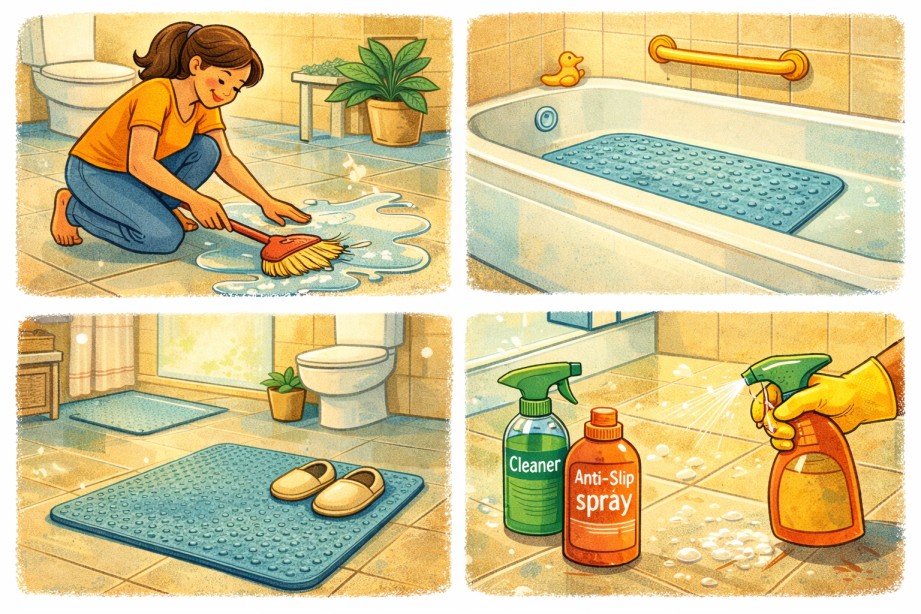
- Use anti-slip bathroom mats.
- Clean soap residue from tiles regularly.
- Keep bathroom ventilated to reduce moisture.
- Install anti-slip strips or stickers.
- Use natural cleaning solutions to remove buildup.
- Dry the floor after bathing.
These simple steps help reduce the risk of bathroom accidents.
Step-by-Step Ways to Prevent Bathroom Floor Slipperiness
1. Use Anti-Slip Bathroom Mats
One of the easiest solutions is placing anti-slip mats near the shower area and bathroom entrance.
These mats provide better grip and absorb excess water. Rubber-backed mats work best because they stay firmly in place.
Make sure to wash the mats regularly to avoid mould buildup.
2. Remove Soap Residue Regularly
Soap and shampoo residues are one of the biggest reasons for slippery tiles.
Clean bathroom tiles weekly using mild cleaning solutions to remove these residues.
If soap buildup becomes stubborn, you can learn effective methods in our guide:
Mold Removal From Bathroom Walls – Safe Home Method That Works
https://caringforyourhome.com/mold-removal-from-bathroom-walls-safe-home-method-that-works/
3. Improve Bathroom Ventilation
Proper ventilation helps reduce moisture on the floor.
You can improve airflow by:
- Opening windows after bathing
- Installing a bathroom exhaust fan
- Keeping the bathroom door open when possible
Ventilation allows the floor to dry faster and reduces slipperiness.
If your exhaust fan becomes dirty, airflow may reduce. Learn how to clean it here:
How to Clean Bathroom Exhaust Fan Easily at Home
https://caringforyourhome.com/how-to-clean-bathroom-exhaust-fan-easily-at-home/
4. Install Anti-Slip Stickers or Strips
Anti-slip stickers are affordable and easy to install.
These textured strips increase friction on smooth tiles and prevent slipping.
They are commonly used in:
- Shower areas
- Bathtub surfaces
- Bathroom entrances
These strips are widely available in hardware stores and online.
5. Dry the Bathroom Floor After Use
A simple but effective habit is drying the floor after bathing.
Use a floor wiper or cloth to remove excess water.
This is especially helpful in small bathrooms where water spreads across the entire floor.
6. Use Natural Cleaning Solutions
Natural cleaners help remove slippery residue without damaging tiles.
A simple solution is:
- 1 cup vinegar
- 1 cup warm water
- Few drops dishwashing liquid
Scrub the floor gently with this mixture to remove soap film and dirt.
This method also helps remove unpleasant odours. You may find this guide helpful:
Simple Home Remedies to Remove Urine Smell From Toilet
https://caringforyourhome.com/simple-home-remedies-to-remove-urine-smell-from-toilet/
Comparison Table: Popular Anti-Slip Bathroom Solutions
| Solution | Cost | Effectiveness | Maintenance |
|---|---|---|---|
| Anti-slip mats | Low | High | Wash regularly |
| Anti-slip stickers | Low | Medium to high | Replace when worn |
| Regular cleaning | Very low | High | Weekly cleaning needed |
| Floor wiper drying | Very low | Medium | Daily habit |
| Improved ventilation | Medium | High | Minimal maintenance |
Using multiple solutions together provides the best safety.
Real-Life Example from an Indian Home
Meena from Hyderabad noticed that her bathroom tiles became extremely slippery during monsoon season. Her elderly parents found it difficult to walk safely inside the bathroom.
She installed anti-slip mats near the shower area and began drying the floor after each use.
Within a few days, the bathroom became much safer and the risk of slipping reduced significantly.
Personal Experience:
In my own home, the bathroom floor used to become very slippery after showering, especially when soap residue accumulated on the tiles. After starting a simple routine of weekly vinegar cleaning and using a floor wiper after bathing, the tiles became noticeably less slippery and much safer to walk on.
Common Mistakes to Avoid
Ignoring Soap Buildup
Soap residue slowly forms a slippery layer on tiles if not cleaned regularly.
Using Too Much Floor Cleaner
Excess cleaner can leave a slippery film on the floor.
Not Drying the Floor
Standing water significantly increases slip risk.
Using Smooth Bathroom Tiles
Highly polished tiles look attractive but may be unsafe for wet areas.
Expert Tips for Bathroom Floor Safety
Experts recommend a few simple habits for preventing slips.
Choose textured tiles
If renovating, choose anti-slip tiles designed for bathrooms.
Keep cleaning tools handy
Place a floor wiper inside the bathroom to encourage quick drying.
Use separate shower area
If possible, install a shower partition to limit water spread.
Clean drainage regularly
Blocked drains cause water to accumulate on the floor.
You can learn simple ways to prevent drainage issues in this guide:
Kitchen Sink Blockage – Simple Home Fixes That Work Naturally
https://caringforyourhome.com/kitchen-sink-blockage-simple-home-fixes-that-work-naturally/
Pros and Cons of Bathroom Anti-Slip Solutions
| Pros | Cons |
|---|---|
| Improves bathroom safety | Requires regular maintenance |
| Reduces risk of accidents | Mats may need frequent cleaning |
| Affordable solutions available | Stickers may wear out over time |
| Easy to install and use | Some solutions may affect aesthetics |
Frequently Asked Questions
1. Why does my bathroom floor become slippery?
Soap residue, water buildup, and smooth tiles are the main reasons for slippery bathroom floors.
2. What is the easiest way to prevent slipping in the bathroom?
Using anti-slip mats and drying the floor after bathing are the simplest solutions.
3. Can vinegar help reduce slippery tiles?
Yes. Vinegar removes soap residue and mineral deposits that cause slipperiness.
4. Are anti-slip stickers effective?
Yes. They increase friction on smooth tiles and help prevent slips.
5. How often should bathroom floors be cleaned?
Bathroom floors should be cleaned at least once or twice a week to remove soap buildup.
6. Are anti-slip tiles better for bathrooms?
Yes. Textured anti-slip tiles provide better grip compared to polished tiles.
Conclusion
Slippery bathroom floors are a common safety concern in many households. Water, soap residue, and poor ventilation often combine to create hazardous conditions that increase the risk of slips and falls.
Fortunately, preventing this problem does not require expensive solutions. Simple steps like using anti-slip mats, cleaning soap residue regularly, improving ventilation, and drying the floor after bathing can make a big difference.
By adopting these practical habits and maintaining regular bathroom cleaning, you can create a safer environment for your family, especially for children and elderly members.
Small improvements in bathroom safety today can prevent serious accidents in the future.
References
Healthline
https://www.healthline.com/health/how-to-prevent-bathroom-falls
The Spruce
https://www.thespruce.com/how-to-clean-bathroom-tile-5092327
CDC Home Safety Guidelines
https://www.cdc.gov/homeandrecreationalsafety/falls/bathroom.html
Good Housekeeping
https://www.goodhousekeeping.com/home/cleaning/a34399206/how-to-clean-bathroom-floor/
From what I have observed in many homes, including relatives’ houses, small cleaning habits are often ignored until problems become noticeable. Regular maintenance using simple home methods makes a big difference in keeping things clean, preventing damage, and avoiding costly repairs later.
References
World Health Organization (WHO)https://www.who.int/publications/i/item/9789289041683
Centers for Disease Control and Prevention (CDC)
https://www.cdc.gov/healthyhomes
United States Environmental Protection Agency (EPA)
https://www.epa.gov/indoor-air-quality-iaq