
Learn how to clean greasy kitchen walls safely without damaging paint. Simple home methods, step-by-step guidance, common mistakes, and real-life Indian household experiences.
Introduction
In many Indian homes, the kitchen is one of the busiest spaces. Daily cooking—especially frying, tadka, and pressure cooking—slowly leaves its mark on the walls. Over time, the area behind the gas stove or near cabinets starts looking dull, sticky, and dark. Most people notice this problem only during festivals, house cleaning days, or when guests are expected.
Anita Sharma from Noida, Uttar Pradesh, faced this issue before Diwali cleaning. When she wiped the wall behind her stove with a wet cloth, the grease spread instead of coming off, leaving uneven patches on the paint. “I was worried I had spoiled the wall,” she shared. Like many homeowners, she assumed repainting was the only option.
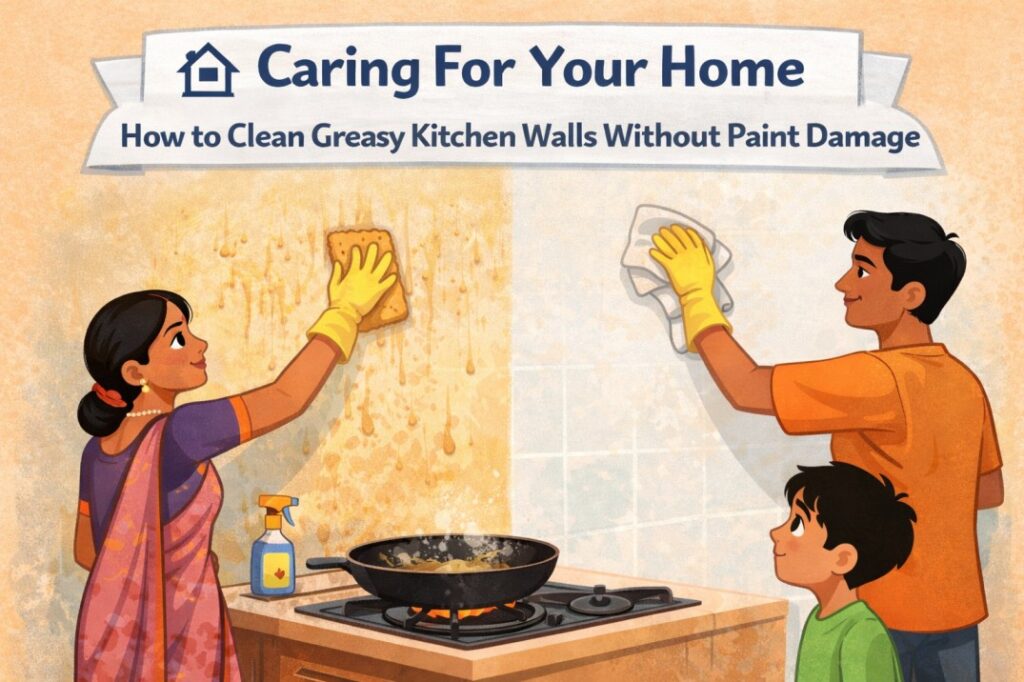
The truth is, greasy walls can be cleaned safely if done correctly. Knowing how to clean greasy kitchen walls without paint damage helps maintain hygiene, appearance, and paint life—without harsh chemicals or extra expense. This article explains why grease builds up, what tools are safe, and step-by-step methods that work well in Indian kitchens.
Why Grease Builds Up on Kitchen Walls
Indian cooking often involves oil, ghee, spices, and high heat. When food is fried or tempered, tiny oil particles rise with steam and settle on nearby surfaces. Over time, these particles stick to walls and mix with dust and moisture.
Poor ventilation worsens the problem. Kitchens without exhaust fans or with unclean chimney filters trap grease in the air. Flat or low-quality wall paint absorbs grease faster, making stains harder to remove.
If walls are not cleaned regularly, the grease layer thickens and bonds with the paint surface. When scrubbed harshly later, this can cause paint fading, peeling, or patchiness.
Tools and Materials Needed
Most items required are already available at home.
Basic Supplies
- Soft microfiber cloths
- Non-abrasive sponge
- Warm water
- Mild liquid dish soap
- White vinegar
- Bucket or spray bottle
- Dry cotton towel
Optional
- Rubber gloves
- Small stool for higher areas
Avoid scrub pads, steel wool, strong degreasers, or acid-based cleaners, as these can damage wall paint.
Step-by-Step: How to Clean Greasy Kitchen Walls Without Paint Damage
Step 1: Test Before Cleaning
Always test your cleaning solution on a small, hidden section of the wall. This helps ensure the paint does not fade or peel.
Step 2: Remove Dry Dust First
Use a dry microfiber cloth to wipe off loose dust. This prevents smudging and spreading grease during wet cleaning.
Step 3: Prepare a Mild Cleaning Solution
Mix:
- 1 litre warm water
- 2–3 drops of mild dishwashing liquid
This solution breaks down grease gently without harming paint.
Step 4: Clean Gently in Sections
Dip the sponge, squeeze out excess water, and wipe the wall lightly. Clean in straight strokes, working from bottom to top to avoid drip marks.
Do not scrub hard or soak the wall.
Step 5: Rinse the Area
Use another clean, damp cloth with plain water to remove soap residue. Leftover soap attracts more dust later.
Step 6: Dry Immediately
Dry the wall using a towel. Letting walls air-dry may leave water marks or dull patches.
Removing Stubborn Grease Near the Stove
For areas with heavy oil buildup:
Vinegar Solution
- 1 cup warm water
- 1 tablespoon white vinegar
Spray lightly, wipe gently, and rinse immediately. Vinegar helps loosen grease but should not be used daily.
If grease is also present on cabinets, this guide on how to remove grease from kitchen cabinets naturally at home provides similar safe methods.
Safety Tips While Cleaning Painted Walls
- Do not use excessive water
- Avoid circular scrubbing
- Keep switches and plug points dry
- Never mix vinegar with chemical cleaners
- Wear gloves if skin is sensitive
If your kitchen also faces dampness issues during winter or monsoon, these winter home care tips to avoid moisture damage and dampness can help protect wall surfaces.
Common Mistakes to Avoid
- Using harsh degreasers meant for tiles
- Scrubbing old stains aggressively
- Skipping the dusting step
- Letting soap dry on the wall
- Cleaning only once a year
These mistakes often cause paint discoloration and uneven finish.
Do vs Avoid Table
| Do | Avoid |
|---|---|
| Use mild soap | Use acid cleaners |
| Wipe gently | Scrub hard |
| Clean regularly | Wait until stains harden |
| Dry immediately | Let walls drip-dry |
Myths vs Reality
Myth: Strong cleaners remove grease faster
Reality: They damage paint and shorten wall life
Myth: Repainting is the only solution
Reality: Safe cleaning restores most walls
Myth: Vinegar is always harmful to paint
Reality: Diluted vinegar is safe if used occasionally
Real-Life Indian Household Experiences
Rajesh Kulkarni – Pune, Maharashtra
Rajesh noticed dark oil stains near his cooking area after years of daily cooking. “I thought repainting was the only option,” he said. After learning gentle cleaning methods, he removed most stains without damaging the paint and now cleans monthly.
Meena Iyer – Coimbatore, Tamil Nadu
Meena damaged one section of her wall using a strong floor cleaner. “That mistake taught me to test first,” she explained. Using mild soap and regular wiping, she maintained the rest of her kitchen walls safely.
How to Prevent Grease Buildup Going Forward
- Wipe splash zones weekly
- Use chimney or exhaust fan while cooking
- Clean chimney filters regularly using chemical-free methods
- Avoid cooking on very high flame without ventilation
FAQs
1. Can I use baking soda on painted kitchen walls?
Only lightly and occasionally. Baking soda is mildly abrasive and should be used carefully.
2. How often should kitchen walls be cleaned?
Light cleaning every 2–3 weeks prevents heavy grease buildup.
3. Will vinegar remove old grease stains?
It helps loosen grease but works best when stains are not too old.
4. Is repainting necessary after grease buildup?
Not always. Proper cleaning often restores wall appearance.
5. Does wall paint type matter?
Yes. Matte paints absorb grease faster than semi-gloss finishes.
Quick Checklist Before You Start
- ✔ Test solution first
- ✔ Dust before wet cleaning
- ✔ Use minimal water
- ✔ Dry the wall immediately
Summary
Greasy kitchen walls are common in Indian homes, but they do not always require repainting. With gentle cleaning methods, regular maintenance, and the right tools, it is possible to clean greasy kitchen walls without paint damage. Small, consistent efforts keep walls clean, hygienic, and looking fresh for years.
Maintaining kitchen walls along with other home-care routines makes everyday cleaning easier and helps protect your home’s interior in the long run.
Safety note: If you’re unsure or uncomfortable performing any home maintenance task mentioned in this article, it’s safer to consult a qualified professional.