

Learn how to protect furniture from termites at home using safe, non-chemical methods. Practical prevention tips, real-life home stories, and long-term care habits.
Introduction
Termite damage is one of the most silent and costly problems homeowners face. Unlike visible pests, termites work from the inside out, often going unnoticed until furniture becomes weak, hollow, or permanently damaged. Beds, wardrobes, wooden cabinets, doors, and even sofas with wooden frames are common targets.
Many people only realize there is a termite issue when furniture starts shedding powder, making hollow sounds, or collapsing at joints. At that stage, repair options are limited. Chemical termite treatments exist, but many homeowners hesitate to use them indoors due to health concerns, strong odors, and the presence of children or pets.
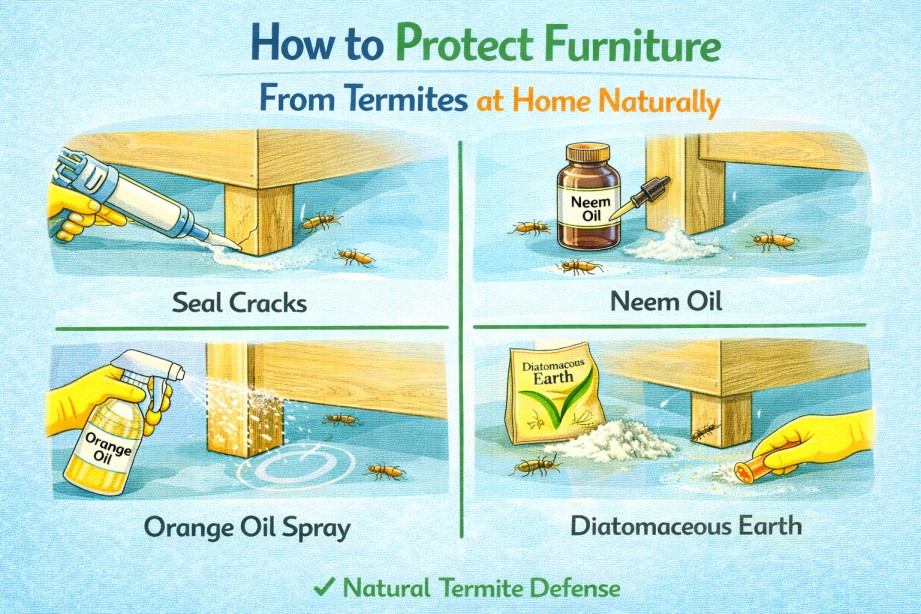
The good news is that protecting furniture from termites at home is possible with early prevention, moisture control, and regular inspection. This guide explains why termites attack furniture, how to protect wooden items naturally, and how real households prevented termite damage through simple, consistent habits.
Why Termites Attack Furniture
Termites are attracted to conditions that support survival and nesting.
Common reasons include:
- Moisture in walls, floors, or furniture
- Wood in contact with damp surfaces
- Poor ventilation
- Hidden cracks or untreated wood
- Long periods without inspection
Furniture placed near damp walls or bathrooms is especially vulnerable.
Early Signs of Termite Activity in Furniture
Identifying termites early can save furniture:
- Fine wood powder near furniture legs
- Hollow sound when tapping wood
- Small holes or cracks on wooden surfaces
- Loose joints or weakened panels
- Mud-like trails near walls or floors
If you notice these signs, immediate action is necessary.
How to Protect Furniture From Termites at Home
1. Keep Furniture Dry at All Times
Moisture is the biggest attractor for termites.
- Wipe furniture regularly
- Avoid placing furniture against damp walls
- Fix leaks immediately
Moisture control is a key preventive step, similar to practices shared in
how to protect home from mold during rainy season naturally
2. Maintain Proper Airflow Around Furniture
Stagnant air traps moisture.
- Keep a small gap between furniture and walls
- Open windows for ventilation daily
- Avoid overcrowding rooms
This also helps extend furniture life, as discussed in
wooden furniture care tips to prevent damage and extend lifespan
3. Regularly Inspect Wooden Furniture
Early detection prevents spread.
- Check corners, undersides, and back panels
- Inspect furniture legs touching the floor
- Look behind wardrobes and cabinets
Monthly inspection is usually sufficient.
4. Avoid Direct Contact With Floor and Walls
Furniture in constant contact with floors absorbs moisture.
- Use furniture risers or rubber pads
- Avoid placing furniture directly on damp floors
- Keep furniture away from bathrooms and kitchens
5. Use Natural Termite-Repelling Measures
While not treatments, these help reduce risk:
- Neem leaves placed inside cupboards
- Camphor blocks in storage units
- Sun-drying small wooden items periodically
These help deter termites when combined with cleanliness.
6. Control Dampness During Monsoon and Winter
Termite activity increases in damp seasons.
- Use moisture absorbers near furniture
- Dry walls and floors regularly
- Improve ventilation in closed rooms
Seasonal care habits like those in
monsoon home care tips to prevent dampness naturally
play an important role in termite prevention.
Common Furniture Protection Mistakes
- Ignoring minor powder deposits
- Painting over damaged wood
- Assuming termites only affect old furniture
- Using random chemical sprays without inspection
These actions often delay proper prevention.
Real-Life Home Stories: Furniture Termite Prevention
Story 1: Ramesh Nair – Kakkanad, Kochi, Kerala
Ramesh Nair noticed fine wood powder near the legs of his wooden bed during monsoon. Instead of using chemicals, he focused on drying the room, moving the bed slightly away from the wall, and inspecting the underside weekly. He also placed moisture absorbers in the room. The termite activity stopped spreading, and no new damage appeared. Early detection helped him save the furniture.
Story 2: Shilpa Mehta – Borivali West, Mumbai, Maharashtra
Shilpa Mehta discovered hollow sounds in her wardrobe panels. The wardrobe was placed against a bathroom wall that stayed damp. She relocated the wardrobe, improved ventilation, and dried the wall thoroughly. She also followed furniture care practices similar to
how to remove water stains from wooden table naturally at home
The termite issue did not progress further.
Story 3: Aman Verma – Vaishali, Ghaziabad, Uttar Pradesh
Aman Verma faced repeated termite issues in wooden cabinets near his kitchen. The problem was linked to moisture and food residue. He improved kitchen hygiene, controlled grease and dampness, and kept cabinets dry—similar to habits explained in
how to remove grease from kitchen cabinets naturally at home
Over time, termite activity stopped recurring.
Do vs Avoid: Termite Prevention Habits
| Do | Avoid |
|---|---|
| Keep furniture dry | Ignoring moisture |
| Inspect regularly | Waiting for damage |
| Maintain airflow | Pressing furniture to walls |
| Act early | Delaying response |
When to Consider Professional Help
Natural prevention works best in early stages. Seek professional inspection if:
- Termite damage is widespread
- Structural wood is affected
- Activity continues despite drying and inspection
Early professional advice prevents structural damage.
FAQs
1. Can termites be prevented completely at home?
Risk can be reduced significantly with moisture control and inspection.
2. Do termites only attack old furniture?
No, new furniture is also vulnerable in damp conditions.
3. Are natural repellents enough?
They help prevent but don’t eliminate existing infestations.
4. How often should furniture be checked?
Once a month, more often during monsoon.
5. Is moisture the main cause of termites?
Yes, moisture is the biggest contributing factor.
Simple Summary
Termite damage to furniture often starts silently but can be prevented with early care. By controlling moisture, ensuring airflow, inspecting furniture regularly, and maintaining seasonal habits, you can protect your wooden furniture effectively without relying on chemicals. Real-life home experiences show that prevention works best when done consistently.
With these simple, home-friendly termite prevention tips, your furniture can remain strong, safe, and long-lasting for years.
Safety note: If you’re unsure or uncomfortable performing any home maintenance task mentioned in this article, it’s safer to consult a qualified professional.