

Learn how to clean an induction cooktop without scratches using safe, natural methods. Step-by-step cleaning, real-life stories, and prevention tips included.
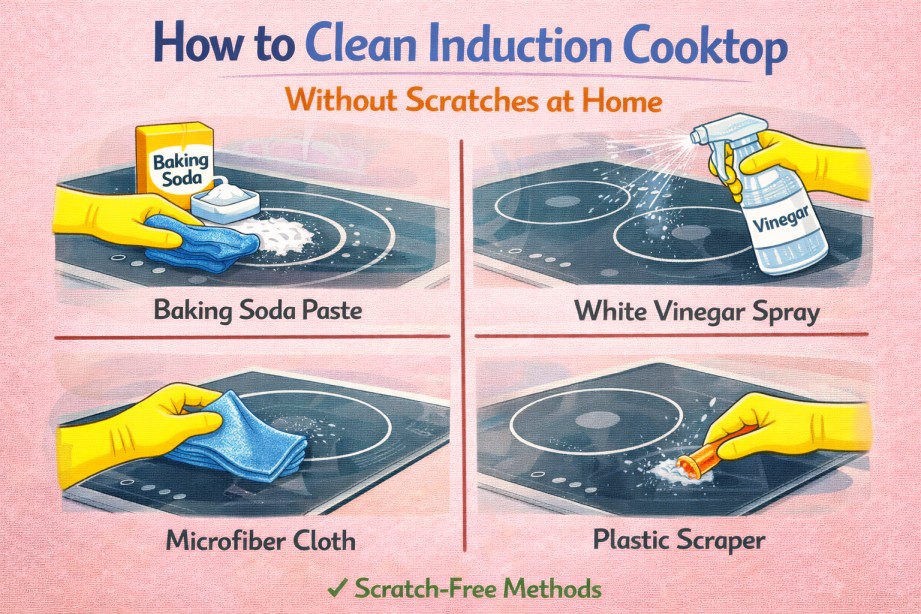
Introduction
Induction cooktops are popular for their sleek design, quick heating, and easy cooking experience. However, their smooth glass surface also makes many homeowners anxious about cleaning. A single wrong scrubber or harsh cleaner can leave permanent scratches, dull patches, or swirl marks that spoil the appearance.
Spills, burnt food, oil splashes, and daily cooking residue build up gradually. Many people either clean too aggressively out of frustration or avoid cleaning frequently out of fear of scratching the surface. Both approaches cause long-term damage—either through stubborn stains or surface wear.
The good news is that you can clean an induction cooktop without scratches using gentle, natural methods and correct tools. This guide explains why scratches happen, how to clean safely step by step, and how real households maintain their induction cooktops in good condition without harsh chemicals.
Why Induction Cooktops Get Scratched Easily
Induction cooktops are made of toughened glass, but scratches occur due to:
- Using steel scrubbers or rough sponges
- Trapped food particles rubbed during cleaning
- Dry wiping greasy surfaces
- Harsh powder cleaners
- Sliding heavy cookware
Knowing what causes scratches helps prevent them.
What You’ll Need for Scratch-Free Cleaning
Use only gentle, non-abrasive items:
- Microfiber cloth or soft cotton cloth
- Mild dishwashing liquid
- Baking soda
- White vinegar or lemon juice
- Warm water
- Soft sponge
Avoid steel wool, scouring pads, or dry paper towels.
Step-by-Step: How to Clean Induction Cooktop Without Scratches
Step 1: Let the Cooktop Cool Completely
Always clean only after the surface has cooled down. Cleaning a hot cooktop can cause stains to set and damage the glass.
Step 2: Wipe Loose Debris Gently
- Use a dry microfiber cloth
- Remove crumbs or food particles
- Do not rub stuck residue at this stage
This prevents scratching during wet cleaning.
Step 3: Mild Soap Cleaning for Daily Residue
- Mix warm water with a few drops of mild dish soap
- Dip a soft cloth or sponge and wring well
- Wipe gently in circular motions
- Dry immediately with a clean cloth
This method is safe for daily cleaning.
Step 4: Baking Soda for Greasy or Burnt Marks
For stubborn spots:
- Sprinkle a small amount of baking soda on the area
- Place a damp cloth over it for 10–15 minutes
- Wipe gently without scrubbing
Baking soda loosens residue without scratching.
Step 5: Vinegar or Lemon for Final Shine
- Lightly spray diluted vinegar or lemon water
- Wipe with a microfiber cloth
- Buff gently to restore shine
This removes streaks and odors naturally.
Safety Tips to Avoid Scratches
- Never use steel scrubbers
- Avoid dry scrubbing greasy surfaces
- Clean spills immediately after cooling
- Lift cookware instead of sliding
Common Mistakes That Cause Scratches
- Using powder-based cleaners
- Scraping with knives or blades
- Cleaning with rough sponges
- Ignoring small spills until they harden
Real-Life Home Stories: Induction Cooktop Care
Story 1: Ritu Malhotra – Sector 62, Noida, Uttar Pradesh
Ritu Malhotra noticed fine swirl scratches on her induction cooktop after using a regular kitchen scrubber. She switched to microfiber cloth cleaning with mild soap and baking soda for stains. Within weeks, no new scratches appeared, and the surface retained its shine. Her experience showed that changing tools matters more than using strong cleaners.
Story 2: Ajay Kulkarni – Baner, Pune, Maharashtra
Ajay Kulkarni cooks daily and often deals with oil splashes on his induction cooktop. Earlier, wiping grease when dry caused faint marks. He started placing a damp cloth over stains before wiping and finished with vinegar polishing. He also maintained better kitchen hygiene, similar to practices shared in
how to remove grease from kitchen cabinets naturally at home
This reduced grease spread and surface wear.
Story 3: Farah Khan – Andheri West, Mumbai, Maharashtra
Farah Khan struggled with burnt milk stains on her induction cooktop. Instead of scraping, she used baking soda and a damp cloth method. She also kept her gas stove burners clean in the past and followed similar patience-based cleaning methods explained in
gas stove burner cleaning at home – step-by-step natural guide
Her induction cooktop remained scratch-free.
Do vs Avoid: Induction Cooktop Cleaning
| Do | Avoid |
|---|---|
| Use microfiber cloth | Using steel scrubbers |
| Clean after cooling | Cleaning hot surface |
| Use baking soda gently | Scraping residue |
| Dry after cleaning | Leaving water spots |
Preventing Stains and Scratches Long-Term
- Wipe spills after every cooking session
- Use flat-bottom cookware only
- Lift pots instead of sliding
- Clean weekly even if it looks clean
Maintaining overall kitchen cleanliness also reduces residue buildup. Regular chimney care, as explained in
how to clean chimney filter at home without chemicals step by step
helps prevent grease settling on the cooktop.
Good appliance hygiene elsewhere in the home—such as
how to clean washing machine drum at home naturally
supports a cleaner cooking environment by controlling moisture and residue.
Seasonal care routines like the
summer home maintenance checklist to keep your home cool and damage-free
also help protect kitchen appliances from heat and dust.
FAQs
1. Can scratches on induction cooktops be removed?
Light marks may reduce with polishing, but deep scratches are permanent.
2. Is baking soda safe for glass cooktops?
Yes, when used gently with a damp cloth.
3. Can vinegar damage the induction surface?
No, when diluted and wiped dry afterward.
4. How often should I clean my induction cooktop?
Light cleaning after every use and deeper cleaning weekly.
5. Should I use special cooktop cleaners?
Not necessary if natural methods are used correctly.
Simple Summary
Induction cooktops stay scratch-free when cleaned gently and regularly. By using soft cloths, mild cleaners, baking soda, and patient wiping techniques, you can remove stains without damaging the glass surface. Real-life home experiences show that the right tools and habits matter more than strong products.
With these safe methods and preventive habits, your induction cooktop can remain clean, shiny, and scratch-free for years—making everyday cooking more enjoyable and stress-free.
Safety note: If you’re unsure or uncomfortable performing any home maintenance task mentioned in this article, it’s safer to consult a qualified professional.