
Learn essential geyser maintenance tips for home safety. Simple checks, safe cleaning habits, real-life home stories, and preventive steps to avoid risks and extend geyser life.
Introduction
A geyser is one of the most important yet most overlooked appliances in a home. It quietly heats water every day for bathing, cleaning, and household use. Because it usually works without visible issues, many homeowners forget that a geyser deals with electricity, water, heat, and pressure all at once. Neglecting basic maintenance can turn this useful appliance into a safety risk.
Common problems like overheating, electrical short circuits, water leakage, or pressure buildup often develop slowly. By the time warning signs appear, the damage may already be serious. Unfortunately, many geyser accidents reported in homes happen due to poor maintenance rather than manufacturing defects.
The good news is that geyser maintenance for home safety does not require technical skills or expensive servicing if done regularly. Simple checks, correct usage habits, and timely cleaning can significantly reduce risk and extend the appliance’s lifespan. This guide explains why geyser maintenance matters, what you should check regularly, and how real households improved safety with small but consistent steps.
Why Geyser Maintenance Is Important for Safety
A geyser combines multiple risk factors:
- Electrical wiring and heating elements
- High water temperature
- Internal pressure buildup
- Continuous exposure to moisture
Without maintenance, this can lead to:
- Electric shock risk
- Overheating or thermostat failure
- Water leakage and wall damage
- Increased electricity consumption
- Reduced appliance lifespan
Regular maintenance helps ensure safe operation and stable performance.
Common Warning Signs You Should Not Ignore
Pay attention if you notice:
- Water taking longer to heat
- Unusual noise from the geyser
- Water dripping from valves or pipes
- Burning smell near the unit
- Fluctuating water temperature
These signs indicate the need for immediate inspection.
Geyser Maintenance Tips for Home Safety
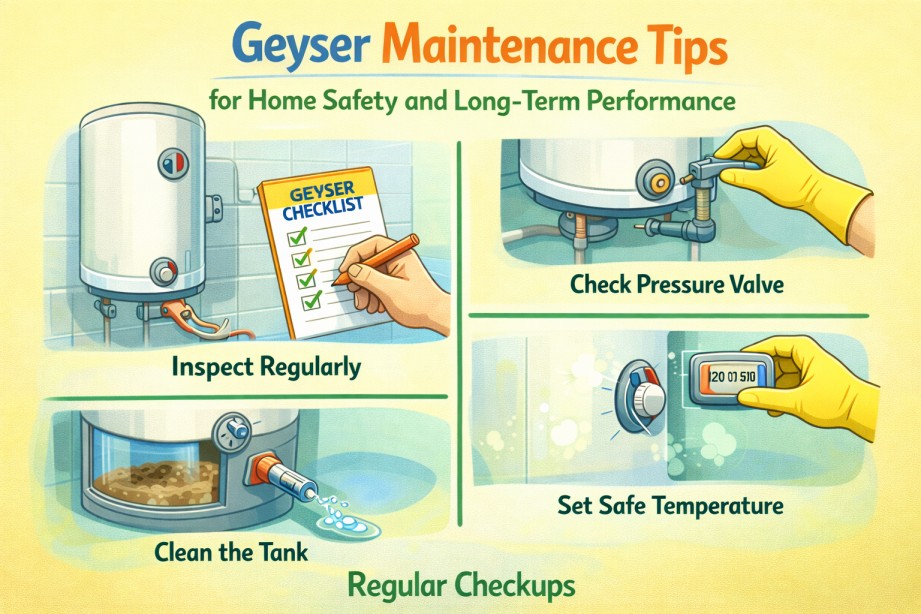
1. Always Switch Off Power Before Use
One of the simplest but most important habits:
- Turn off the geyser after heating water
- Avoid keeping it switched on continuously
- Use a timer if available
Continuous heating increases pressure and electrical load.
2. Check Electrical Connections Periodically
Loose or damaged wiring is a major safety hazard.
- Inspect switches and sockets
- Watch for sparks or loose plugs
- Ensure proper earthing
If you notice abnormalities, stop using the geyser and call a technician.
3. Inspect the Pressure Relief Valve (PRV)
The pressure relief valve releases excess pressure safely.
- Check if water drips occasionally (this is normal)
- Continuous leakage indicates a problem
- Never block or seal the PRV outlet
A functioning PRV is essential for preventing pressure-related accidents.
4. Descale the Geyser Tank Periodically
In hard-water areas, mineral buildup reduces efficiency and safety.
- Descaling once a year is recommended
- Excess scale causes overheating
- It increases electricity consumption
Mineral buildup issues are similar to those seen in bathrooms, as explained in
how to remove hard water stains from bathroom tiles naturally
5. Watch for Water Leakage Around the Unit
Leakage weakens walls and increases electrical risk.
- Check pipes and wall fittings monthly
- Address small leaks immediately
- Avoid water pooling near sockets
Moisture control is essential for safety, especially during monsoon, as discussed in
monsoon home care tips to prevent dampness naturally
6. Keep the Bathroom Well-Ventilated
Poor ventilation traps moisture and heat.
- Use exhaust fans during bathing
- Keep doors open after use
- Clean exhaust fans regularly
You can follow simple steps from
how to clean bathroom exhaust fan easily at home
to improve airflow and reduce moisture risks.
7. Do Not Overload Bathroom Power Points
Avoid using multiple heavy appliances on the same circuit as the geyser.
- Do not plug heaters or irons into the same socket
- Use dedicated wiring for the geyser
This reduces electrical overload and fire risk.
Real-Life Home Stories: Geyser Safety and Maintenance
Story 1: Sanjay Kulkarni – Kothrud, Pune, Maharashtra
Sanjay Kulkarni noticed his geyser making unusual popping sounds during heating. Initially, he ignored it, assuming it was normal. Later, a technician identified heavy scale buildup inside the tank due to hard water. After descaling and adopting the habit of switching off the geyser after use, the noise stopped and heating became faster. Sanjay now schedules annual maintenance, which has improved safety and reduced power consumption.
Story 2: Neha Arora – Rohini, Delhi
Neha Arora experienced water leakage near her bathroom wall socket connected to the geyser. Concerned about safety, she immediately stopped using it. The issue turned out to be a loose pipe joint and moisture buildup. After fixing the leak and improving bathroom ventilation, the problem did not recur. Neha also began checking moisture levels regularly, following practices similar to
how to protect home from mold during rainy season naturally
Story 3: Thomas Mathew – Kottayam, Kerala
Living in a high-humidity region, Thomas Mathew faced repeated electrical issues with his geyser. The problem was traced to poor ventilation and continuous moisture exposure. He installed a better exhaust system and ensured the geyser was switched off after heating. Over time, electrical issues stopped, and the geyser functioned safely even during heavy rains.
Common Geyser Maintenance Mistakes
- Keeping the geyser switched on all day
- Ignoring minor leakage
- Blocking the pressure relief valve
- Skipping annual servicing
- Using damaged switches or sockets
Do vs Avoid: Geyser Safety Habits
| Do | Avoid |
|---|---|
| Switch off after heating | Leaving geyser on continuously |
| Ensure proper earthing | Using loose sockets |
| Check PRV regularly | Blocking pressure outlet |
| Control moisture | Ignoring leaks |
Geyser Safety and Overall Home Care
Geyser safety is closely connected to overall bathroom and home maintenance. Moisture, mold, and electrical safety go hand in hand. Managing dampness and appliance hygiene across the home—such as
how to clean washing machine drum at home naturally
and maintaining kitchen appliances—helps reduce overall electrical and moisture-related risks.
FAQs
1. How often should a geyser be serviced?
Once a year is ideal, especially in hard-water areas.
2. Is it safe to keep the geyser on overnight?
No, it increases pressure and electrical risk.
3. Why does water drip from the PRV pipe?
Occasional dripping is normal; continuous flow needs inspection.
4. Can hard water damage a geyser?
Yes, scale buildup reduces efficiency and increases overheating risk.
5. Should I replace an old geyser?
If it frequently leaks, overheats, or trips power, replacement is safer.
Simple Summary
Geyser maintenance is not just about performance—it is about home safety. Regular checks, proper usage habits, moisture control, and timely servicing can prevent accidents and extend the appliance’s life. Real-life home experiences show that most geyser issues are avoidable with consistent care.
By following these geyser maintenance tips, you can ensure safer bathing, lower energy usage, and peace of mind for everyone at home.
Safety note: If you’re unsure or uncomfortable performing any home maintenance task mentioned in this article, it’s safer to consult a qualified professional.