
Learn how to remove mold from bathroom walls safely at home using natural methods. Step-by-step process, real-life stories, and prevention tips included.
Introduction
Mold on bathroom walls is a common problem in many homes, especially in areas with high humidity or poor ventilation. It often starts as small black or green spots in corners, near ceilings, or around tiles. Because bathrooms are cleaned regularly, many people feel confused or frustrated when mold keeps coming back despite frequent scrubbing.
The truth is that mold is not just a surface dirt issue. It thrives in moisture-rich environments and spreads through invisible spores. Using strong chemical sprays may remove visible mold temporarily, but they often leave behind fumes and don’t address the root cause—excess moisture and poor airflow.
The good news is that mold removal from bathroom walls can be done safely at home using simple, natural methods. This guide explains why mold forms, how to remove it step by step, and how real households managed the issue effectively without harsh chemicals.
Why Mold Forms on Bathroom Walls
Bathrooms create ideal conditions for mold growth due to:
- Constant moisture from showers
- Poor ventilation or non-working exhaust fans
- Water splashes left to dry naturally
- Damp walls during monsoon
- Warm indoor temperatures
When moisture stays trapped on walls, mold spores settle and multiply quickly.
Common Areas Where Bathroom Mold Appears
- Upper wall corners and ceilings
- Tile grout lines
- Areas behind doors or shelves
- Walls near shower heads
- Spots with poor air circulation
Identifying these areas early helps prevent widespread growth.
What You’ll Need for Safe Mold Removal
You don’t need industrial cleaners. These basic items work well:
- White vinegar
- Baking soda
- Warm water
- Spray bottle
- Soft scrub brush or old toothbrush
- Microfiber cloth
- Rubber gloves
Avoid mixing different cleaning agents together.
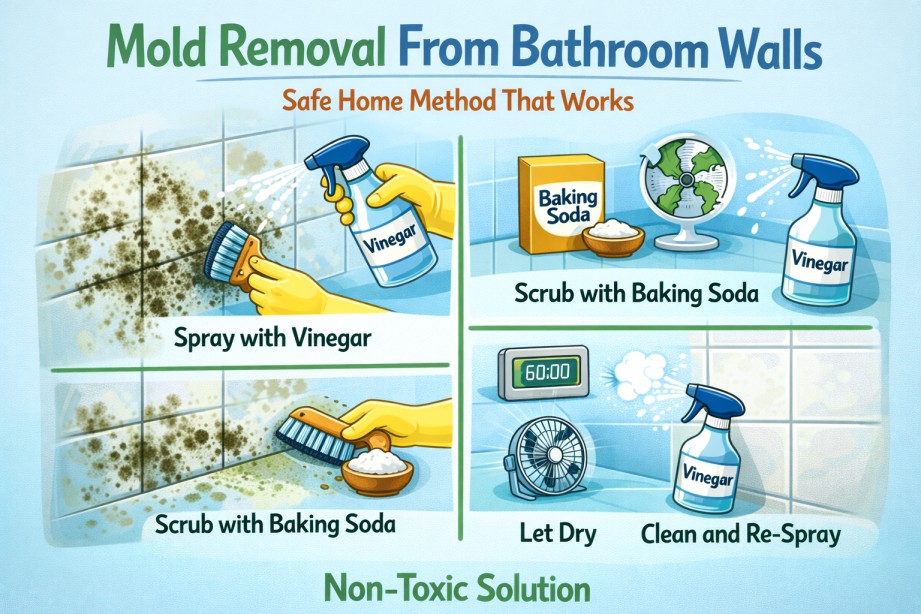
Step-by-Step: Mold Removal From Bathroom Walls (Safe Home Method)
Step 1: Ventilate the Bathroom
Before cleaning:
- Open windows and doors
- Switch on the exhaust fan
Good airflow prevents inhaling mold spores.
Step 2: Vinegar Spray for Mold Killing
- Pour plain white vinegar into a spray bottle
- Spray directly on moldy areas
- Let it sit for 30–45 minutes
Vinegar helps kill mold at the root level.
Step 3: Scrub Gently
- Use a soft brush or toothbrush
- Scrub affected areas lightly
- Avoid damaging paint or grout
Do not scrub dry mold without spraying first.
Step 4: Baking Soda Rinse (Optional)
- Mix baking soda with warm water
- Wipe the area to remove residue
- This helps deodorize and prevent regrowth
Step 5: Dry the Wall Completely
- Wipe with a dry cloth
- Leave the bathroom ventilated
- Run the exhaust fan for 15–20 minutes
Drying is essential to stop mold from returning.
Safety Tips While Removing Mold
- Wear gloves during cleaning
- Do not mix vinegar with bleach
- Avoid brushing mold when dry
- Keep children and pets away during cleaning
Natural methods are safer but still require care.
Common Mistakes to Avoid
- Using air fresheners instead of cleaning
- Ignoring moisture after showers
- Painting over mold without removal
- Closing the bathroom immediately after use
These habits allow mold to return quickly.
Real-Life Home Stories: Bathroom Mold Removal
Story 1: Poonam Joshi – Kandivali East, Mumbai, Maharashtra
Poonam Joshi noticed black mold patches forming near her bathroom ceiling during monsoon. Despite daily cleaning, the mold kept spreading. She focused on moisture control instead of chemicals. After spraying vinegar and scrubbing gently, she began wiping walls dry after showers and kept the exhaust fan running longer. Within two weeks, mold stopped reappearing. Her experience showed that ventilation matters as much as cleaning.
Story 2: Arvind Menon – Palakkad, Kerala
Living in a high-humidity area, Arvind Menon faced recurring mold on tiled bathroom walls. He removed visible mold using vinegar and baking soda and improved airflow by keeping the bathroom door open during the day. He also cleaned the exhaust fan regularly, following practices similar to
how to clean bathroom exhaust fan easily at home
Mold growth reduced significantly and did not spread further.
Story 3: Ritu Saxena – Alambagh, Lucknow, Uttar Pradesh
Ritu Saxena noticed mold forming behind the bathroom door where air circulation was poor. Instead of repainting, she cleaned the area naturally and adjusted daily habits. She wiped moisture after showers and followed broader dampness control steps similar to
how to protect home from mold during rainy season naturally
The mold cleared and did not return the next season.
Do vs Avoid: Bathroom Mold Control
| Do | Avoid |
|---|---|
| Ventilate after showers | Keeping bathroom closed |
| Dry walls regularly | Leaving moisture overnight |
| Use vinegar or baking soda | Using harsh chemical sprays |
| Act early on spots | Waiting for mold to spread |
Preventing Mold From Returning
- Use exhaust fans during and after showers
- Wipe walls and corners regularly
- Keep bathroom doors open when possible
- Fix leaks immediately
Bathroom hygiene also helps prevent mineral buildup and stains, as explained in
how to remove hard water stains from bathroom tiles naturally
FAQs
1. Is mold on bathroom walls dangerous?
Prolonged exposure may trigger allergies or breathing discomfort in sensitive individuals.
2. Can vinegar remove mold permanently?
It removes existing mold, but moisture control prevents regrowth.
3. How often should I check for mold?
Weekly checks during humid or rainy seasons are ideal.
4. Does mold always come back?
Not if moisture and ventilation are managed properly.
5. Can I paint over mold?
Painting without removal traps mold and worsens the issue.
Simple Summary
Mold on bathroom walls is common but manageable. Safe home methods using vinegar, baking soda, and proper drying can remove mold effectively without harsh chemicals. Real-life experiences show that controlling moisture and improving ventilation are key to long-term prevention.
By combining natural cleaning with better daily habits, you can keep bathroom walls cleaner, healthier, and mold-free throughout the year.
Safety note: If you’re unsure or uncomfortable performing any home maintenance task mentioned in this article, it’s safer to consult a qualified professional.