
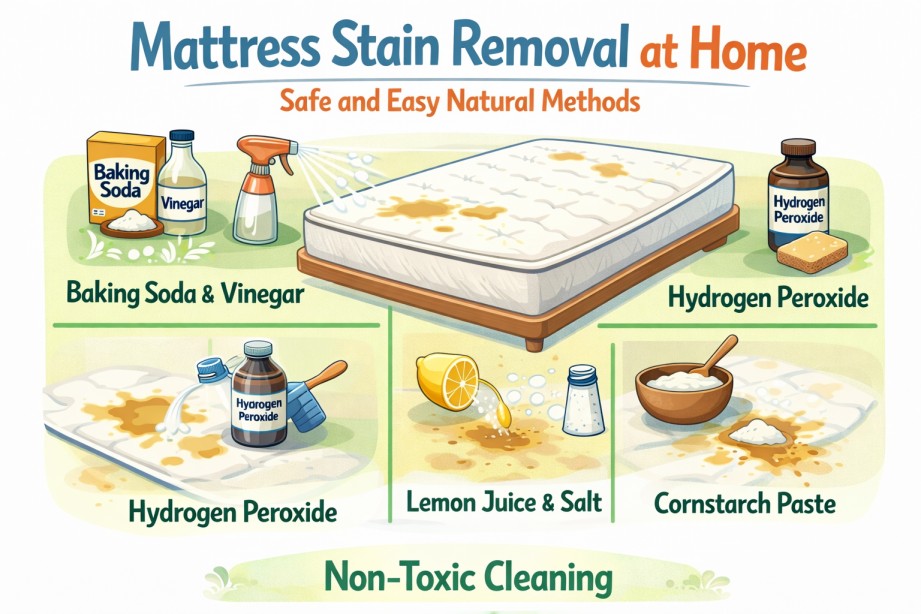
Learn how to remove mattress stains at home using safe, easy, and natural methods. Step-by-step solutions, real-life home stories, and prevention tips included.
Introduction
A mattress is one of the most used yet least cleaned items in a home. Sweat, spills, accidental stains, humidity, and daily use slowly leave marks that are hard to ignore. Over time, these stains can cause unpleasant odors, affect sleep hygiene, and shorten the life of the mattress.
Many people hesitate to clean mattress stains because mattresses cannot be washed like sheets. Others try strong chemical sprays that leave residues and strong smells, which are not ideal for something you sleep on every night. In reality, most common mattress stains can be handled safely at home with simple methods.
This guide focuses on mattress stain removal at home using safe and easy methods. It explains why stains form, how to remove different types naturally, and how real households managed stains without damaging their mattresses.
Why Mattress Stains Are Common
Mattress stains develop gradually due to everyday factors:
- Sweat and body oils soaking into fabric
- Accidental food or drink spills
- Humidity and moisture during monsoon
- Pet accidents or water leaks
- Infrequent mattress airing or cleaning
If stains are left untreated, they attract dust and bacteria, making cleaning harder later.
Types of Mattress Stains You May Encounter
Yellow Sweat Stains
Caused by perspiration and body oils over time.
Liquid Spills
Water, tea, coffee, or juice spills that soak into fabric.
Odor-Related Stains
Moisture combined with bacteria leads to discoloration and smell.
Identifying the stain type helps choose the right method.
What You’ll Need for Natural Mattress Cleaning
Most methods use simple household items:
- Baking soda
- White vinegar
- Mild liquid soap
- Clean spray bottle
- Soft cloth or sponge
- Old toothbrush
- Dry towels
Avoid soaking the mattress with water.
Step-by-Step: Mattress Stain Removal at Home
Step 1: Blot the Stain Immediately
If the stain is fresh:
- Use a dry towel to blot excess moisture
- Do not rub, as it spreads the stain deeper
Step 2: Mild Soap Solution for Fresh Stains
- Mix a few drops of mild soap with water
- Lightly dab the stain using a sponge
- Blot with a dry cloth
This works well for recent food or drink spills.
Step 3: Baking Soda for Sweat and Odor Stains
- Sprinkle baking soda generously over the stain
- Leave it for 6–8 hours or overnight
- Vacuum or brush off the powder
Baking soda absorbs moisture and neutralizes odor naturally.
Step 4: Vinegar Spray for Set-In Stains
- Mix equal parts vinegar and water
- Lightly spray on the stained area
- Blot gently and let it air-dry
Use vinegar sparingly to avoid strong smell.
Step 5: Dry Thoroughly
- Place the mattress near an open window
- Use a fan to speed up drying
- Never cover a damp mattress
Drying is crucial to prevent mold growth.
Safety Tips While Cleaning a Mattress
- Never soak the mattress
- Avoid harsh chemical cleaners
- Test solutions on a hidden area first
- Ensure proper ventilation during drying
These steps protect both the mattress and indoor air quality.
Common Mattress Cleaning Mistakes
- Using too much water
- Scrubbing aggressively
- Covering the mattress before drying
- Ignoring stains for long periods
Real-Life Home Stories: Mattress Stain Removal
Story 1: Anjali Verma – Indirapuram, Ghaziabad, Uttar Pradesh
Anjali Verma noticed yellow sweat stains forming on her mattress after years of use. Instead of replacing it, she sprinkled baking soda generously and left it overnight. After vacuuming and airing the mattress in sunlight, the stains lightened significantly and the odor disappeared. She now repeats this process every two months, which has helped maintain mattress hygiene without chemicals.
Story 2: Saurabh Kulkarni – Karve Nagar, Pune, Maharashtra
Saurabh Kulkarni spilled tea on his mattress during a late-night work session. He immediately blotted the spill and used a mild soap solution followed by baking soda. The stain faded within a day, and no smell remained. His experience showed that quick action makes stain removal much easier.
Story 3: Fatima Khan – Malad West, Mumbai, Maharashtra
During monsoon, Fatima Khan noticed a musty smell and light stains on her mattress due to humidity. She focused on drying, ventilation, and baking soda treatment. She also improved moisture control in the room, following habits similar to
monsoon home care tips to prevent dampness naturally
The stains stopped spreading, and the smell reduced noticeably.
Do vs Avoid: Mattress Care
| Do | Avoid |
|---|---|
| Blot stains quickly | Rubbing stains |
| Use baking soda regularly | Using harsh chemicals |
| Dry mattress fully | Covering while damp |
| Air mattress monthly | Ignoring humidity |
Preventing Mattress Stains in the Future
- Use a washable mattress protector
- Change bedsheets weekly
- Air the mattress every month
- Keep indoor moisture under control
Moisture management also plays a role in overall home hygiene, as seen in
how to clean washing machine drum at home naturally
where regular drying prevents odor and buildup.
Fabric hygiene around the home also matters. Upholstery care methods in
how to clean fabric sofa at home without vacuum cleaner
follow similar principles.
FAQs
1. Can all mattress stains be removed at home?
Most surface and sweat stains can be improved or removed with natural methods if treated early.
2. Is vinegar safe for mattresses?
Yes, when diluted and used lightly, followed by proper drying.
3. How often should a mattress be cleaned?
Light deodorizing every 1–2 months and stain treatment as needed.
4. Can sunlight damage a mattress?
Short exposure helps drying, but avoid prolonged direct sunlight.
5. Should I flip the mattress after cleaning?
Yes, rotating or flipping helps even wear and drying.
Simple Summary
Mattress stains are common but manageable. With gentle blotting, baking soda, mild soap, and proper drying, you can remove stains safely at home without harsh chemicals. Real-life home experiences show that early action and regular airing are key to maintaining mattress hygiene.
By following these safe and easy methods, your mattress can stay cleaner, fresher, and more comfortable for years, supporting better sleep and a healthier home environment.
Safety note: If you’re unsure or uncomfortable performing any home maintenance task mentioned in this article, it’s safer to consult a qualified professional.