
Learn simple home fixes for kitchen sink blockage using natural methods. Step-by-step solutions, real-life stories, and prevention tips to keep drains flowing smoothly.
Introduction
A blocked kitchen sink is one of the most common and disruptive household problems. Water refusing to drain, unpleasant smells rising from the sink, and gurgling sounds can quickly turn daily cooking into a stressful task. Most blockages don’t happen suddenly—they build up slowly due to grease, food particles, soap residue, and poor drainage habits.
Many homeowners reach for chemical drain cleaners when the sink blocks, but these products often provide only temporary relief and may damage pipes over time. In kitchens, where food hygiene matters, harsh chemicals are also not the safest option.
The good news is that most kitchen sink blockages can be cleared using simple home fixes that actually work. With a basic understanding of what causes the blockage and a few natural methods, you can restore proper drainage without professional help. This guide explains the causes, step-by-step solutions, and real-life home experiences that show what works in everyday kitchens.
Why Kitchen Sink Blockage Happens
Kitchen sinks handle more than just water. Over time, several materials collect inside the drain:
- Cooking oil and grease that solidify inside pipes
- Food scraps washed down the sink
- Soap residue that binds grease together
- Coffee grounds and rice particles
- Poor water flow or old plumbing
Grease buildup is one of the biggest contributors, especially in kitchens with frequent frying or heavy cooking.
Early Signs of a Blocked Kitchen Sink
Recognizing early signs helps prevent complete blockage:
- Slow draining water
- Foul smell from the sink
- Gurgling sounds
- Water backing up when using the sink
Acting early makes clearing the blockage much easier.
Simple Home Fixes for Kitchen Sink Blockage
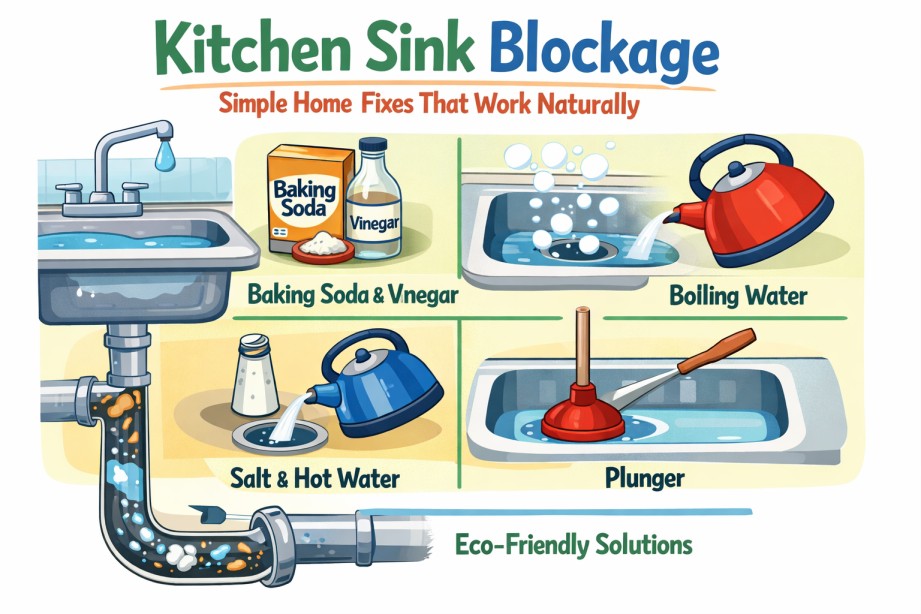
1. Boiling Water for Grease Buildup (Mild Blockage)
For early-stage grease buildup:
- Boil a kettle of water
- Slowly pour it down the drain in stages
- Wait a few minutes and check flow
This helps melt grease lining the pipe walls. Avoid this method if you have very old or PVC pipes that may not tolerate heat well.
2. Baking Soda and Vinegar Method
This is one of the most effective natural fixes.
Steps:
- Pour ½ cup baking soda into the drain
- Add 1 cup white vinegar
- Cover the drain and let it fizz for 20–30 minutes
- Flush with warm water
This breaks down grease and organic matter naturally.
3. Dish Soap and Hot Water
For greasy blockages:
- Add a few drops of dishwashing liquid
- Follow with hot water
Dish soap helps loosen grease, allowing it to move through the pipe.
4. Plunger Technique
If water is standing in the sink:
- Use a sink plunger
- Cover the drain completely
- Plunge firmly several times
This helps dislodge food particles stuck in the pipe bend.
5. Clean the Sink Strainer and Trap
Often, the blockage is close to the sink opening.
- Remove and clean the sink strainer
- Check the trap (U-bend) under the sink
- Clear trapped food or grease
Always place a bucket below before opening the trap.
Common Mistakes to Avoid
- Pouring oil directly into the sink
- Relying frequently on chemical drain cleaners
- Ignoring slow drainage signs
- Washing food scraps down the drain
Real-Life Home Stories: Kitchen Sink Blockage Solutions
Story 1: Deepak Kulkarni – Baner, Pune, Maharashtra
Deepak Kulkarni noticed water draining slowly in his kitchen sink after cooking heavy meals daily. The problem worsened during weekends when frying was frequent. Instead of calling a plumber, he tried the baking soda and vinegar method followed by hot water. The blockage cleared within an hour. He later realized grease buildup was the main cause and began wiping oily pans before washing. His sink has remained clog-free since then.
Story 2: Farah Siddiqui – Jogeshwari West, Mumbai, Maharashtra
Farah Siddiqui experienced frequent sink blockages along with bad smells. The issue was traced to food scraps entering the drain due to a missing strainer. After cleaning the trap and installing a strainer, she used boiling water weekly to prevent grease buildup. She also improved kitchen hygiene by regularly cleaning chimney filters, following steps similar to
how to clean chimney filter at home without chemicals step by step
The sink blockage problem stopped recurring.
Story 3: Ramesh Iyer – Adyar, Chennai, Tamil Nadu
Living in an older apartment, Ramesh Iyer faced repeated sink blockages during monsoon. Moisture and food residue combined to worsen the issue. He adopted a routine of monthly drain cleaning and better moisture control, similar to the habits suggested in
monsoon home care tips to prevent dampness naturally
Since then, drainage improved and unpleasant odors disappeared.
Do vs Avoid: Kitchen Sink Care
| Do | Avoid |
|---|---|
| Use a sink strainer | Pouring oil down the drain |
| Flush drains weekly | Ignoring slow drainage |
| Clean trap periodically | Using harsh chemicals |
| Wipe greasy dishes first | Letting food scraps wash down |
Preventing Kitchen Sink Blockage Long-Term
Improve Overall Kitchen Hygiene
Grease and residue don’t stay limited to sinks. Keeping cabinets and nearby surfaces clean helps reduce oil spread, as explained in
how to remove grease from kitchen cabinets naturally at home
Maintain Appliances That Add Moisture and Residue
Blocked drains are often linked to moisture and residue elsewhere in the home. Regular appliance care, such as
how to clean washing machine drum at home naturally
helps manage overall plumbing health.
Keep the Kitchen Well-Ventilated
Poor ventilation increases grease settlement.
- Use exhaust fans or chimneys
- Clean gas stove burners regularly to reduce residue, as explained in
gas stove burner cleaning at home – step-by-step natural guide
Kitchen Sink Blockage and Whole-Home Maintenance
Kitchen drainage problems often reflect broader home maintenance issues. Seasonal care plays a role too. For example, summer heat dries grease faster inside pipes, while monsoon moisture worsens blockages. A seasonal approach like the
summer home maintenance checklist to keep your home cool and damage-free
helps prevent plumbing stress.
Bathroom drainage and odor issues can also indicate plumbing problems, similar to those discussed in
toilet bad smell: simple home remedies that actually work
FAQs
1. Can baking soda and vinegar damage pipes?
No, when used occasionally, they are safe for most household pipes.
2. How often should I clean my kitchen sink drain?
Once every 2–3 weeks for preventive maintenance.
3. Why does my sink block repeatedly?
Frequent grease disposal, food scraps, or poor ventilation are common reasons.
4. Is hot water safe for all sinks?
Hot (not boiling) water is generally safe, but avoid extreme heat for old PVC pipes.
5. When should I call a plumber?
If blockages persist despite cleaning or water backs up into other drains.
Simple Summary
Kitchen sink blockages are usually the result of grease, food residue, and neglected maintenance—not major plumbing faults. With natural methods like baking soda, vinegar, hot water, and regular cleaning, most blockages can be fixed at home. Real-life experiences show that simple habits, such as wiping greasy dishes and using strainers, prevent recurring problems.
By combining these home fixes with good kitchen hygiene and seasonal maintenance, you can keep your kitchen sink flowing smoothly and avoid unnecessary repairs.
Safety note: If you’re unsure or uncomfortable performing any home maintenance task mentioned in this article, it’s safer to consult a qualified professional.