

Learn effective monsoon home care tips to prevent dampness, mold, and musty odors using simple, natural methods suitable for everyday homes.
Introduction
The monsoon season brings relief from heat, but it also introduces a common household problem—persistent dampness. Walls feel cold, cupboards smell musty, clothes refuse to dry properly, and mold spots begin to appear in hidden corners. These issues are especially noticeable in homes with limited ventilation or high humidity levels.
Many homeowners only address dampness once visible damage appears, such as peeling paint or fungal growth. At that point, repairs become costly and inconvenient. What often goes unnoticed is that small daily habits and preventive care can significantly reduce moisture buildup during the rainy season.
Chemical dehumidifiers and moisture absorbers are available, but they’re not always necessary for regular home maintenance. With the right routines, ventilation practices, and natural moisture-control methods, you can keep your home comfortable and hygienic throughout the monsoon.
This guide shares monsoon home care tips to prevent dampness using practical, chemical-free approaches. It explains why dampness happens, which areas are most affected, and how to manage moisture effectively before it turns into a serious problem.
Why Dampness Becomes a Problem During Monsoon
Dampness during monsoon is caused by a combination of environmental and household factors:
- High humidity levels reduce evaporation
- Continuous rainfall increases moisture in walls and floors
- Poor ventilation traps humid air indoors
- Wet clothes indoors raise indoor moisture
- Water seepage from roofs or walls
When moisture remains trapped, it creates an ideal environment for mold, mildew, and unpleasant odors. Over time, this can weaken wall surfaces, damage furniture, and affect indoor air quality.
Areas Most Affected by Dampness
Certain parts of the home are more vulnerable during monsoon:
- Bathrooms and toilets
- Kitchen cabinets and under-sink areas
- Wardrobes and closed cupboards
- Washing machine area and laundry corners
- Corners of rooms and behind furniture
Targeting these zones early helps prevent widespread moisture issues.
Monsoon Home Care Tips to Prevent Dampness
1. Improve Daily Ventilation
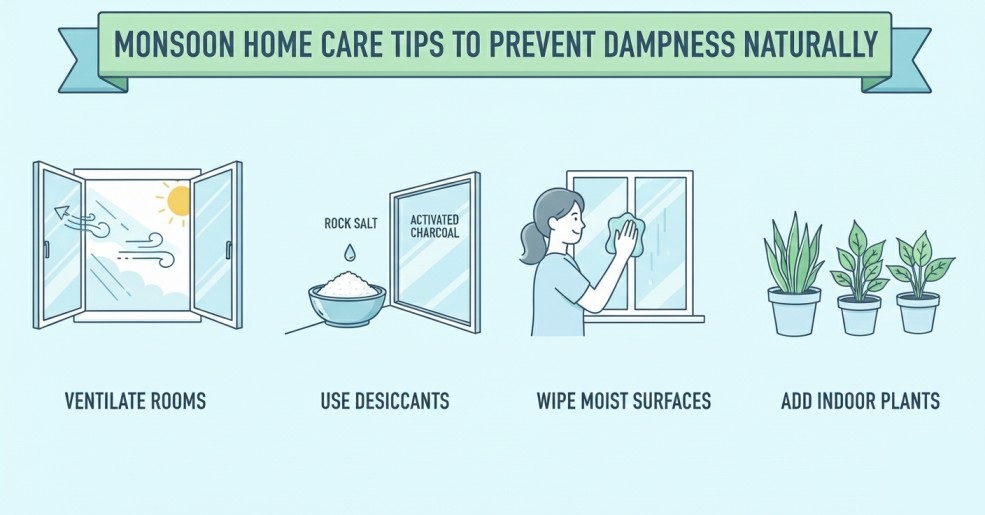
Open windows whenever rainfall pauses, even for short periods. Cross-ventilation helps release trapped humid air. Use exhaust fans in kitchens and bathrooms consistently, especially after cooking or bathing.
2. Avoid Drying Clothes Indoors for Long Periods
Wet clothes significantly increase indoor humidity. If indoor drying is unavoidable, place clothes near windows or under ceiling fans. Ensure the room is well-ventilated.
3. Use Natural Moisture Absorbers
Simple household items can help control moisture:
- Rock salt: Place in bowls inside cupboards
- Baking soda: Absorbs moisture and odors
- Activated charcoal: Useful in wardrobes and shoe racks
Replace these every 10–15 days during heavy rains.
4. Keep Floors and Surfaces Dry
Wipe floors regularly, especially near entrances. Use doormats to prevent rainwater from spreading inside. Avoid leaving wet umbrellas or footwear indoors without proper drainage.
5. Check for Water Seepage Early
Inspect walls, ceilings, and window frames for early signs of seepage. Address small cracks or leaks promptly before moisture spreads.
Kitchen and Laundry Area Dampness Control
The kitchen and laundry zones often remain humid due to water usage.
- Wipe kitchen counters and sink areas after use
- Keep cabinets under the sink dry and clutter-free
- Run the washing machine door open after every wash
Regular appliance maintenance also helps. For example, cleaning the washing machine drum prevents moisture-related odor and mold buildup. You can follow this guide on
how to clean washing machine drum at home naturally
Wardrobe and Furniture Care During Monsoon
- Leave wardrobe doors open once a week
- Avoid pushing furniture tightly against walls
- Store clothes only when fully dry
- Use newspaper layers inside drawers to absorb moisture
These small steps help prevent fabric damage and fungal growth.
Real-Life Home Experiences: Preventing Dampness During Monsoon
Story 1: Sunita Deshmukh – Wakad, Pune, Maharashtra
Sunita Deshmukh lives in a ground-floor apartment in Wakad, where monsoon humidity often caused damp floors and musty smells. During one rainy season, she noticed moisture forming behind cupboards and along wall corners. Instead of using chemical moisture absorbers, she focused on improving ventilation and daily drying routines.
She began opening windows whenever rain stopped, wiping floors twice a day, and placing bowls of rock salt inside cupboards. She also ensured furniture was kept a few inches away from walls. Within two weeks, the damp smell reduced significantly, and mold spots stopped appearing. Sunita now follows the same routine every monsoon, preventing recurring dampness naturally.
Story 2: Rohan Iyer – Velachery, Chennai, Tamil Nadu
Rohan Iyer lives in a high-humidity area close to the coast. Every monsoon, his home developed a persistent damp odor, especially in bedrooms and wardrobes. Clothes often smelled musty even after washing.
Rohan focused on moisture control rather than surface cleaning. He started drying clothes near windows with fans running, avoided storing clothes when slightly damp, and kept wardrobe doors open once a week. He also cleaned appliances that contributed to indoor moisture, such as the washing machine area. These steps reduced humidity levels indoors, and the damp smell gradually disappeared without using chemical dehumidifiers.
Story 3: Neelam Banerjee – New Town, Kolkata, West Bengal
Neelam Banerjee noticed damp patches forming on walls and a cold, musty smell in her living room during extended monsoon rains. The problem worsened because furniture was placed tightly against external walls.
She rearranged the furniture to allow airflow and placed activated charcoal and newspaper layers behind cabinets. She also wiped condensation from windows daily. After consistent effort for a few weeks, wall dampness reduced and the indoor smell improved noticeably. Neelam continues these habits every monsoon to protect both walls and furniture naturally.
Why These Stories Matter
These homes faced dampness due to different reasons—ground-level moisture, coastal humidity, and poor airflow—but all were managed using simple, natural methods. The common solution was controlling moisture early, improving ventilation, and maintaining daily habits rather than relying on chemical products.
Do vs Avoid: Monsoon Dampness Prevention
| Do | Avoid |
|---|---|
| Ventilate rooms daily | Keeping windows closed all day |
| Use natural moisture absorbers | Relying only on sprays |
| Dry surfaces frequently | Ignoring small wet patches |
| Inspect walls early | Waiting for visible mold |
Myths vs Reality
Myth: Dampness only affects old houses
Reality: Any home can develop dampness during monsoon
Myth: Air fresheners solve damp smells
Reality: They only mask odors, not moisture
Myth: Dampness is harmless if invisible
Reality: Hidden moisture causes long-term damage
FAQs
1. How can I tell if my home has hidden dampness?
Musty odors, peeling paint, and recurring mold spots are common signs.
2. Is dampness dangerous for health?
Prolonged exposure can trigger allergies and respiratory discomfort.
3. Can fans reduce dampness?
Fans help air circulation but don’t remove moisture entirely.
4. How often should moisture absorbers be replaced?
Every 10–15 days during peak monsoon humidity.
5. Does sunlight help reduce dampness?
Yes, sunlight naturally dries surfaces and reduces mold growth.
Helpful Natural Home Care Guides
If you’re focusing on chemical-free home maintenance, these resources may help:
- Bathroom surface care explained in
how to remove hard water stains from bathroom tiles naturally - Upholstery care without machines in
how to clean fabric sofa at home without vacuum cleaner - Kitchen hygiene tips in
how to clean chimney filter at home without chemicals step by step
Simple Summary
Dampness during monsoon is a common but manageable issue. With proper ventilation, regular wiping, and natural moisture-control methods, you can protect your home from mold, odors, and damage. Addressing moisture early is easier and more effective than fixing long-term damp problems later.
Making these monsoon home care tips part of your routine helps maintain a healthier, more comfortable living space throughout the rainy season.
Safety note: If you’re unsure or uncomfortable performing any home maintenance task mentioned in this article, it’s safer to consult a qualified professional.