

Learn how to clean washing machine drum at home naturally using simple ingredients. Remove odor, residue, and buildup safely without chemicals.
Introduction
A washing machine is meant to clean clothes, but over time, it can quietly become a source of odor and residue itself. Many people notice that freshly washed clothes don’t smell as clean as they used to, or they find black flakes, slimy residue, or a musty smell coming from the drum. This often happens even when the machine looks clean from the outside.
In most homes, washing machines are used several times a week, sometimes daily. Detergent residue, fabric softener buildup, hard water minerals, and moisture combine inside the drum and pipes. Because this buildup isn’t always visible, it’s easy to overlook until problems appear.
The common response is to buy strong chemical cleaners, but these can leave residues, irritate skin, and add unnecessary chemicals to wastewater. The good news is that you can clean washing machine drum at home naturally using simple, safe ingredients that effectively remove buildup without harming your machine or clothes.
This guide explains why drum buildup happens, what you need, and a clear step-by-step method you can follow confidently at home.
Why Washing Machine Drums Get Dirty
Even though water and detergent run through the machine regularly, several factors cause residue to accumulate:
- Excess detergent use leaves soap deposits on the drum walls
- Fabric softeners create a sticky film that traps dirt
- Hard water minerals settle inside the drum and pipes
- Moisture retention encourages mold and mildew growth
- Low-temperature washes don’t fully dissolve residues
Over time, this buildup affects washing performance, causes unpleasant odors, and can transfer residue back onto clothes.
Tools and Natural Ingredients Needed
You don’t need special products or machine cleaners. These household items are enough:
- White vinegar
- Baking soda
- Hot water
- Microfiber cloth
- Old toothbrush or soft brush
- Small bowl
- Clean towel
All of these are safe for regular maintenance and widely available.
Step-by-Step: How to Clean Washing Machine Drum at Home Naturally
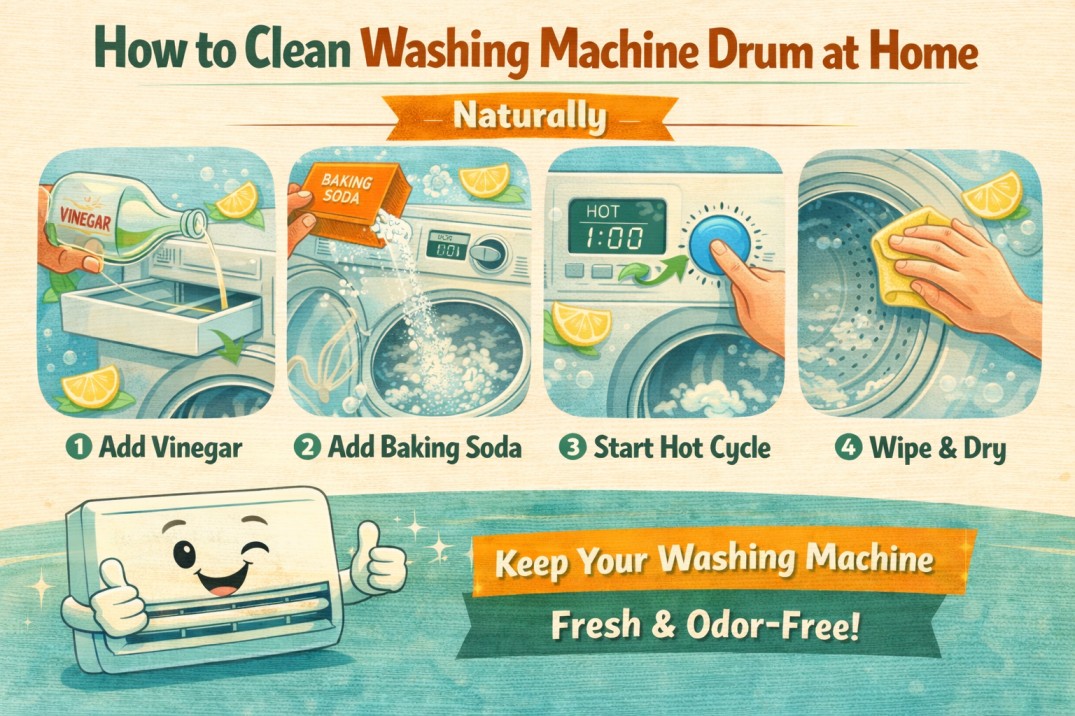
Step 1: Empty the Washing Machine
Ensure there are no clothes inside the drum. Cleaning should always be done on an empty machine to allow full contact with cleaning agents.
Step 2: Clean the Drum with Vinegar
Pour 2 cups of white vinegar directly into the drum (not the detergent tray). Vinegar helps dissolve soap residue, mineral deposits, and odor-causing bacteria.
Set the machine to the hottest and longest wash cycle available and start the cycle.
Allow the cycle to run completely.
Step 3: Pause and Scrub Visible Areas (If Needed)
If your machine allows pausing, stop the cycle midway and wipe the inner drum, rubber gasket, and door edges using a microfiber cloth. Use a toothbrush for crevices where residue collects.
This step is especially important for front-load machines.
Step 4: Run a Baking Soda Cycle
After the vinegar cycle finishes, sprinkle ½ cup of baking soda into the drum.
Run another hot water cycle. Baking soda neutralizes odors and lifts remaining grime loosened by vinegar.
Step 5: Clean the Detergent Drawer
Remove the detergent tray if possible. Soak it in warm water with a little baking soda for 15–20 minutes. Scrub gently and rinse well before reinstalling.
Step 6: Wipe and Air-Dry
Once cycles are complete, wipe the drum dry with a clean towel. Leave the door open for a few hours to allow moisture to evaporate completely.
Safety Tips to Follow
- Never mix vinegar and baking soda at the same time in the drum
- Avoid using boiling water, which may damage internal parts
- Do not use bleach with vinegar
- Always run cleaning cycles without clothes
- Keep the area well-ventilated during cleaning
These steps help protect both your appliance and your health.
Common Mistakes to Avoid
- Using too much detergent regularly, which accelerates buildup
- Skipping drum cleaning for months, allowing mold growth
- Closing the door immediately after washes, trapping moisture
- Using chemical cleaners too frequently, which may damage seals
Regular natural cleaning prevents these issues.
Real-Life Home Experiences: Washing Machine Drum Cleaning
Story 1: Priya Malhotra – Rohini, Delhi
Priya Malhotra noticed that freshly washed clothes from her front-load washing machine started smelling slightly musty, especially towels. The machine looked clean from the outside, so the issue was confusing. After checking online, she realized detergent residue and moisture buildup inside the drum could be the cause.
She ran an empty hot-water cycle with white vinegar once a month and followed it with a baking soda cycle. She also started leaving the washing machine door open after every wash. Within two cycles, the odor disappeared, and clothes smelled fresh again. This simple routine helped prevent buildup without using chemical cleaners.
Story 2: Harish Rao – Miyapur, Hyderabad, Telangana
Harish Rao used his washing machine daily for family laundry. Over time, he noticed black flakes appearing on light-colored clothes. Instead of calling for servicing immediately, he inspected the drum and detergent tray.
He soaked the detergent drawer in warm water with baking soda and ran a hot cycle using vinegar. He also reduced detergent quantity going forward. The flakes stopped appearing, and the machine felt cleaner. Harish now cleans the drum every month and avoids excess detergent, which has improved washing results consistently.
Story 3: Shalini Patil – Nashik, Maharashtra
Living in an area with hard water, Shalini Patil faced recurring odor issues in her top-load washing machine. Mineral deposits and moisture were the main contributors. She started cleaning the drum every three weeks using vinegar and wiping the rubber gasket after each wash.
She also ensured the lid remained open for a few hours after washing. Over time, the smell reduced, and mineral residue buildup slowed down. Her experience showed that regular natural cleaning is especially important in hard-water regions.
Why These Experiences Matter
Although the problems varied—odor, residue flakes, and mineral buildup—the solution in each case was consistent, natural drum cleaning and better moisture management. These real-life experiences show that simple habits can prevent washing machine issues and extend appliance life without harsh chemicals.
Do vs Avoid: Washing Machine Drum Care
| Do | Avoid |
|---|---|
| Clean drum monthly | Waiting for odor to appear |
| Use vinegar and baking soda separately | Mixing cleaning agents |
| Leave door open after washes | Trapping moisture inside |
| Use correct detergent amount | Overloading detergent |
Myths vs Reality
Myth: The washing machine cleans itself
Reality: Residue and moisture still accumulate over time
Myth: Only front-load machines need drum cleaning
Reality: Top-load machines also develop buildup
Myth: Strong chemicals are the only effective solution
Reality: Natural ingredients work well when used correctly
FAQs
1. How often should I clean my washing machine drum?
Once a month is ideal for regular use. For heavy use, every 2–3 weeks is better.
2. Can I use vinegar in all washing machines?
Yes, white vinegar is generally safe, but avoid excessive use more than once a month.
3. What if my machine still smells after cleaning?
Repeat the process and clean the rubber gasket and detergent tray more thoroughly.
4. Is baking soda safe for stainless steel drums?
Yes, baking soda is non-abrasive and safe when used properly.
5. Can I clean the drum with lemon instead of vinegar?
Lemon helps with odor but is less effective against heavy mineral buildup.
Related Natural Cleaning Guides
If you prefer safe and chemical-free cleaning methods, you may also find these useful:
- Learn bathroom cleaning solutions in
how to remove hard water stains from bathroom tiles naturally - For upholstery care without machines, see
how to clean fabric sofa at home without vacuum cleaner - Kitchen appliance care explained in
how to clean chimney filter at home without chemicals step by step
Simple Summary
A dirty washing machine drum can affect both cleanliness and hygiene, but fixing it doesn’t require harsh chemicals. With vinegar, baking soda, and regular care, you can naturally remove residue, odors, and buildup at home. Consistent maintenance keeps your machine efficient and your laundry truly fresh.
Making natural drum cleaning part of your monthly routine is a simple step toward a cleaner, healthier home.
Safety note: If you’re unsure or uncomfortable performing any home maintenance task mentioned in this article, it’s safer to consult a qualified professional.