

Learn how to clean chimney filter at home without chemicals using simple tools, safe methods, and practical tips to remove grease and improve kitchen air quality.
Introduction
If you cook regularly—especially frying, grilling, or tempering spices—you’ve probably noticed your kitchen chimney slowly losing its suction power. Smoke lingers longer, oil smells stay in the air, and the filter looks dark and sticky even after a quick rinse. Many people assume strong chemical cleaners are the only solution, but they can leave residues, irritate the skin, and damage the filter over time.
The good news is that you can clean chimney filter at home without chemicals using common household ingredients and a bit of patience. This approach is safer for your health, better for the filter material, and more environmentally responsible. It’s also practical for families with children, pets, or sensitive skin.
In real-life homes, especially apartments with compact kitchens, chimney filters collect grease faster because of limited ventilation and frequent cooking. Regular, chemical-free cleaning not only restores airflow but also reduces fire risk and unpleasant odors. In this guide, you’ll learn why chimney filters get dirty, what tools you need, and exactly how to clean them step by step—without relying on harsh cleaners.
Why Chimney Filters Get Greasy and Clogged
Chimney filters are designed to trap oil particles, smoke residue, and airborne grease released during cooking. Over time, several factors contribute to heavy buildup:
- Frequent cooking with oil or butter, especially deep-frying
- High heat, which vaporizes grease and pushes it into the filter
- Infrequent cleaning, allowing grease to harden and trap dust
- Poor kitchen ventilation, common in small or closed kitchens
When grease accumulates, it blocks airflow. This forces the chimney motor to work harder, reduces suction efficiency, and can even increase electricity usage. In extreme cases, thick grease deposits can become a fire hazard.
Tools and Materials You’ll Need (Chemical-Free)
Before starting, gather these simple items. Most are already available in an average kitchen:
- Hot water
- Baking soda
- White vinegar or lemon juice
- Mild dish soap (optional, fragrance-free)
- Large basin, sink, or bucket
- Soft scrub brush or old toothbrush
- Microfiber cloth or soft sponge
- Rubber gloves
- Old towel or drying rack
These materials help dissolve grease naturally without corroding metal or mesh filters.
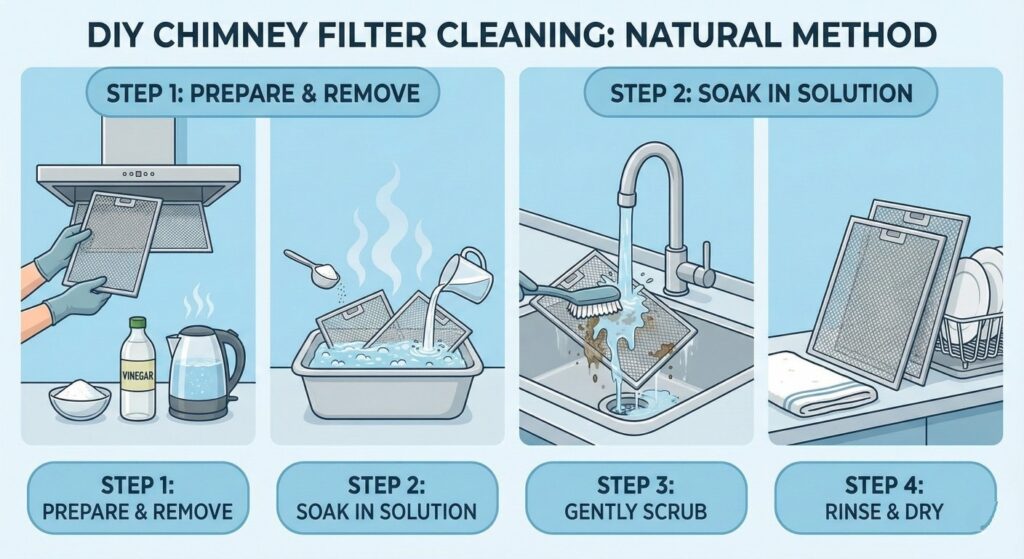
Step-by-Step: How to Clean Chimney Filter at Home Without Chemicals
Step 1: Switch Off and Remove the Filter
- Turn off the chimney and unplug it.
- Wait until the filter cools completely.
- Carefully slide or unclip the filter according to your chimney model.
Place it on newspaper or an old towel to avoid dripping grease on the floor.
Step 2: Prepare a Hot Water Soak
- Fill a large basin or sink with very hot water (not boiling).
- Add 2–3 tablespoons of baking soda and mix well.
- For extra degreasing, add ½ cup of white vinegar or lemon juice.
Hot water loosens grease, while baking soda and vinegar break down oily residue naturally.
Step 3: Soak the Filter
- Fully submerge the filter in the solution.
- Let it soak for 30–45 minutes.
If the filter is heavily clogged, extend soaking up to one hour. You’ll notice the water turning cloudy as grease releases.
Step 4: Gently Scrub the Filter
- Use a soft brush or toothbrush to scrub along the mesh or baffle grooves.
- Focus on corners and edges where grease builds up most.
- Avoid steel wool or hard brushes—they can damage the filter surface.
For stubborn spots, sprinkle a little baking soda directly on the brush.
Step 5: Rinse Thoroughly
- Rinse the filter under running warm water.
- Ensure all residue and loosened grease are washed away.
The water should run clear before you move on.
Step 6: Dry Completely Before Reinstalling
- Shake off excess water.
- Air-dry the filter on a rack or towel for several hours.
- Make sure it is completely dry before placing it back into the chimney.
Reinstalling a damp filter can affect suction and encourage odor buildup.
Safety Tips to Keep in Mind
- Always disconnect power before removing the filter.
- Wear gloves to avoid direct contact with grease and hot water.
- Never use boiling water—it may warp certain filter frames.
- Avoid mixing vinegar with any leftover commercial cleaners.
- Ensure proper ventilation while cleaning, especially in small kitchens.
Common Mistakes to Avoid
- Using harsh chemicals or degreasers that corrode metal
- Scrubbing too aggressively, damaging the mesh
- Skipping regular cleaning, allowing grease to harden
- Reinstalling the filter while wet
- Ignoring the chimney exterior, where grease also settles
Real-Life Stories: How People Clean Chimney Filters Without Chemicals
Anita Verma – Indore, Madhya Pradesh
Anita cooks daily for a family of five. When her chimney suction dropped, she avoided chemical cleaners due to skin sensitivity. Instead, she soaked the filter monthly in hot water and baking soda. She shared her routine during a residential society meeting, and neighbors confirmed visible improvement in smoke removal within weeks.
Mohammed Irfan – Malappuram, Kerala
Living in a humid coastal town, Irfan noticed grease buildup quickly. Power cuts are common, so he prefers manual cleaning. He uses hot water and lemon juice, followed by gentle brushing. His method was demonstrated during a local home-maintenance workshop, where participants observed reduced odor and cleaner filters after repeated use.
Sunita Kulkarni – Kolhapur, Maharashtra
Sunita runs a small home-based tiffin service. To avoid chemical residues, she cleans her chimney filter every two weeks using baking soda and thorough air-drying. She documented before-and-after photos for her self-help group meetings, showing consistent results and no filter damage even after years of use.
Do vs Avoid: Best Practices at a Glance
| Do | Avoid |
|---|---|
| Clean filters every 2–4 weeks | Waiting until suction drops |
| Use hot water and baking soda | Using bleach or acid cleaners |
| Air-dry filters completely | Reinstalling while damp |
| Use soft brushes | Using steel wool or knives |
Myths vs Reality
Myth: Chemical cleaners are the only way to remove grease
Reality: Hot water, baking soda, and vinegar are often just as effective with regular use.
Myth: Filters don’t need frequent cleaning
Reality: Even light cooking produces grease that accumulates over time.
Myth: Scrubbing harder cleans better
Reality: Gentle, repeated cleaning preserves filter life and performance.
Quick Maintenance Checklist
- ☐ Wipe chimney exterior weekly
- ☐ Check filter condition every 2 weeks
- ☐ Deep-clean filter monthly
- ☐ Keep cooking area well-ventilated
- ☐ Replace damaged filters promptly
Frequently Asked Questions
1. How often should I clean my chimney filter?
For regular cooking, once every 3–4 weeks is ideal. Heavy frying may require biweekly cleaning.
2. Can I use only baking soda without vinegar?
Yes. Baking soda alone works well, though vinegar or lemon juice improves grease breakdown.
3. Is it safe to use dish soap?
A small amount of mild, fragrance-free dish soap is acceptable if grease is very stubborn.
4. Can this method be used for all chimney filters?
It is suitable for most metal mesh and baffle filters. Always check manufacturer guidelines.
5. What if the grease doesn’t come off completely?
Repeat the soak and scrub process rather than using stronger chemicals.
Summary
Keeping your kitchen chimney clean doesn’t require harsh chemicals or expensive products. With hot water, baking soda, and simple tools, you can safely restore your filter’s efficiency and improve indoor air quality. Regular chemical-free cleaning reduces grease buildup, extends filter life, and keeps your kitchen fresher.
If you make this process part of your monthly routine, maintaining your chimney becomes easier and more effective over time—helping your kitchen stay cleaner, safer, and more comfortable.
Safety note: If you’re unsure or uncomfortable performing any home maintenance task mentioned in this article, it’s safer to consult a qualified professional.